


Coumarin
Coumarin is a lactone aroma compound with warm, sweet, hay- and almond-like notes. It is a key structural ingredient in classic oriental, fougère, and powdery fragrances. Its aroma is soft and long-lasting, significantly enhancing the roundness and longevity of a fragrance formulation.
Type
Woody
The scent is warm and smooth, with a sweetness reminiscent of hay, almond, and a hint of vanilla, along with a slightly powdery and dry, tobacco-like aroma, creating a strong sense of envelopment and comfort.
Acquisition Methods
Natural extraction or chemical synthesis
Coumarins can be naturally extracted from plants such as tonka bean, vanilla, and sweet alfalfa. They can also be produced through lactone reaction of salicylaldehyde with acetic anhydride and other raw materials to ensure purity, stability, and regulatory control, making them more suitable for modern fragrance and perfume systems.
Basic Information
| English Name | Coumarin |
| Common Industry Name | Coumarin |
| Chemical Category | Benzopyranones (Lactones) |
| Molecular Formula | C₉H₆O₂ |
| Molecular Weight | 146.14 g/mol |
| CAS Number | 91-64-5 |
| Appearance | White to pale yellow crystalline solid |
Technical Data
| Boiling point | 291 °C (decomposes) |
| Melting point | 68–73 °C |
| Flash point | 151 °C |
| Density (20 °C) | Approx. 0.93 g/cm³ |
| Solubility | Easily soluble in ethanol, ether, and essential oil systems; low solubility in water. |
| Stability | Relatively stable under neutral conditions; sensitive to strong alkaline environments; prolonged high temperatures may lead to decomposition. |
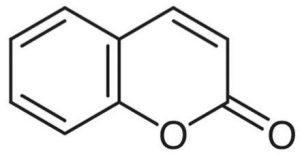
Chemical Structure
C₉H₆O₂
Fragrance Characteristics
| Fragrance Characteristics | Warm, sweet scent with hints of hay and almond, powdery, and slightly tobaccoy. |
| Fragrance Notes | Middle to Base |
| Common Pairings | Vanillin, Cinnamyl Alcohol, Heliotropin, Tobacco accord, Lavender, Oakmoss Replacers |
| Applications | Perfumes (Oriental, Fougere, Powdery), Fragrances (Soaps, Baths, Fabric Care), Home Furnishings and Candles |
Safety and Compliance
| IFRA Guidelines | Coumarin is an IFRA-restricted ingredient, with specific maximum usage requirements for different end-product categories. |
| Stability | Good, but stability testing is required in alkaline or high-temperature systems. |
| Allergy Risk | Listed by the EU as a potential sensitizing fragrance ingredient requiring labeling, its use in skin contact products must be strictly compliant. |
Application Highlights
- A “setting agent” for classic powdery and warm-sweet structures
- Significantly enhances longevity and overall smoothness
- Irreplaceable in fougère and oriental fragrances
- A subtle yet crucial structural component of the formula
Get in Touch
Interested in learning more about our products, solutions or our company? We are happy to support!