


Hydroxycitronellal
Hydroxycitronellal is a synthetic fragrance ingredient commonly used in perfumes and fragrances, possessing a fresh, sweet floral and citrus aroma. It is a derivative of citronellal, with distinctive fragrance characteristics, and is widely used in perfumes, personal care products, and cleaning agents. Due to its soft floral and woody notes, it is often used as a middle or base note fragrance ingredient to enhance the complexity and depth of the product.
Type
Floral
The lily of the valley scent is clean, soft, and very powdery, like the classic “clean white shirt” fragrance.
Acquisition Methods
Natural extraction or chemical synthesis
It can be extracted from plant essential oils such as citronella oil and lemongrass oil, usually through a chemical modification reaction that converts the aldehyde group into a hydroxyl group.
Basic Information
| English Name | Hydroxycitronellal |
| Common Industry Name | Hydroxygeraniol |
| Chemical Category | Citronellol Derivative (Aldehyde Compound) |
| Molecular Formula | C10H18O2 |
| Molecular Weight | 174.25 g/mol |
| CAS Number | 107-75-5 |
| Appearance | Colorless to pale yellow liquid |
Technical Data
| Boiling Point | 259°C |
| Flash Point | 103°C |
| Refractive Index (20°C) | 1.490 – 1.495 |
| Density (20°C) | 0.955 – 0.960 g/cm³ |
| Solubility | Soluble in alcohols, ethers, and oils; insoluble in water. |
| Stability | Stable at room temperature, but should be protected from light and prolonged exposure to air to prevent oxidative degradation. |
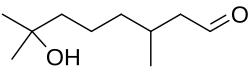
Chemical Structure
C10H18O2
Fragrance Characteristics
| Fragrance Characteristics | A fresh, sweet floral scent combined with citrus notes, featuring soft woody undertones and delicate fruitiness. |
| Fragrance Family Position | Middle to Base Notes |
| Common Pairings | Commonly used with citrus, rose, vanilla, and lavender fragrances; frequently found in floral and citrus perfumes. |
| Applications | Widely used in perfumes, personal care products (such as shampoos, shower gels, and face creams), air fresheners, and cleaning agents. |
Safety and Compliance
| IFRA Guidelines | The use of hydroxycitronellol in perfumes and cosmetics is restricted by IFRA standards, and recommended usage amounts must be followed. |
| Stability | Stable under suitable storage conditions; storage away from light is optimal. |
| Allergy Risk | Some sensitive individuals may experience allergic reactions to hydroxycitronellol, especially at high concentrations. |
Application Highlights
- Hydroxycitronellal is frequently used to enhance floral notes in perfumes and fragrances, making the scent softer and fresher.
- It has strong fragrance longevity, extending the time a perfume’s scent lasts and creating more distinct layers of aroma.
- Due to its antioxidant and antibacterial properties, hydroxycitronellal is often used in skincare products to help soothe the skin and reduce environmental damage.
- As a synthetic fragrance, hydroxycitronellal has a fresh scent without being overly irritating, making it commonly used in high-end and mid-to-high-end perfume and cosmetic formulations.
Get in Touch
Interested in learning more about our products, solutions or our company? We are happy to support!