
Which Perfume to Choose for Women? The Guide to Finding Your Olfactory Signature and Style
A practical style guide for choosing fragrance by notes, mood, season, skin, and occasion.
Choosing a perfume for women sounds simple until the counter fills with blotters. One fragrance is luminous and floral. Another is clean and musky. A third feels expensive on someone else and oddly sharp on your own skin. The best choice is rarely the bottle everyone recommends.
A woman's olfactory signature should fit her daily rhythm, style, climate, and the way perfume develops on skin. It should feel like a private pleasure first, then a public impression.
This guide is written for practical choosing: how to understand fragrance notes, concentration, season, personality, and wearability without turning perfume into a personality test.
Begin With the Life You Actually Live
A perfume should match your real days, not only an imagined evening in a silk dress. If you work in close offices, ride crowded trains, or live in hot weather, a huge amber fragrance may feel beautiful yet difficult. If you attend evening events or enjoy dramatic style, a delicate citrus cologne may feel too quiet.
Start with where you will wear the fragrance most. Daily perfume, date-night perfume, work perfume, wedding perfume, and signature perfume can be different choices.
A good fragrance wardrobe does not need to be large. It needs to be honest.
Understand the Main Fragrance Families
Floral fragrances are the classic starting point for many women, but floral can mean many things: fresh rose, creamy jasmine, powdery iris, watery peony, tropical ylang-ylang, or modern transparent white flowers.
Fresh fragrances can feel citrusy, aquatic, green, tea-like, or clean musky. Woody fragrances feel polished, dry, creamy, smoky, or minimalist. Amber and gourmand fragrances bring warmth through vanilla, resin, spice, caramel, tonka, or soft balsamic notes.
Learning fragrance notes gives you a language for preference. It also helps you avoid buying the same style repeatedly under different names.
Match Perfume to Personality Without Stereotypes
A romantic person does not have to wear rose. A confident woman does not have to wear oud. A minimalist does not have to smell like white musk. Perfume style works better when it describes mood and texture rather than fixed identity.
If you like softness, try musks, iris, tea, clean florals, or creamy sandalwood. If you like brightness, try citrus, neroli, pear, green notes, or sparkling aldehydes. If you like depth, explore woods, amber, patchouli, vanilla, incense, or spices.
The right perfume should make your style easier to inhabit.
Choose by Season and Climate
Warm weather often makes perfume project more. Citrus, green, aquatic, tea, musky, and sheer floral scents can feel refreshing. Heavy vanilla, dense amber, or syrupy fruit may become too loud in humidity unless applied lightly.
Cool weather gives richer notes more room. Woods, resins, gourmand notes, spices, musks, and deeper florals often feel more comfortable when the air is dry or cold.
Climate is personal, too. If your skin holds fragrance strongly, you may prefer lighter structures year-round. If fragrance fades quickly on you, a warmer eau de parfum may be more satisfying.
Test on Skin Before Deciding
A perfume can smell lovely on paper and less graceful on skin. Skin warmth, natural oils, sweat, and personal scent background all change how a fragrance opens and dries down.
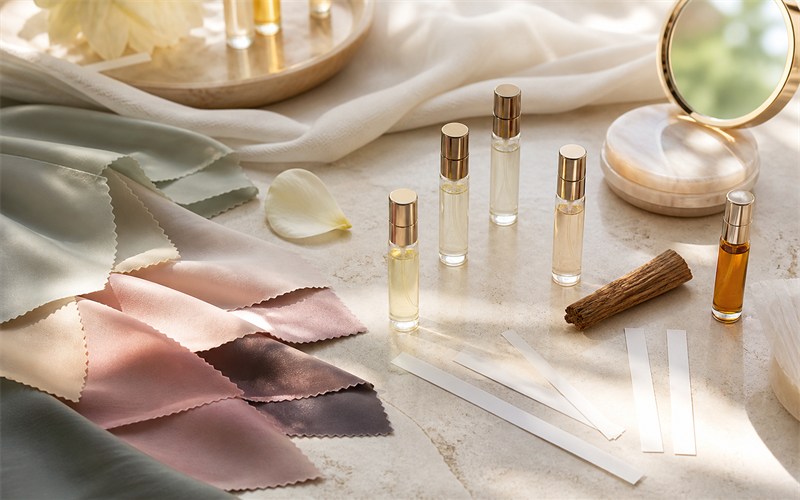
Test one or two fragrances at a time. Give each perfume at least four hours. Notice the opening, the heart, and the drydown. If you still enjoy the scent after daily movement, meals, weather, and fabric contact, it is a stronger candidate.
The most expensive mistake in perfume shopping is falling in love with the first five minutes.
Think About Concentration
Eau de toilette often feels lighter, brighter, and easier to wear. Eau de parfum often feels deeper, smoother, and longer lasting. Extrait or parfum concentrations can feel richer and more intimate, though they are not automatically better.
Choose concentration by use. A fresh office scent may be perfect as eau de toilette. A sensual evening floral may be better as eau de parfum. A body mist may be ideal when you want casual refreshment.
The concentration should serve your lifestyle rather than act as a status badge.
Avoid Common Buying Traps
Do not buy only because a perfume is viral. Do not buy only because the bottle is beautiful. Do not buy because a note list sounds luxurious. The scent has to work on your skin and in your life.
Also be careful with blind buying. Reviews can be useful, but words like clean, sexy, elegant, mature, youthful, and expensive mean different things to different noses.
If you cannot test first, choose smaller sizes or discovery sets. Curiosity is more enjoyable when it is affordable.
A Simple Style Map
Use this map as a starting point, then let your skin and taste make the final decision:
| Style direction | Fragrance families to explore |
|---|---|
| Fresh and effortless | Citrus, tea, green notes, watery florals, clean musks. |
| Soft and feminine | Rose, peony, iris, white musk, creamy sandalwood. |
| Elegant and polished | Powdery florals, woods, aldehydes, musks, subtle amber. |
| Warm and sensual | Vanilla, amber, tonka, resin, spice, patchouli. |
| Modern and minimal | Sheer woods, transparent musks, mineral notes, clean florals. |
| Distinctive and artistic | Incense, leather, unusual fruits, niche woods, textured florals. |
What Brands Can Learn From Women's Perfume Choices
For fragrance brands, women's perfume is no longer a single pink floral category. Consumers now want freshness, comfort, quiet luxury, gourmand warmth, clean musks, niche woods, and personal stories. The market rewards clarity, but it also rewards nuance.
A successful fragrance formula should connect scent direction, concentration, packaging, price, and target occasion. The same floral concept can become a work-friendly mist, a premium eau de parfum, or a romantic gift set depending on formula choices.
Testing with real wearers matters. The fragrance should feel attractive on skin, understandable in a note pyramid, and credible for the brand's audience.
Working With Scentake
Scentake works with perfume brands, private-label buyers, and product developers who want fragrance concepts that feel wearable, distinctive, and commercially sensible. From fragrance ingredients and notes to concentration choices and sample refinement, the process should support both emotion and repeat purchase.
If you are developing a women's perfume, body mist, gift set, or scented product line, contact Scentake with your target audience, style direction, price point, and market. A clear brief helps transform a broad idea into a fragrance women can recognize as their own.