

How Is Perfume Made? A Step-by-Step Guide?
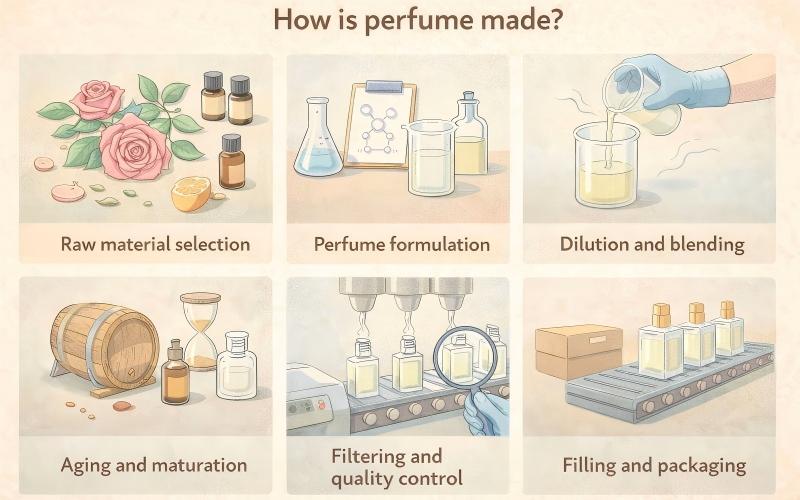
Fragrance creation is often romanticized as an artistic ritual guided by instinct and inspiration. That is only part of the story. Behind every successful perfume lies a sophisticated convergence of chemistry, craftsmanship, raw material sourcing, quality control, and regulatory compliance. It is both poetic and technical. Both creative and industrial.
Understanding how perfume is made not only reveals the complexity of the fragrance industry but also helps brands, distributors, and private label buyers make more informed sourcing decisions. The process is meticulous. Every step matters.
The Concept Stage: Where Scent Begins as an Idea
Every perfume begins with a concept. Sometimes it originates from a brand vision. Sometimes it is driven by market data or seasonal demand. Occasionally, it is inspired by cultural movements or consumer psychology.
According to market research from Statista, the global fragrance market is projected to exceed USD 70 billion by 2027, driven largely by evolving consumer preferences toward personalization and storytelling. This means fragrance development rarely begins randomly. It starts with strategy.
Perfume concepts usually consider several elements:
- Target demographic and usage scenarios
- Emotional positioning such as freshness, sensuality, or comfort
- Product format such as fine fragrance, personal care, or home fragrance
- Price positioning and performance expectations
Once the concept is defined, perfumers translate abstract ideas into olfactory direction. This stage functions like architectural planning before construction begins.
Raw Material Selection: The Building Blocks of Fragrance
A perfume is composed of numerous aromatic materials, each selected for both scent profile and functional performance. These materials generally fall into two primary categories.
Natural Ingredients
Natural raw materials are extracted from flowers, woods, fruits, resins, spices, and herbs. Rose absolute, sandalwood oil, and bergamot essential oil are classic examples. Extraction methods include steam distillation, solvent extraction, cold pressing, and CO₂ extraction.
Natural materials offer olfactory richness and complexity. However, they can be influenced by climate, harvest conditions, and agricultural variability. For example, the yield of rose oil is extremely limited. Approximately 3 to 5 tons of rose petals are required to produce just 1 kilogram of rose essential oil, making it one of the most expensive perfume materials globally.
Synthetic Ingredients
Synthetic aroma molecules are created through controlled chemical synthesis. They replicate natural aromas or introduce entirely new scent effects. Famous examples include vanillin, Iso E Super, and Hedione.
Modern perfumery relies heavily on synthetic ingredients for several reasons. They provide batch consistency, enhance safety through controlled purity, reduce pressure on endangered natural resources, and allow perfumers to design scent structures impossible with naturals alone.
In reality, most perfumes use a hybrid composition combining both natural and synthetic ingredients. This synergy allows balance between creativity, sustainability, and stability.
Fragrance Formulation: The Art of Composition
Once materials are selected, perfumers begin blending them into a formula. This stage is both artistic and highly scientific. Perfume compositions are structured around three layers, often described as fragrance notes.
Top Notes
Top notes form the initial impression. They evaporate quickly and usually include citrus, aromatic herbs, or light fruits. Their purpose is to create immediate impact and attraction.
Heart Notes
Heart notes define the character of the fragrance. Florals, spices, and green accords commonly appear here. These notes emerge after the top notes dissipate and remain present for several hours.
Base Notes
Base notes provide longevity and depth. Ingredients such as musks, woods, amber, and resins stabilize the fragrance and create persistence on skin and fabric.
Perfume formulation requires precise measurement. Even a minor adjustment of 0.1 percent can significantly alter the final scent profile. Large fragrance houses often evaluate hundreds of formula revisions before approving a final composition.
Dilution and Solvent Integration
After the fragrance concentrate is completed, it must be diluted to create wearable perfume products. The primary solvent used in fine fragrance is ethanol due to its ability to evaporate cleanly without interfering with scent clarity.
The concentration of fragrance oil determines product classification:
Eau de Cologne typically contains 2 to 5 percent fragrance oil
Eau de Toilette usually contains 5 to 15 percent
Eau de Parfum commonly contains 15 to 20 percent or higher
Higher concentration often results in stronger longevity and projection. However, balance remains crucial. Excessive concentration can create heaviness rather than elegance.
In certain personal care or home fragrance applications, alternative carriers such as water-based systems, wax, or oils may be used instead of alcohol.
Aging and Maturation: Allowing the Fragrance to Harmonize
After blending and dilution, perfume mixtures undergo a maturation period. This stage allows molecular interactions to stabilize the scent profile.
Maturation can last from several weeks to several months depending on formulation complexity. During this time, the fragrance becomes smoother and more cohesive. Harsh edges soften. Individual notes integrate into a unified olfactory structure.
This step is comparable to wine aging. It cannot be rushed without compromising quality.
Filtration and Quality Control
Before bottling, perfumes are filtered to remove impurities or unwanted sediment. Filtration ensures visual clarity and product stability, particularly when natural extracts are involved.
Quality control is a critical stage in commercial fragrance production. Laboratories conduct multiple tests, including:
- Stability testing under varying temperatures
- Compatibility testing with packaging materials
- Safety and allergen compliance verification
- Performance testing for longevity and diffusion
Organizations such as IFRA (International Fragrance Association) establish global safety standards governing ingredient usage. Compliance with IFRA guidelines ensures fragrances meet international regulatory expectations.
Bottling and Packaging: Where Product Meets Consumer
The final stage involves filling the fragrance into packaging formats. Packaging is not merely aesthetic. It protects fragrance stability and influences brand perception.
Glass bottles are commonly used because they minimize chemical interaction with fragrance compounds. Packaging also integrates atomizers, caps, and protective sealing to ensure product durability during transportation and storage.
For bulk fragrance buyers, packaging flexibility is particularly important. Private label customization often includes bottle design, labeling, and branding integration.
Market Testing and Commercial Launch
Before large-scale distribution, many fragrance products undergo consumer testing. Feedback helps brands evaluate scent acceptance, emotional resonance, and purchase likelihood.
According to consumer behavior studies published in the Journal of Sensory Studies, fragrance preference is strongly linked to cultural familiarity and emotional association. This is why regional market adaptation often plays a key role in successful fragrance launches.
Once validated, production is scaled and distributed through retail, e-commerce, or brand-specific channels.
Why Professional Manufacturing Expertise Matters
Perfume creation is a multidisciplinary process. It combines olfactory artistry, chemical precision, supply chain reliability, and regulatory awareness. Brands entering fragrance markets often underestimate the technical challenges involved.
Professional fragrance manufacturers provide advantages such as:
- Access to global raw material sourcing networks
- Advanced formulation and stability expertise
- Regulatory and compliance support
- Scalable production capacity
- Custom fragrance development aligned with brand identity
These capabilities significantly reduce development risk and accelerate market entry.
The Future of Perfume Manufacturing
Modern fragrance production is evolving rapidly. Sustainability, biotechnology, and AI-assisted formulation are reshaping the industry. Biotechnology now enables the creation of renewable aroma molecules through fermentation, reducing environmental impact while maintaining olfactory authenticity.
Additionally, consumer demand for transparency and ethical sourcing continues to grow. Brands increasingly seek fragrance partners capable of balancing innovation with environmental responsibility.
Perfume manufacturing is no longer only about scent. It is about storytelling, science, and sustainability working in unison.
Partnering With Scentake for Custom Fragrance Development
At Scentake, fragrance creation is approached as both an art form and a technical discipline. With extensive experience in fragrance formulation, raw material sourcing, and global compliance, Scentake supports brands in developing distinctive scent identities tailored to specific markets and product applications.
From fine fragrance and personal care to home scenting solutions, Scentake provides comprehensive OEM and private label services designed to meet evolving consumer expectations. Each fragrance is crafted with careful attention to performance, stability, and emotional resonance.
If your brand is exploring custom fragrance development or expanding into scented product categories, Scentake offers the expertise and manufacturing capability to support your vision.
Contact Scentake today to begin creating fragrances that define your brand and captivate your customers.