

How Much Does It Cost to Make a Perfume?
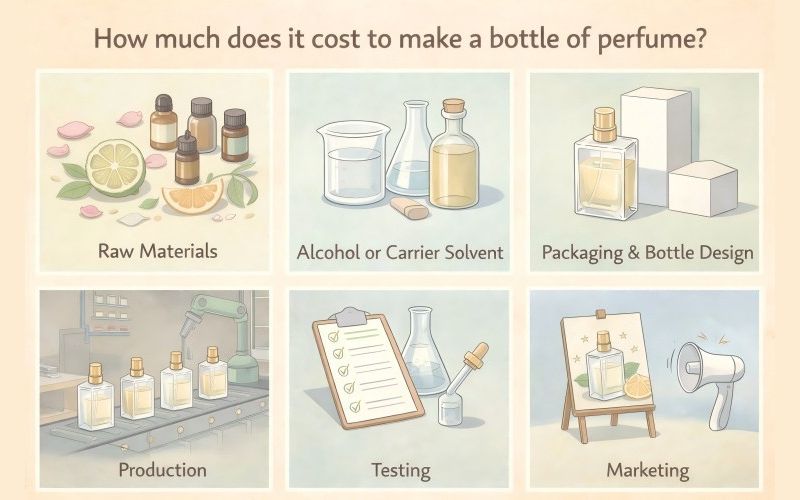
Perfume has always carried an aura of luxury. A small glass bottle can sell for tens or even hundreds of dollars, which naturally raises a practical question: how much does it actually cost to make a perfume?
The answer is rarely simple. Fragrance production involves a chain of decisions, each shaping the final cost. Raw materials, formulation expertise, packaging design, compliance requirements, and production scale all contribute to the overall price structure.
Some perfumes are produced for only a few dollars per unit. Others require raw materials that cost hundreds of dollars per kilogram.
The Core Components That Determine Perfume Cost
Every perfume is essentially a combination of several cost layers. These layers interact with one another, forming the final production budget.
Typical cost elements include:
- Fragrance raw materials
- Alcohol or carrier solvents
- Packaging and bottle design
- Manufacturing and quality control
- Regulatory compliance and testing
- Branding, marketing, and distribution
Among these, fragrance materials and packaging usually dominate the production cost for most commercial perfumes.
Raw Materials: The Heart of Fragrance Cost
The fragrance oil itself is often the most technically complex component of perfume production. Perfumers work with hundreds of aromatic ingredients sourced from plants, resins, spices, and laboratory synthesis.
Natural Ingredients
Some natural materials are extremely rare. Rose oil is a well-known example. Industry reports estimate that 3 to 5 tons of rose petals are required to produce one kilogram of rose essential oil, which explains why high-grade rose oil can exceed several thousand dollars per kilogram.
Oud, also known as agarwood, represents another dramatic example. Genuine oud oil forms only when certain Aquilaria trees become infected by specific fungi. This rare biological process makes natural oud one of the most expensive fragrance materials in the world.
Natural ingredients contribute richness and complexity to perfume formulas. However, they also introduce variability and higher sourcing costs.
Synthetic Aroma Molecules
Modern perfumery relies heavily on synthetic materials. These molecules deliver stability, reproducibility, and creative flexibility. Many iconic fragrance structures would not exist without them.
Synthetic aroma chemicals often cost far less than rare natural oils. They also allow perfumers to construct scent effects that nature does not provide on its own. Clean musks, diffusive woody ambers, and radiant aldehydic florals all benefit from laboratory-developed ingredients.
A typical commercial fragrance formula blends both natural and synthetic materials. This combination balances cost, performance, and sustainability.
Fragrance Concentration and Its Impact on Cost
Perfume strength directly affects ingredient cost. The concentration of fragrance oil determines how much aromatic material is required per bottle.
Typical concentration ranges include:
- Eau de Cologne: 2–5 percent fragrance oil
- Eau de Toilette: 5–15 percent fragrance oil
- Eau de Parfum: 15–20 percent fragrance oil
Higher concentrations require more fragrance oil, which increases production cost. At the same time, stronger concentrations often support longer longevity and a more luxurious perception.
Brands frequently choose concentration levels based on their target market and pricing strategy.
Packaging: The Often Overlooked Expense
Packaging costs can rival or exceed fragrance formulation costs, particularly for premium brands.
A simple bottle and cap might cost only a few dollars in large manufacturing volumes. Custom glass molds, magnetic caps, metal plating, and decorative elements can raise packaging costs dramatically.
Luxury perfume brands often invest heavily in packaging because presentation shapes consumer perception. A well-designed bottle becomes part of the fragrance experience.
Packaging expenses typically include:
- Glass bottle production
- Spray pumps and atomizers
- Caps and decorative components
- Outer boxes and inserts
- Label printing and finishing
These elements contribute both aesthetic value and logistical protection.
Manufacturing and Quality Control
Perfume production requires precise blending, filtration, and maturation processes. After formulation, fragrance concentrate is mixed with alcohol and allowed to age so that molecular interactions stabilize the scent.
Maturation periods can range from several weeks to several months depending on formula complexity.
Manufacturers also conduct laboratory testing to ensure product stability and safety. These tests may include:
- Temperature stability testing
- Packaging compatibility analysis
- Allergen screening
- Regulatory compliance verification
Organizations such as the International Fragrance Association (IFRA) provide global safety standards for fragrance ingredients. Compliance with these guidelines adds additional testing and documentation requirements.
Estimated Production Costs
The manufacturing cost of a perfume varies widely depending on formula complexity and production scale.
Approximate production costs might fall into these ranges:
- Mass-market perfumes: roughly $2–$10 per unit in large volumes
- Mid-range fragrances: roughly $10–$30 per unit
- Luxury fragrances: $30 or more per unit, sometimes significantly higher
Retail prices often exceed production costs because marketing, distribution, and branding expenses play major roles in final pricing.
For example, some industry analyses suggest that marketing can account for more than 40 percent of a perfume’s retail price in large commercial fragrance brands.
Why Production Scale Matters
Volume has a powerful influence on cost efficiency. Large production runs reduce per-unit expenses through economies of scale.
Bulk raw material purchasing lowers ingredient costs. Automated filling lines increase manufacturing speed. Packaging suppliers offer lower pricing for high-volume orders.
This dynamic explains why private-label fragrance production often becomes far more affordable once minimum order quantities are reached.
For emerging brands, partnering with an experienced fragrance manufacturer helps optimize cost structure while maintaining quality.
Building a Fragrance Brand With the Right Manufacturing Partner
Developing a fragrance product requires expertise across multiple disciplines. Chemistry, design, regulatory compliance, and global logistics all intersect within the perfume industry.
At Scentake, fragrance creation combines technical knowledge with market awareness. The team works closely with brands to develop custom scents that align with product positioning, regional preferences, and regulatory requirements.
Scentake provides:
- Custom fragrance formulation
- IFRA-compliant ingredient sourcing
- Private label and OEM manufacturing
- Scalable production capabilities
- Support for personal care, home fragrance, and fine fragrance products
Whether a brand is launching its first perfume line or expanding an existing fragrance portfolio, a well-structured manufacturing partnership simplifies the process.
Start Developing Your Own Perfume Today
Creating a perfume involves creativity, science, and strategic planning. The right manufacturing partner transforms an idea into a market-ready product with reliable quality and competitive cost control.
Contact Scentake today to discuss your fragrance project and explore how custom scent development can elevate your brand in the global fragrance market.