
Shalimar by Guerlain: The Story of a Fragrant Legend

Why One Perfume Can Become a Reference Point
Some perfumes succeed for a season. A smaller group becomes part of perfume language itself. Shalimar by Guerlain belongs to that second group because it helped define what many people understand as an ambery, vanilla-rich oriental perfume.
For consumers, Shalimar is often remembered as warm, sensual, powdery, smoky, and elegant. For fragrance developers, it is more useful as a lesson in structure: a bright citrus opening, a refined floral heart, and a long, soft base built around vanilla, balsams, tonka-like warmth, resins, woods, and animalic shadows.
This article is not a sales page for Shalimar. It is a practical look at why a classic fragrance can endure, and what modern brands can learn from its balance of story, materials, bottle identity, and drydown.
The Historical Setting: Paris, 1925, and a New Kind of Warmth
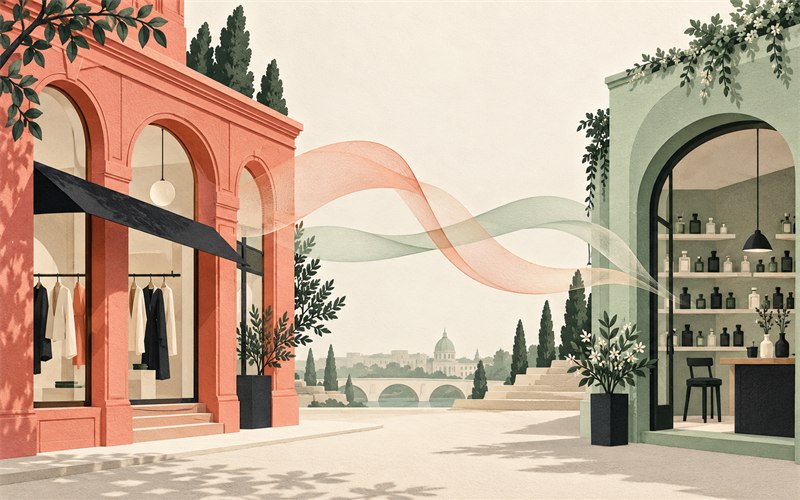
Shalimar is widely associated with Jacques Guerlain and its 1925 presentation during the Art Deco period in Paris. The fragrance is linked to the Shalimar gardens and the romantic image of Mughal India that European luxury culture often imagined in the early twentieth century.
That historical context matters. Perfume in the 1920s was changing quickly. Houses were using natural materials with new aroma chemicals, allowing richer effects, stronger diffusion, and more dramatic signatures. Shalimar became famous for placing vanilla and ambered warmth in a composition that still felt elegant rather than edible.
The result was daring for its time: luminous bergamot on top, powdery floral softness in the middle, and a lingering base that seemed to glow on fabric and skin.
The Architecture of the Scent
Shalimar is often described through bergamot, iris, jasmine, rose, vanilla, tonka bean, resins, woods, leather, and musk-like warmth. Exact formulas are proprietary, but the broad architecture is clear enough to study.
The bergamot opening is essential because it keeps the perfume from feeling heavy too early. The floral heart gives polish and softness. The base is the legend: vanilla, balsamic richness, powder, smoke, and a leathery shadow that makes the sweetness feel adult.
This is the central lesson for fragrance creation. Sweetness needs contrast. If a vanilla fragrance has no citrus lift, no floral shape, no dry wood, and no resinous depth, it may smell pleasant at first and flat after an hour. A classic ambery perfume keeps moving.
Vanilla, Ethyl Vanillin, and the Modern Perfume Imagination
Shalimar is often discussed in relation to ethyl vanillin, a powerful vanilla-smelling aroma material that helped perfumers create more intense, more diffusive vanilla effects than natural vanilla alone could provide.
This point is important for modern buyers. A luxurious fragrance does not need to be built only from rare natural extracts. Many landmark perfumes became possible because perfumers blended naturals and aroma molecules with taste and restraint.
For private-label development, the question is not whether a vanilla note is natural or synthetic in isolation. The better question is whether the final scent has depth, safety documentation, stability, performance, and a clear emotional identity.
Why Shalimar Still Feels Relevant
A perfume lasts culturally when it gives people more than a pleasant smell. Shalimar carries memory, family associations, evening glamour, vintage style, and a recognizable trail. At the same time, its structure still connects to current taste for vanilla, amber, smoky woods, and skin-like musks.
Modern fragrance trends have made vanilla and amber feel newly popular, especially in gourmand, cozy, and unisex categories. Shalimar shows an older way to handle those materials: less candy, more shadow; less instant sweetness, more drydown.
That is why a classic can teach contemporary product teams. Trends change, but balance, contrast, and a memorable base remain valuable.
What Brands Can Learn From a Fragrance Legend
A long-lived fragrance usually has a distinct silhouette. Consumers may forget every listed note, but they remember the feeling: bright top, soft powder, smoky vanilla, elegant trail.
A strong fragrance also has discipline. The packaging, name, storytelling, concentration, and target customer need to point in the same direction. A warm ambery scent in a playful bottle will send a different message than the same scent in heavy glass with deep colors and refined typography.
Brands developing inspired ambery directions should avoid copying a classic. The smarter path is to study why it works, then create a different brief: cleaner citrus amber, smoky vanilla leather, floral amber musk, soft resin powder, or modern unisex vanilla woods.
Regulatory and Production Lessons
A heritage-style scent can contain many material families: citrus oils, floral materials, resins, coumarin-like warmth, vanilla materials, musks, woods, and animalic effects. Each product format needs safety and performance review.
IFRA Standards guide safe use by product category, and finished products sold as cosmetics must also meet local rules for ingredient labelling, allergens, and consumer safety. In the United States, FDA guidance explains that fragrance ingredients in cosmetics must be safe under labeled or customary use. In the European Union, fragrance allergen labelling has expanded under Regulation (EU) 2023/1545.
This matters when a brand translates an ambery perfume idea into body lotion, hair mist, candle, reed diffuser, or oil perfume. The same scent direction may need different dosage, solvent strategy, color control, and stability testing.
A Practical Brief for an Ambery Classic
Define the era and mood: vintage glamour, modern amber, smoky vanilla, powdery elegance, or clean unisex warmth.
Set a drydown target because this fragrance family succeeds or fails in the base.
Use citrus, floral, woody, and resinous contrast so vanilla does not become one-dimensional.
Check IFRA category, allergen declaration, color, solubility, and stability before approving production.
Create packaging that supports the scent’s emotional world without imitating another brand’s protected identity.
How Scentake Helps Build Modern Classics
Scentake works with fragrance brands and private-label teams that want scent ideas with market appeal and production discipline. For an ambery vanilla concept, that may include benchmark discussion, original formula direction, IFRA-aware development, stability checks, and sample refinement for the final product format.
If you want to build a warm, memorable fragrance with the depth of a classic and the clarity of a modern product brief, contact Scentake to start a custom fragrance development conversation.