
The 11 Most Important Ingredients Used in Perfumery
Why Ingredients Matter More Than Note Lists
Perfume marketing often talks about notes: rose, amber, musk, citrus, woods, vanilla. A formula is built from ingredients and accords. Some ingredients come from plants, resins, roots, seeds, or flowers. Others are aroma molecules designed or isolated for precision, performance, and safety control.
Understanding key perfumery ingredients helps consumers choose better scents and helps brands write better briefs. It also makes sourcing conversations more practical. A supplier can only develop the right fragrance when the desired mood, performance, product base, and price range are clear.
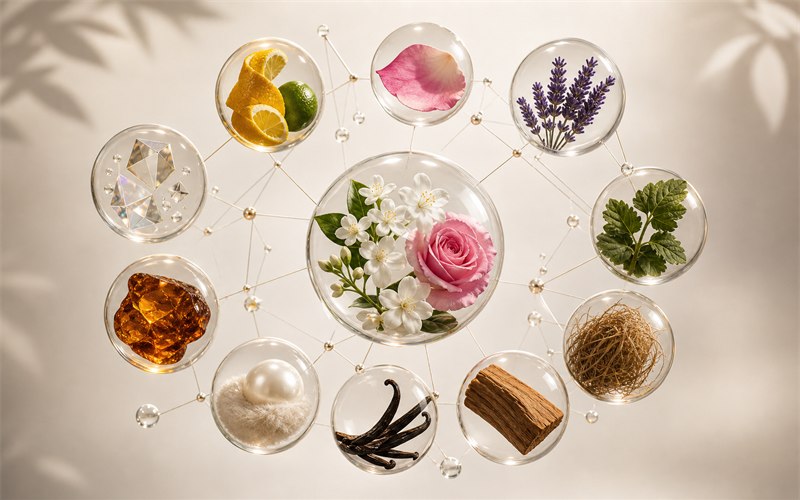
The following 11 ingredients and ingredient families are not the only important materials in perfumery. They are a useful map of how modern fragrance is built: freshness, floral body, warmth, texture, fixation, diffusion, and long-lasting character.
1. Bergamot
Bergamot is one of the classic citrus materials in fine fragrance. It smells bright, sparkling, slightly floral, bitter-green, and tea-like. It gives lift to cologne, chypre, fougere, amber, floral, and woody fragrances.
Because citrus materials can contain photosensitizing constituents depending on processing, professional formulas need the right quality and safe-use guidance. Bergamot FCF qualities are often used when phototoxicity concerns need to be managed.
For brands, bergamot is useful when a fragrance needs immediate freshness without smelling like simple lemon cleaner.
2. Rose
Rose can smell fresh, spicy, jammy, honeyed, green, powdery, or wine-like. Natural rose oil and rose absolute are prized for complexity, while rose bases and aroma molecules help control cost, consistency, and diffusion.
Rose works in feminine, masculine, and unisex scents. It pairs with patchouli, oud, musk, amber, citrus, tea, woods, and gourmand notes, which is why the wider floral family in perfumery remains so commercially important.
A modern rose brief should specify the style: dewy garden rose, dark rose, powdery rose, fruity rose, spicy rose, or clean rose musk.
3. Jasmine
Jasmine adds radiance, natural floral depth, and a sensual white-flower effect. It can smell green, fruity, creamy, indolic, tea-like, or narcotic depending on material and dosage.
In small amounts, jasmine gives a perfume glow. In larger amounts, it becomes a central floral signature. It is also important in many fantasy floral accords because it helps make a constructed flower feel alive.
For body care and lighter products, jasmine often needs careful balancing so it stays elegant rather than overpowering.
4. Lavender
Lavender is aromatic, herbal, fresh, clean, slightly floral, and sometimes camphoraceous. It is central to fougere, barbershop, cologne, wellness, home fragrance, and clean personal-care scents.
Lavender can make a fragrance feel calm and familiar. It also pairs well with citrus, woods, musk, vanilla, amber, mint, rosemary, and tonka effects.
A buyer should specify whether the lavender should feel natural and herbaceous, soft and spa-like, or crisp and masculine.
5. Patchouli
Patchouli gives earth, woods, shadow, cocoa-like depth, and long-lasting texture. Modern fractions can smell much cleaner than old-fashioned heavy patchouli oil.
It is essential in many chypres, rose fragrances, woody ambers, incense scents, and dark gourmands. Even when customers do not recognize it, patchouli may be responsible for the expensive drydown.
For product development, choose between natural oil, clean fraction, or reconstructed patchouli accord depending on target market and base stability.
6. Vetiver
Vetiver root oil smells dry, earthy, smoky, green, woody, nutty, and mineral. It is one of the great base notes because it adds structure without needing sweetness.
Vetiver can support citrus colognes, woody fragrances, iris, rose, musk, leather, and incense. Haitian-style vetiver is often admired for elegance, while other origins may feel darker or smokier.
Brands should test vetiver in the actual product base because color, solubility, and odor profile can vary by quality.
7. Sandalwood and Creamy Woods
Sandalwood is valued for creamy, milky, soft, woody warmth. True sandalwood oils are costly and supply-sensitive, so modern perfumery often uses sustainable sources, fractions, or sandalwood-like aroma molecules.
Creamy woods are useful in skin scents, floral musks, amber, incense, luxury body care, and unisex fragrance. They smooth sharper notes and make the base feel comfortable.
A sandalwood brief should clarify whether the target is natural, creamy, dry, milky, smoky, or modern transparent wood.
8. Vanilla and Vanillin Materials
Vanilla brings comfort, sweetness, warmth, and volume. Natural vanilla extracts can be complex and expensive, while vanillin and ethyl vanillin help perfumers create stronger, cleaner, and more consistent vanilla effects.
Vanilla appears in gourmand, amber, floral, woody, spicy, and powdery fragrances. It can feel edible, smoky, leathery, creamy, or elegant depending on supporting materials.
The key is balance. Vanilla needs contrast from woods, spices, resins, citrus, musk, or florals so the scent does not become flat.
9. Musks
Modern musks are essential for softness, diffusion, clean laundry effects, skin warmth, and long-lasting comfort. They are among the most important synthetic ingredient families in contemporary perfumery.
Different musks can smell powdery, clean, creamy, fruity, animalic, woody, or almost invisible. They also help connect top, heart, and base notes.
For brands, musk selection shapes the whole product personality. A baby-care style musk, a sensual skin musk, and a crisp detergent musk are very different creative directions.
10. Ambers and Ambroxide Materials
Amber in perfumery is usually an accord rather than a single ingredient. It may combine labdanum, benzoin, vanilla, resins, woods, musks, and modern amber molecules. Ambroxide materials, widely known through names such as Ambroxan, give woody, ambery, salty, musky persistence.
Amber materials make fragrances feel warm, lasting, and polished. They appear in fine fragrance, candles, diffusers, body care, and masculine or unisex scents.
Because amber can become heavy, a good brief should define whether the goal is soft amber, dry amber, marine amber, woody amber, or sweet resinous amber.
11. Aldehydes and Modern Aroma Molecules
Aldehydes can create sparkle, lift, soapiness, waxy citrus peel, metallic air, or champagne-like brightness. Modern aroma molecules also create effects that nature does not provide easily: transparent woods, airy amber, powerful diffusion, clean musks, and stable floral notes.
These materials are core tools of modern perfumery. Many landmark fragrances depend on the creative combination of natural materials and aroma molecules.
For brands, the practical question is performance. The right molecule can improve stability, price control, projection, safety management, and consistency across production batches.
Documentation and Safe Use
Important ingredients still need responsible handling. IFRA Standards guide safe use by product category, and cosmetics sold in different markets must follow local rules for labelling, allergens, and consumer safety.
A fragrance supplier should provide the documents needed for the intended product format: IFRA certificate, allergen declaration, SDS where relevant, and stability guidance. This matters whether the formula uses natural oils, aroma molecules, or both.
Scentake helps brands turn ingredient ideas into workable fragrance briefs, samples, and production-ready compounds. If you are developing a fragrance line and want the right ingredient direction, contact Scentake with your product type, target market, and scent goals.