

What Are Aldehydes and How Are They Used In Perfumery?
Aldehydes are among the most transformative materials in modern perfumery.
They are not always obvious on a blotter, rarely dominate marketing narratives, and yet they quietly shape some of the most iconic fragrances in the world. For fragrance brands and formulators, understanding aldehydes is not a matter of style—it is a matter of structure, performance, and commercial relevance.
In global fragrance development, aldehydes serve as tools for brightness, diffusion, abstraction, and longevity. Their role becomes even more critical when balancing regulatory constraints, cost efficiency, and large-scale production.
What Are Aldehydes?

From a chemical perspective, aldehydes are organic compounds characterized by a carbonyl group bonded to at least one hydrogen atom. In perfumery, the term “aldehydes” usually refers not to a single material, but to a family of aromatic molecules with diverse olfactory profiles.
Some aldehydes occur naturally in essential oils—such as citral in citrus oils—while many others are produced synthetically to achieve consistency and purity.
In fragrance classification, aldehydes are typically described by their carbon chain length, which directly influences their scent character.
The Olfactory Characteristics of Aldehydes
Aldehydes are often described as:
- Bright
- Diffusive
- Clean
- Sparkling
- Abstract
Short-chain aldehydes (such as C-8, C-9, and C-10) can feel metallic, citrusy, or effervescent. Longer-chain aldehydes may lean waxy, fatty, or soapy. When used correctly, aldehydes do not “smell like themselves”—they modify the entire fragrance structure.
This ability to lift, expand, and clarify is why aldehydes are frequently used in small doses, often below the threshold of easy detection.
A Brief Historical Context
Aldehydes entered mainstream perfumery in the early 20th century. The launch of Chanel No. 5 in 1921 is often cited as a turning point, where aldehydes were used deliberately to create abstraction rather than realism. Instead of mimicking a single flower, the fragrance introduced an impressionistic, modern scent structure.
This approach reshaped perfumery. Aldehydes became synonymous with sophistication, cleanliness, and innovation—values that still influence fragrance positioning today.
How Aldehydes Are Used in Modern Perfumery

Enhancing Diffusion and Projection
Aldehydes increase the radiance of a fragrance. They help scent travel through air more efficiently, especially in the opening phase. This makes them valuable in products designed for immediate impact without heavy dosage.
Creating Clean and Contemporary Profiles
Many “clean,” “fresh,” or “linen-like” fragrances rely on aldehydes to achieve brightness without citrus overload. This is particularly relevant in personal care, home fragrance, and functional perfumery.
Adding Abstraction and Signature
Aldehydes allow perfumers to move away from literal interpretations of ingredients. They blur edges, connect accords, and create signatures that are harder to copy—an important advantage in competitive markets.
Supporting Longevity and Structure
While aldehydes are volatile, their interaction with other materials can improve overall fragrance coherence and perceived longevity. They act as architectural elements rather than standalone notes.
Aldehydes in Today’s B2B Fragrance Market
From a commercial perspective, aldehydes offer several advantages:
- Consistency: Synthetic aldehydes provide stable quality across batches.
- Cost Efficiency: They can enhance impact without increasing raw material costs.
- Regulatory Clarity: Many aldehydes have well-documented safety profiles under IFRA standards.
- Versatility: Suitable for fine fragrance, personal care, detergents, and home scenting.
According to industry data referenced by IFRA and major fragrance houses, aldehydes remain widely used in both premium and mass-market formulations, particularly where cleanliness and diffusion are key performance criteria.
Regulatory and Safety Considerations
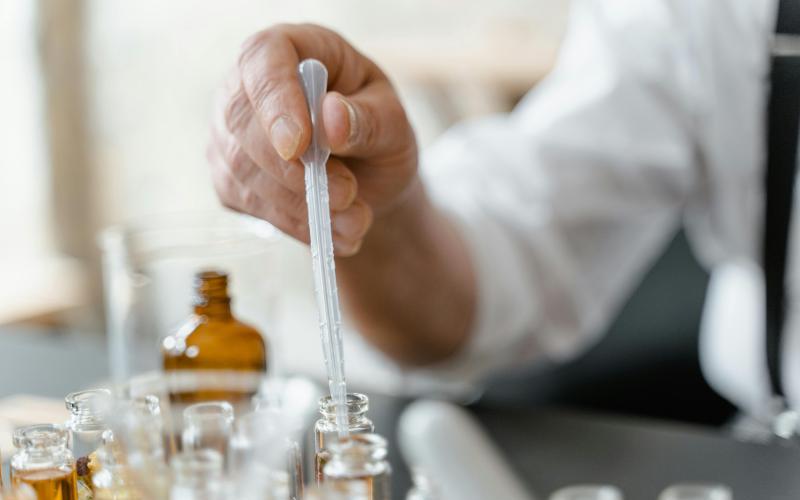
Like all fragrance ingredients, aldehydes are subject to regulatory oversight. IFRA Standards specify usage limits for certain aldehydes based on toxicological data and product categories.
For B2B buyers, the critical point is controlled usage and proper formulation. Aldehydes are rarely problematic when used within recommended concentrations and in compliance with regional cosmetic regulations such as EU Regulation (EC) No 1223/2009.
Professional fragrance suppliers factor these limitations into formula design from the outset.
At Scentake, aldehydes are treated as precision tools rather than stylistic shortcuts. By integrating aldehydes thoughtfully, we help brands achieve fragrances that feel modern, stable, and commercially viable across global markets.
Let’s Develop Fragrances With Structure and Precision
If you are developing new fragrance concepts, reformulating existing products, or sourcing performance-driven scents for international markets, Scentake is ready to support your strategy.
Contact Scentake today to explore fragrance solutions built on technical expertise, regulatory awareness, and creative clarity.