

What Makes a Perfume Long-Lasting?
Longevity is one of the most frequently asked—and least clearly understood—attributes in perfumery. For consumers, a long-lasting perfume means value and satisfaction. For brands, manufacturers, and buyers, longevity is a technical outcome shaped by formulation strategy, ingredient selection, and product design.
Perfume Longevity: More Than Just Concentration
A common misconception is that higher fragrance concentration automatically equals longer wear. While concentration matters, it is only one variable.
For example:
Eau de Parfum (EDP) typically contains 15–20% fragrance oil
Eau de Toilette (EDT) usually ranges from 8–12%
However, two perfumes at the same concentration can perform very differently. Longevity is the result of how the formula is built, not just how much oil it contains.
Key Factors That Make a Perfume Last Longer
1. Fragrance Structure and Note Volatility
Perfumes are structured around top, heart, and base notes—each with different evaporation rates.
Top notes (citrus, light aromatics) evaporate quickly and provide the initial impression.
Heart notes (florals, spices) form the core character and last several hours.
Base notes (woods, musks, resins, ambers) evaporate slowly and anchor longevity.
A long-lasting perfume relies on a well-built base, not an overloaded top.
2. Choice of Raw Materials
Certain materials naturally persist longer on skin and surfaces.
Long-lasting ingredients often include:
- Woods such as sandalwood, cedarwood, and patchouli
- Musks and amber molecules
- Resins and balsamic notes
- Lactones and fixative materials
For example, patchouli oil has been shown to remain detectable on skin for 8–12 hours under standard wear conditions, making it a common backbone in long-lasting fragrances.
3. Use of Fixatives
Fixatives slow down evaporation and help stabilize more volatile components.
In modern perfumery, fixatives are not limited to traditional animal-derived materials. They include: Synthetic musks, Amber molecules, Certain woody aroma chemicals
These materials extend scent life while maintaining clarity and compliance.
4. Balance Between Diffusion and Persistence
Longevity does not always mean strong projection.
A perfume may:
Project strongly for one hour and disappear quickly
Or remain close to the skin for eight hours
High-quality long-lasting fragrances balance diffusion (how far a scent travels) with persistence (how long it remains detectable). This balance is especially important for premium and professional applications.
5. Stability of the Formula
Long-lasting performance depends on how well a fragrance holds up over time and under varying conditions.
Key considerations include antioxidant properties, compatibility with alcohol and substrate, and temperature stability.
Poor stability can reduce perceived longevity even if strong base materials are used.
6. Skin Interaction and Usage Context
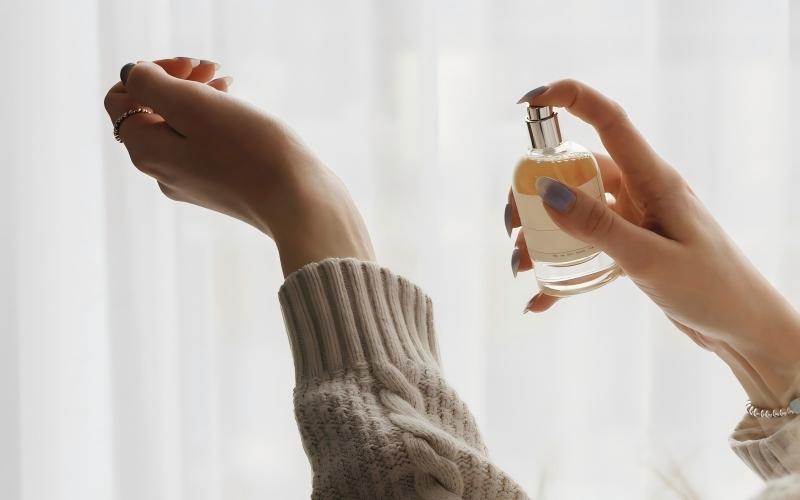
It’s important to note that longevity varies by application.
Factors affecting performance include:
Skin type (dry vs oily skin): The sebum on the surface of oily or oily skin can “capture” fragrance molecules and slow down their evaporation, so the fragrance is usually longer-lasting and more mellow. On the other hand, dry skin lacks oil, so fragrance molecules evaporate more easily, and the fragrance tends to spread and dissipate quickly, resulting in a shorter overall scent duration.
Climate and humidity: In high-temperature, high-humidity environments (such as the Middle East and Southeast Asia), the aroma diffuses faster and the top notes are more pronounced, but the overall evaporation rate is also faster, requiring higher standards for formulation stability and base note design. In low-temperature, dry environments (such as European winters), the fragrance diffuses more slowly, but the base notes linger longer, and woody, amber, and musky notes are more stable.
Product format: Perfume isn’t limited to just being sprayed on the skin; different carriers significantly impact its longevity.
- Fine Fragrance/Eau de Cologne: Applyed directly to the skin, its longevity is most significantly affected by skin type.
- Body Spray/Deodorant Products: Lower fragrance concentration, emphasizing freshness, typically with a shorter lasting time.
- Personal Care Products (Shower Gel, Lotion, Shampoo): The fragrance needs to leave a “lingering impression” after rinsing or dilution, requiring higher standards for ingredient selection and formula stability.
- Home Furnishings (Candles, Diffusers, Air Fresheners): Not in contact with the skin; longevity depends on evaporation control, diffusion systems, and ambient air circulation.
At Scentake, longevity is engineered—not guessed.
Our fragrance development process focuses on:
Strategic base construction for lasting performance
Carefully selected fixatives and stable raw materials
IFRA-compliant formulations across applications
Performance testing under real-use conditions
Whether for fine fragrance, personal care, or home scent products, we help partners create fragrances that last on skin, in memory, and in the market.
If you are developing perfumes or scented products and need reliable, long-lasting fragrance solutions that meet global market expectations, Scentake is ready to support your next project.
Contact Scentake today to discuss custom fragrance development, bulk supply, or performance-focused formulations.
Because lasting impact starts with smart formulation.