
What Are the Most Common Fragrance Allergens?
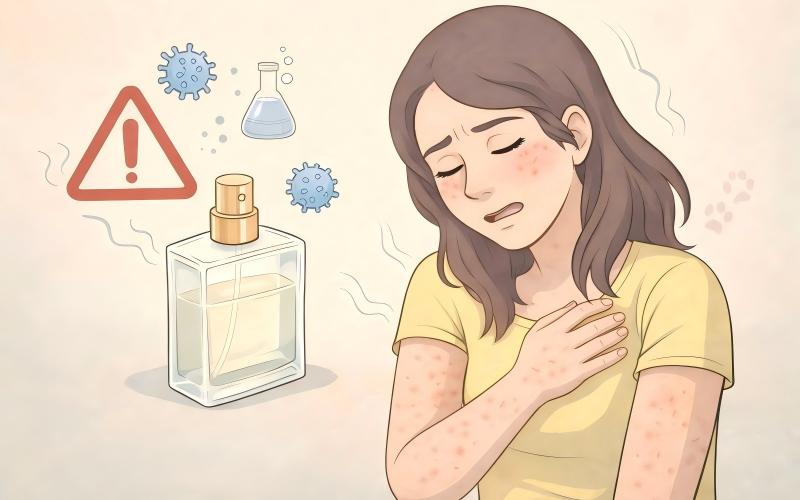
Fragrance is designed to delight.
Yet for a small share of consumers, it can also provoke irritation, sensitivity, or full allergic contact dermatitis. The issue is not rare enough to ignore and not simple enough to wave away with a label claim. For brands selling perfumes, body care, home fragrance, or private-label cosmetic products, fragrance allergens sit at the intersection of product safety, regulatory disclosure, formulation strategy, and commercial trust.
This topic matters commercially. It also matters reputationally.
The U.S. FDA lists fragrances among the common allergen classes found in cosmetics, and notes that cosmetic products can trigger allergic reactions in some people, often showing up as itchy, red skin rashes consistent with contact dermatitis. IFRA, the global fragrance industry body, states that fragrance allergens can provoke skin sensitisation in a small fraction of users and points to dermatology surveillance suggesting that fewer than three percent of people develop a fragrance allergy.
So the practical question for brands is straightforward: which fragrance allergens appear most often, and what should a responsible manufacturer do about them?
Why Fragrance Allergens Deserve Serious Attention
A fragrance formula may contain dozens or even hundreds of components. Some are present at trace levels. Some are key character materials. A handful are recognised as sensitisers and therefore need careful management.
That has consequences far beyond the laboratory.
Retailers increasingly request allergen transparency. Importers ask for IFRA certificates. Regulatory teams want documentation aligned with the target market. Consumers, meanwhile, are reading labels more closely than they did a decade ago. In the United States, fragrance mixtures can usually appear on cosmetic labels simply as “fragrance,” because fragrance formulas are treated as trade secrets under cosmetic ingredient labelling rules. The FDA also notes that it does not have the same legal authority to require allergen labelling for cosmetics as it does for food. In the European Union, the approach is far more granular: the European Commission has a dedicated framework for fragrance allergen labelling in cosmetics, and Regulation (EU) 2023/1545 amended the Cosmetics Regulation specifically on this point.
That divergence alone is enough to complicate global product development.
What a Fragrance Allergen Actually Is
A fragrance allergen is a fragrance ingredient that may trigger an allergic reaction in susceptible individuals. Usually this presents as skin sensitisation after repeated or sufficient exposure. The chemistry can be natural, synthetic, or nature-identical. The source does not grant immunity.
That distinction is important.
Many commercially important allergens come from essential oils or naturally derived aromatic materials. Linalool, limonene, citral, eugenol, citronellol, and geraniol are familiar examples. They are widely used because they smell beautiful, functional, and recognisable. They are also well known in allergen discussions. The FDA’s cosmetic allergen information specifically references a list of commonly cited fragrance allergens drawn from the EU framework, including benzyl alcohol, benzyl benzoate, benzyl salicylate, cinnamaldehyde, citral, citronellol, coumarin, eugenol, farnesol, geraniol, limonene, linalool, oak moss extract, and tree moss extract, among others.
In other words, “natural” does not automatically mean low-risk.
And “synthetic” does not automatically mean high-risk.
The Most Common Fragrance Allergens Brands Encounter
Certain allergens appear repeatedly across fine fragrance, personal care, and scented consumer goods because they are deeply embedded in perfumery itself. They are effective materials. They are also materials that require discipline.
Linalool
Linalool is one of the most common fragrance substances in modern perfumery. It appears naturally in lavender, coriander, basil, rosewood, and many floral or citrus-adjacent materials. Its scent profile is soft, airy, lightly floral, and faintly woody. Perfumers value it because it adds lift and elegance without becoming shrill.
From a commercial perspective, linalool is everywhere. Floral perfumes use it. Fresh shampoos use it. Skin-care scents use it. That ubiquity explains why it shows up repeatedly in allergen labelling discussions. The concern becomes more pronounced when oxidation occurs, because oxidised fragrance materials can create greater sensitisation risk than the fresh raw material alone.
Limonene
Limonene is strongly associated with citrus freshness. It is present in orange, lemon, lime, and other citrus oils, and it contributes the sparkling, juicy, immediate quality many consumers associate with cleanliness and energy. It is highly attractive from a sensory standpoint. It is also highly common.
For brands, limonene is a classic formulation paradox: excellent for consumer appeal, widely familiar, and relatively economical in many applications, yet one that must be handled carefully in terms of oxidation, storage, and declaration. Again, the problem is not the smell. The problem is unmanaged exposure and poor stability discipline.
Citral
Citral contributes a sharp lemon character and is heavily used in citrus, verbena, lemongrass, and green-fresh accords. It brings crispness and recognisability. It can also contribute to sensitivity concerns in vulnerable consumers. Citral is therefore a material that frequently appears in both technical documentation and label disclosure conversations.
Citronellol and Geraniol
These two are staples in floral perfumery. Rose accords rely on them. So do many muguet, peony, and fresh-floral profiles. They are commercially attractive precisely because they smell familiar and beautiful. Yet familiarity does not erase regulatory responsibility. Their presence needs to be tracked, especially when natural oils introduce them as constituents rather than explicitly added single ingredients.
Eugenol and Isoeugenol
Clove-like, warm, and spicy, these materials bring depth and ornamental detail to carnation accords, spicy florals, and certain oriental structures. They are useful in fine fragrance and in richer personal-care scents, but they sit in a higher-attention category because their sensitisation profile has been discussed for years in both safety and regulatory circles.
Coumarin
Coumarin gives perfumes a soft, hay-like, almond-vanilla warmth. It is foundational in fougère, gourmand, and fabric-care profiles. Commercially, it is a star. Compliance-wise, it is a material worth monitoring closely. Its presence often supports the emotional comfort consumers love in fragrance, especially in laundry, home care, and skin-close formats.
Benzyl Alcohol, Benzyl Benzoate, and Benzyl Salicylate
These materials are common in floral and balsamic structures and often play dual roles as scent ingredients or technical helpers within a formula. Their inclusion on allergen lists matters because they can appear both as deliberately dosed ingredients and as natural constituents in extracts. That dual origin makes accurate specification work especially important for B2B manufacturing.
Oak Moss and Tree Moss Extracts
These are legendary materials in classical perfumery. They give chypres and fougères their shadow, dryness, and sophisticated gravitas. They also occupy a high-regulation zone. Their use has been heavily shaped by safety and restriction history, and many modern formulas rely on reconstitutions or low-allergen alternatives to preserve the aesthetic while reducing risk. The FDA still lists oak moss extract and tree moss extract among fragrance allergens commonly cited from the EU approach.
Why the Regulatory Picture Keeps Shifting
The allergen conversation is not static.
The European Commission’s fragrance allergen labelling framework has evolved significantly, and Commission Regulation (EU) 2023/1545 amended the Cosmetics Regulation on fragrance allergen labelling. Industry summaries of that amendment explain that the EU expanded the declarable fragrance allergen list beyond the long-familiar 24/26-substance scheme, with low thresholds for leave-on and rinse-off products. Meanwhile, IFRA emphasises that fragrance safety depends on exposure management, risk assessment, and continuously updated standards, and that the resulting IFRA Standards serve as a global benchmark for safe fragrance use.
A perfume for the EU, a body mist for Southeast Asia, and a fabric spray for the Gulf market may all need different compliance logic even if the scent direction begins from the same accord family.
How Fragrance Allergens Affect Product Development
In practice, fragrance allergens influence development in four major ways.
1. Formula Construction
A perfumer may love a raw material. A compliance team may need it reduced. A commercial team may still want the same scent signature. That tension is common. It often leads to reformulation, substitution, or accord rebuilding.
Good fragrance development anticipates this early. Poor fragrance development discovers it late, usually after samples have already impressed someone in sales.
2. Label Strategy
If a market requires disclosure of specific allergens above threshold, the ingredient list changes. That affects artwork, carton space, translations, and legal review. On a small package, this is not trivial.
3. Stability and Oxidation Management
Some fragrance allergens become more problematic after oxidation. This means antioxidant strategy, packaging choice, headspace management, and shelf-life testing all matter. The raw material may be compliant on paper and problematic in practice if the final system is unstable.
4. Consumer Perception and Claims
Consumers increasingly notice words such as “sensitive,” “gentle,” “fragrance-free,” or “hypoallergenic.” The FDA has already warned that “hypoallergenic” can mislead consumers because there is no federal standard proving such products cause fewer reactions. Claims therefore need restraint, accuracy, and legal review. In fragrance, overstatement is expensive.
What Smart Brands Usually Do
The strongest fragrance businesses tend to follow a few sensible principles.
They ask for IFRA certificates early.
They request full allergen data from suppliers.
They design with the destination market in mind.
They avoid romantic assumptions about “all-natural” positioning.
They treat fragrance as a compliance-sensitive category from day one.
This approach saves time. It also saves reformulation budgets, label reprints, customs friction, and difficult conversations with distributors.
Where Scentake Fits In
At Scentake, fragrance development is approached with both olfactory intelligence and regulatory sobriety. We understand that a successful scent must smell right, perform well, document cleanly, and travel across markets with minimal friction.
Our work supports brands that need:
- customised fragrance development
- allergen-conscious formulation planning
- IFRA-aligned fragrance solutions
- private-label and OEM support
- commercially realistic scent profiles for global markets
That combination matters. A fragrance can be beautiful and problematic at the same time. The goal is elegance with control.
If your team is developing perfumes, body care, home fragrance, or scented functional products and you need a manufacturing partner who understands both scent creation and compliance reality, Scentake is ready to help.
Contact Scentake today to discuss your fragrance project, request technical support, or explore allergen-aware scent development for your target market.