



Floral 3(1)

Citronellol

Citronellol is a natural monoterpene alcohol, primarily found in the essential oils of plants such as citronella, lemongrass, and rose, possessing a fresh, sweet citrus aroma. Citronellol is widely used not only in perfumes, personal care products, and detergents, but also in mosquito repellents due to its natural insect-repellent properties. It exhibits multiple biological activities, including antibacterial, antioxidant, and anti-inflammatory properties, thus finding wide application in skincare.

Type

Floral

Based on rose and lily of the valley floral notes, with a distinctly fresh fruity quality.

Acquisition Methods

Natural extraction or chemical synthesis

Extracted from plants such as thatch, lemongrass, and rose, or chemically synthesized.

Basic Information

English nameCitronellol
Common Industry NameCitronellol
Chemical CategoryMonoterpene Alcohol
Molecular FormulaC10H20O
Molecular Weight156.27 g/mol
CAS Number106-22-9
AppearanceColorless to pale yellow liquid

Technical Data

Boiling Point 230°C
Flash Point 90°C
Refractive Index (20°C) 1.463 – 1.465
Density (20°C) 0.855 – 0.860 g/cm³
Solubility Soluble in alcohols, ethers, and most vegetable oils; insoluble in water
Stability Stable, but should be stored away from light and protected from prolonged exposure to air.


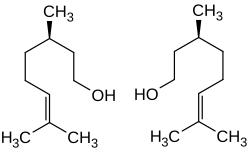
Chemical Structure

C10H20O
14.Citronellol

Fragrance Characteristics

Fragrance Characteristics A fresh citrus scent with subtle hints of rose and woody notes.
Fragrance Family Position Middle to Base Notes
Common Pairings Best paired with citrus notes (such as lemon and orange blossom), rose, lavender, and vanilla.
Applications Widely used in perfumes, personal care products (such as shower gels, shampoos, and face creams), insect repellents, air fresheners, and cleaning agents.


Safety and Compliance

IFRA Guidelines The use of citronellol in fragrances and personal care products follows IFRA limits.
Stability Stable under normal conditions; avoid exposure to sunlight and high temperatures during storage.
Allergy Risk Some sensitive individuals may experience allergic reactions to citronellol, especially at higher concentrations.

Application Highlights

  • Citronellol is a known natural insect repellent ingredient, commonly used in mosquito and insect repellent products to provide natural protection.
  • Citronellol’s fresh citrus scent makes it a key ingredient in many cleaning products, providing a fresh and clean fragrance experience.
  • Citronellol has natural antibacterial and antioxidant properties, effectively extending product shelf life and providing additional anti-inflammatory effects in skin care.
  • Citronellol is not only a fragrance ingredient but also widely used in beauty and skincare products due to its excellent antibacterial and antioxidant properties.

Get in Touch

Interested in learning more about our products, solutions or our company? We are happy to support!

More Ingredients

Woody 3(1)

Ambroxan

Ambroxan Ambroxan is a high-impact amber–woody aroma chemical renowned for its exceptional fixative power, diffusion, and longevity. Originally developed as a sustainable alternative to natural

Read More »
Woody 3(1)

Iso E Super

Iso E Super Iso E Super is a synthetic fragrance ingredient with a soft woody, amber-like quality and velvety sillage. While its scent is understated,

Read More »
Fruity 1(1)

Isoamyl Acetate

Isoamyl Acetate Isoamyl acetate is an ester aroma component with a distinct banana and tropical fruit scent. Its aroma is lively and diffuses quickly, making

Read More »
Woody 3(1)

Angelica Lactone α

Angelica Lactone α Angelica Lactone α is a lactone aroma compound with warm, creamy, slightly caramel and root notes, often used to enhance the naturalness,

Read More »
Woody 3(1)

Ethyl Vanillin

Ethyl Vanillin Ethyl vanillin is an aromatic aldehyde with a stronger and sweeter vanilla scent. Its aroma intensity is significantly higher than that of vanillin.

Read More »
Woody 3(1)

Vanillin

Vanillin Vanillin is an aromatic aldehyde with a sweet, soft, and typical vanilla scent. It is one of the most basic and crucial structural ingredients

Read More »
Woody 3(1)

Coumarin

Coumarin Coumarin is a lactone aroma compound with warm, sweet, hay- and almond-like notes. It is a key structural ingredient in classic oriental, fougère, and

Read More »
Woody 3(1)

Cinnamaldehyde

Cinnamaldehyde Cinnamaldehyde is an aromatic aldehyde with a warm, spicy, and sweet cinnamon scent. It is an indispensable core ingredient in oriental, spicy, and festive

Read More »
Floral 3(1)

Cinnamyl Alcohol

Cinnamyl Alcohol Cinnamyl alcohol is an aromatic alcohol with a warm, slightly sweet, and floral cinnamon-like scent. Its aroma is milder and less pungent than

Read More »
Fruity 1(1)

Citral

Citral Citral is a linear aldehyde aroma component with a strong, fresh lemon scent. Its aroma is bright, clean, and highly sillage, making it a

Read More »
Floral 3(1)

Indole

Indole Indole is a nitrogen-containing heterocyclic aromatic compound, originally discovered in indigo dye, and naturally found in various plants (such as jasmine and orange blossom)

Read More »
Fruity 1(1)

Methyl Anthranilate

Methyl Anthranilate Methyl anthranilate is a classic fragrance molecule that combines natural notes with precise laboratory synthesis. It is naturally found in orange blossom, grape,

Read More »