

Methyl Anthranilate
Methyl anthranilate is a classic fragrance molecule that combines natural notes with precise laboratory synthesis. It is naturally found in orange blossom, grape, and jasmine, thus possessing a familiar fruity-floral blend. The initial scent evokes the sweet juice of ripe grapes, followed by a light floral note reminiscent of orange blossom and a delicate powdery texture. Often called the “soul of grape fragrances,” it can impart a realistic fruity quality to food and beverages, and create a romantic, soft, and slightly mysterious atmosphere in perfumes.
Type
Fruity
Characterized by grapes, purple grape juice, and grape soda, with hints of orange blossom and jasmine.
Acquisition Methods
Natural extraction or chemical synthesis
It can be extracted from orange blossom oil, grape skins, and jasmine flowers, or it can be prepared by esterification of anthranilic acid with methanol.
Basic Information
| English Name | Methyl Anthranilate |
| Common Industry Names | MA, Grape Flavor Ester, Methyl Jasmonate, Methyl Neroli, Methyl Anthranilate/Methyl Anthranilate, Grape Ester |
| Chemical Category | Esters (Aromatic Esters) |
| Molecular Formula | C₈H₁₈NO₂ |
| Molecular Weight | 151.16 g/mol |
| CAS Number | 134-20-3 |
| Appearance | Colorless to pale yellow liquid |
Technical Data
| Boiling Point | 256 °C |
| Flash Point | > 110 °C |
| Refractive Index (20 °C) | 1.583 – 1.587 |
| Density (20 °C) | 1.168 g/cm³ |
| Solubility | Soluble in ethanol and propylene glycol; insoluble in water |
| Stability | Stable at room temperature and protected from light; avoid contact with strong oxidizers. |
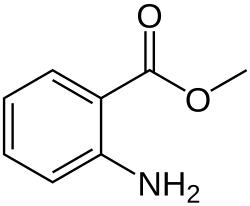
Chemical Structure
Fragrance Characteristics
| Aroma Characteristics | Sweet and rich, with notes of grape, orange blossom, and jasmine, slightly powdery. |
| Fragrance Notes | Middle to Base |
| Common Pairings | Orange blossom oil, rose, violet, ylang-ylang, fruity molecules (isoamyl acetate, methyl phenylacetate, etc.) |
| Applications | High-end perfumes, fruity fragrances (grape, orange), chewing gum, beverage and confectionery flavoring |
Safety and Compliance
| IFRA Guidelines | Maximum concentration limits exist for certain fragrance categories (especially oral and skin contact products). |
| Stability | May decompose under acidic or alkaline conditions; store away from light and in a sealed container. |
| Allergy Risk | Generally considered low allergy risk, but IFRA safe usage guidelines must be followed. |
Application Highlights
- The “Soul of Grapes” in Food Flavors: It’s the core ingredient in grape-flavored fragrances, found in almost all commercially available grape-scented products.
- The Finishing Touch in Perfumes: Not only can it provide floral-fruity notes on its own, but it can also subtly blend floral and fruity aromas, making the overall scent more natural and mellow.
- Cross-Industry Value: It serves both the authentic fruity aroma needs of the food industry and the artistic expression required in perfumery, truly bridging the senses of taste and smell.
- Enhancing Pleasure: Due to its bright and sweet scent, it’s often used in fragrance products associated with happiness and relaxation.
Get in Touch
More Ingredients

Ambroxan
Ambroxan Ambroxan is a high-impact amber–woody aroma chemical renowned for its exceptional fixative power, diffusion, and longevity. Originally developed as a sustainable alternative to natural

Iso E Super
Iso E Super Iso E Super is a synthetic fragrance ingredient with a soft woody, amber-like quality and velvety sillage. While its scent is understated,

Isoamyl Acetate
Isoamyl Acetate Isoamyl acetate is an ester aroma component with a distinct banana and tropical fruit scent. Its aroma is lively and diffuses quickly, making

Angelica Lactone α
Angelica Lactone α Angelica Lactone α is a lactone aroma compound with warm, creamy, slightly caramel and root notes, often used to enhance the naturalness,

Ethyl Vanillin
Ethyl Vanillin Ethyl vanillin is an aromatic aldehyde with a stronger and sweeter vanilla scent. Its aroma intensity is significantly higher than that of vanillin.

Vanillin
Vanillin Vanillin is an aromatic aldehyde with a sweet, soft, and typical vanilla scent. It is one of the most basic and crucial structural ingredients

Coumarin
Coumarin Coumarin is a lactone aroma compound with warm, sweet, hay- and almond-like notes. It is a key structural ingredient in classic oriental, fougère, and

Cinnamaldehyde
Cinnamaldehyde Cinnamaldehyde is an aromatic aldehyde with a warm, spicy, and sweet cinnamon scent. It is an indispensable core ingredient in oriental, spicy, and festive
Cinnamyl Alcohol
Cinnamyl Alcohol Cinnamyl alcohol is an aromatic alcohol with a warm, slightly sweet, and floral cinnamon-like scent. Its aroma is milder and less pungent than

Citral
Citral Citral is a linear aldehyde aroma component with a strong, fresh lemon scent. Its aroma is bright, clean, and highly sillage, making it a

Indole
Indole Indole is a nitrogen-containing heterocyclic aromatic compound, originally discovered in indigo dye, and naturally found in various plants (such as jasmine and orange blossom)

Methyl Anthranilate
Methyl Anthranilate Methyl anthranilate is a classic fragrance molecule that combines natural notes with precise laboratory synthesis. It is naturally found in orange blossom, grape,