
A Simplified Guide To Using The Fragrance Wheel
Why the Fragrance Wheel Still Helps
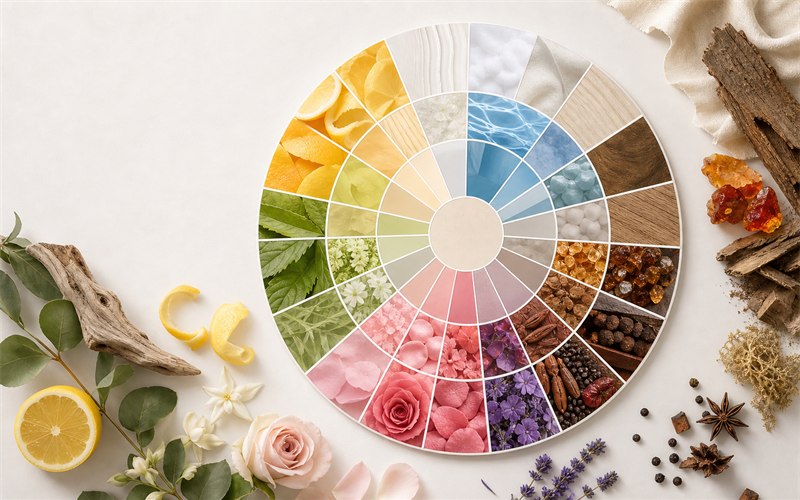
The fragrance wheel is a simple map for a complicated sensory world. It groups scents into families and neighboring styles so people can describe what they smell with more precision than nice, fresh, sweet, or strong.
For consumers, the wheel helps connect preference patterns. If you like citrus aromatic colognes, you may also enjoy green, aquatic, or light woody fragrances. If you love vanilla amber, you may also enjoy resinous, spicy, gourmand, or musky drydowns.
For brands, the wheel is a practical briefing tool. It gives marketing, purchasing, formulation, and sampling teams a shared language before a fragrance supplier begins development.
The Main Idea: Families, Neighbors, and Contrast
A fragrance family is a broad smell category. Floral, woody, amber, fresh, aromatic, citrus, fruity, green, gourmand, chypre, and fougere are all common ways to describe perfume territory. Different wheels use slightly different names, yet the purpose is the same.
Neighboring families usually blend smoothly. Citrus can slide into aromatic herbs. Florals can move toward fruity, powdery, green, or amber directions. Woods can connect with mossy chypre, dry vetiver, smoky incense, or creamy sandalwood.
Contrast is equally useful. A sweet vanilla perfume may need citrus or dry woods to avoid heaviness. A green floral may need musk or amber to feel wearable. The wheel helps teams see those relationships faster.
How Consumers Can Use It When Choosing Perfume
Start by naming three perfumes you already enjoy, then look for their common family. Are they fresh citrus, soft musk, white floral, woody amber, sweet gourmand, or powdery floral? A pattern usually appears.
Next, test nearby families. Someone who likes clean musks may enjoy airy florals, soft woods, or laundry-style aldehydes. Someone who likes ambery perfumes may also enjoy vanilla, resin, spice, tonka, or incense directions.
Use the wheel to avoid blind buying mistakes. A person asking for floral might mean fresh rose, creamy white flowers, powdery violet, tropical ylang ylang, or sweet fruity petals. Those are very different experiences.
How Brands Can Use It in Product Development
A clear brief should define the family, the emotional tone, the product format, and the target customer. Fresh floral for shampoo, woody amber for eau de parfum, citrus aromatic for men’s grooming, and soft musk for body lotion are not interchangeable requests.
The wheel also helps product teams build a balanced collection. A candle line might include fresh, floral, woody, gourmand, and resinous directions. A body mist range might use citrus, fruity floral, clean musk, tea, and light vanilla to cover different moods.
When a buyer says a sample is too heavy, too sweet, too mature, or too sharp, the wheel can guide the next revision. Move toward fresh, woody, musky, powdery, spicy, or green instead of rewriting the whole project blindly.
Common Families in Plain Language
Fresh scents include citrus, aquatic, green, and airy notes. They feel clean, bright, transparent, and easy to wear.
Floral scents range from rose and jasmine to orange blossom, tuberose, iris, violet, and rare-bloom fantasy accords. A deeper overview of the floral family in perfumery can help buyers separate petal styles from creamy white flowers or powdery blooms.
Woody scents include cedar, sandalwood, vetiver, patchouli, dry woods, and modern amber woods. Amber and gourmand scents bring warmth through vanilla, resins, tonka, caramel, chocolate, spice, or balsamic materials.
Where Notes and Ingredients Fit
The fragrance wheel describes smell families, while a formula is built from ingredients and accords. A rose note may use natural rose, rose molecules, geranium facets, fruit nuances, musk, and woods. A sandalwood effect may use natural oil, fractions, or sandalwood-like aroma molecules.
This distinction matters for pricing and performance. A brand may request a natural-feeling citrus floral, while the perfumer chooses the safest and most stable blend for the target product. The article on what fragrance ingredients are made of explains this practical difference.
A good wheel-based brief should describe the desired smell, then let the technical team decide how to reach it responsibly.
Safety and Category Fit
A fragrance family does not determine safety by itself. A light citrus body mist, a strong spice perfume oil, a floral lotion, and a candle all need different technical checks. IFRA Standards guide safe use by product category.
If a product is a cosmetic, brands also need allergen declarations and label review for the destination market. This is why fragrance selection should happen alongside documentation, stability, and packaging checks rather than after the scent is already approved.
For consumers, the wheel is a preference tool. For manufacturers, it is one part of a larger development process.
A Simple Way to Brief Scentake
When briefing Scentake, choose one main family, one supporting family, and three mood words. For example: fresh floral, supported by clean musk, with a soft, youthful, watery mood. Or woody amber, supported by spice, with a warm, premium, long-lasting mood.
Add the product base, price target, target market, and any banned or preferred notes. If you already have a reference perfume, explain what you like about it rather than asking for a copy.
Scentake can help turn that wheel language into samples, revisions, and production-ready fragrance concentrate. To begin a new brief, contact Scentake with your product format and scent direction.