


Farnesol
Farnesol is a natural terpene alcohol with a sweet floral and woody aroma, widely used in perfumes, cosmetics, and personal care products. It is primarily extracted from the essential oils of plants such as rose, orange blossom, and lemongrass, and is a core ingredient in many plant fragrances. Due to its excellent aroma properties and bioactivities such as antibacterial and antioxidant effects, farnesol has become an indispensable ingredient in the fragrance and cosmetics industry.
Farnesol exhibits good stability and fragrance longevity, therefore it is often used in middle and base notes, especially in floral and woody perfumes, where it adds rich layers of complexity. Furthermore, the application of farnesol in skin care products is gradually increasing, as its natural antioxidant and anti-inflammatory properties provide a soothing effect for sensitive skin.
Type
Floral
Similaring to white flowers, lily of the valley, and orange blossom, with a soft herbal note.
Acquisition Methods
Natural extraction or chemical synthesis
Extracted from plants such as rose, orange blossom, lemongrass, and rosemary or chemically synthesized.
Basic Information
| English Name | Farnesol |
| Common Industry Names | Farnesol, trans-farnesol |
| Chemical Category | Terpene Alcohol |
| Molecular Formula | C15H24O |
| Molecular Weight | 222.36 g/mol |
| CAS Number | 4602-84-0 |
| Appearance | Colorless to pale yellow liquid |
Technical Data
| Boiling Point | 273°C |
| Flash Point | 107°C |
| Refractive Index (20°C) | 1.490 – 1.500 |
| Density (20°C) | 0.888 – 0.890 g/cm³ |
| Solubility | Soluble in alcohols, ethers, and oils; slightly soluble in water |
| Stability | Stable at room temperature, but may oxidize with prolonged exposure to air. |
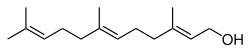
Chemical Structure
Fragrance Characteristics
| Aroma Characteristics | A blend of sweet floral and woody notes with delicate fruity undertones. |
| Fragrance Family Position | Middle to Base Notes |
| Common Pairings | Often paired with rose, citrus, vanilla, sandalwood, and other aromatic compounds. |
| Applications | Widely used in perfumes, cosmetics (such as lotions and creams), personal care products, and cleansers. |
Safety and Compliance
| IFRA Guidelines | The use of Farnesol in fragrances and cosmetics is strictly regulated, and compliance with IFRA standards is recommended. |
| Stability | Stable under proper storage conditions, but exposure to high temperatures and strong light should be avoided. |
| Allergy Risk | At high concentrations, Farnesol may trigger allergic skin reactions in some sensitive individuals. |
Application Highlights
- Natural Antibacterial Properties: Farnesol possesses antibacterial properties, which can be used to prevent bacterial growth in cosmetics and extend product shelf life.
- Fragrance Balancing: It enhances floral and fruity notes in perfumes and adds a warm woody base.
- Skin Soothing: Due to its natural composition, Farnesol is often used in skin care products with soothing and anti-inflammatory effects.
- Multifunctionality in Cosmetics: In addition to fragrances, Farnesol is widely used in cosmetics for its antioxidant and anti-inflammatory properties.
Get in Touch
More Ingredients

Ambroxan
Ambroxan Ambroxan is a high-impact amber–woody aroma chemical renowned for its exceptional fixative power, diffusion, and longevity. Originally developed as a sustainable alternative to natural

Iso E Super
Iso E Super Iso E Super is a synthetic fragrance ingredient with a soft woody, amber-like quality and velvety sillage. While its scent is understated,
Isoamyl Acetate
Isoamyl Acetate Isoamyl acetate is an ester aroma component with a distinct banana and tropical fruit scent. Its aroma is lively and diffuses quickly, making

Angelica Lactone α
Angelica Lactone α Angelica Lactone α is a lactone aroma compound with warm, creamy, slightly caramel and root notes, often used to enhance the naturalness,

Ethyl Vanillin
Ethyl Vanillin Ethyl vanillin is an aromatic aldehyde with a stronger and sweeter vanilla scent. Its aroma intensity is significantly higher than that of vanillin.

Vanillin
Vanillin Vanillin is an aromatic aldehyde with a sweet, soft, and typical vanilla scent. It is one of the most basic and crucial structural ingredients

Coumarin
Coumarin Coumarin is a lactone aroma compound with warm, sweet, hay- and almond-like notes. It is a key structural ingredient in classic oriental, fougère, and

Cinnamaldehyde
Cinnamaldehyde Cinnamaldehyde is an aromatic aldehyde with a warm, spicy, and sweet cinnamon scent. It is an indispensable core ingredient in oriental, spicy, and festive

Cinnamyl Alcohol
Cinnamyl Alcohol Cinnamyl alcohol is an aromatic alcohol with a warm, slightly sweet, and floral cinnamon-like scent. Its aroma is milder and less pungent than

Citral
Citral Citral is a linear aldehyde aroma component with a strong, fresh lemon scent. Its aroma is bright, clean, and highly sillage, making it a

Indole
Indole Indole is a nitrogen-containing heterocyclic aromatic compound, originally discovered in indigo dye, and naturally found in various plants (such as jasmine and orange blossom)

Methyl Anthranilate
Methyl Anthranilate Methyl anthranilate is a classic fragrance molecule that combines natural notes with precise laboratory synthesis. It is naturally found in orange blossom, grape,