
Fragrance Allergy vs Fragrance Sensitivity: What Brands and Consumers Should Know

Two Similar Words That Need Different Responses
Fragrance allergy and fragrance sensitivity are often used as if they mean the same thing. They can overlap in everyday conversation, yet they point to different problems.
A fragrance allergy usually involves an immune reaction, often visible on skin as allergic contact dermatitis. Fragrance sensitivity is broader. It may involve headache, nausea, eye irritation, throat discomfort, migraine triggers, or a strong sensory reaction to scent.
This distinction matters for consumers choosing products and for brands writing claims, labels, and customer guidance. Clear language prevents confusion and helps people make safer decisions.
How Allergy and Sensitivity Differ
An allergy is usually diagnosed through a medical process, often including patch testing when skin symptoms are involved. Sensitivity may be harder to measure because symptoms can be sensory, respiratory, or neurological.
A person can be sensitive to strong smells without having a fragrance allergy. Another person can have a confirmed allergy to a specific fragrance allergen and still tolerate many low-scent environments.
| Topic | Fragrance allergy | Fragrance sensitivity |
|---|---|---|
| Typical pattern | Immune response to one or more allergens. | Lower tolerance to scent intensity or certain odor profiles. |
| Common symptoms | Rash, itching, redness, swelling, eczema flare. | Headache, nausea, dizziness, eye or throat discomfort. |
| Testing | Patch testing may identify allergens. | Often based on symptom pattern and exposure history. |
| Best response | Avoid confirmed allergens and follow medical advice. | Reduce exposure, ventilation, dosage, and triggering scent styles. |
| Brand focus | Accurate allergen documentation and compliant labels. | Clear use guidance and lower-projection product options. |
What Fragrance Allergy Can Look Like
Fragrance allergy most often appears after skin contact. A leave-on product such as perfume, lotion, deodorant, aftershave, hair product, or scented balm may trigger itching, redness, rash, or eczema-like patches.
The reaction may appear hours or days after exposure, which can make the cause difficult to identify. A person may blame the newest perfume, while the real trigger could be a scented soap, laundry product, or body cream used repeatedly.
People with repeated or severe skin reactions should speak with a dermatologist or qualified clinician. Guesswork can lead to unnecessary avoidance or continued exposure to the wrong trigger.
What Fragrance Sensitivity Can Feel Like
Fragrance sensitivity may feel immediate. A strong scent in a car, elevator, office, hotel lobby, or store can trigger headache, nausea, coughing, throat tightness, watery eyes, or a migraine-like response in some people.
The reaction may depend on dose, room size, ventilation, stress, fatigue, and the fragrance profile. Heavy sweet ambers, strong musks, sharp aldehydes, smoke notes, and dense white florals are common complaints, although every person is different.
Sensitivity is real even when it does not show up as a visible rash. The practical solution is exposure control, lower dosage, fragrance-free breaks, and respectful shared-space behavior.
Patch Testing and Medical Evaluation
Patch testing is commonly used to investigate allergic contact dermatitis. Small amounts of potential allergens are applied under controlled conditions, then evaluated by a clinician over time.
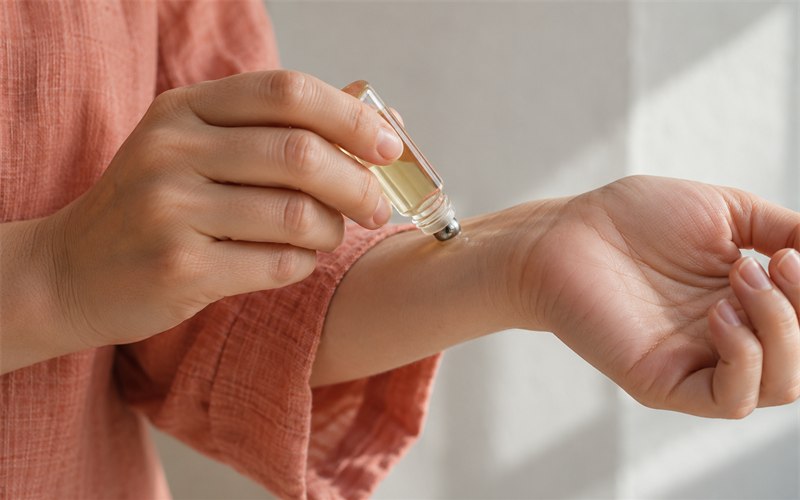
Patch testing is different from spraying perfume on the wrist in a store. A retail skin test can reveal immediate irritation or dislike, yet it cannot diagnose allergy.
For breathing symptoms, migraine, or strong systemic reactions, a clinician may evaluate other factors. Fragrance advice online should support professional care, not replace it.
Why Allergen Labelling Matters
Fragrance formulas contain many materials, and some are recognized allergens. In cosmetics, brands need documentation that supports safe use, market-specific labels, and consumer transparency.
The EU has expanded fragrance allergen labelling requirements through Regulation (EU) 2023/1545, increasing the number of fragrance allergens that may need declaration when thresholds are met.
For brands, allergen declarations, IFRA compliance, SDS where relevant, and supplier communication are practical launch tools. They also help customer service answer questions with confidence.
Practical Advice for Consumers
If you suspect allergy, stop using the product and keep a list of scented products that touched the affected area. Bring product names and ingredient lists to a clinician if symptoms continue.
If you suspect sensitivity, reduce exposure before changing everything at once. Use fewer sprays, apply away from the face, choose softer projection, ventilate rooms, and avoid testing many perfumes in one day.
Sample first when possible. A blotter, a fabric test, and a small skin test on a low-stress day give better information than a rushed purchase in a scented store.
Practical Advice for Brands
Brands should avoid vague promises such as allergy-free or safe for everyone. A more responsible approach is to describe the product type, scent strength, intended use, and documentation available.
Offer fragrance-free companion products when appropriate. Provide clear usage instructions for strong perfumes, room sprays, diffusers, and leave-on body products.
For private-label products, build allergen review and label planning into the development timeline. Fixing compliance language after packaging is printed is expensive and stressful.
Where Scentake Helps
Scentake helps fragrance brands develop products with practical scent direction, documentation awareness, and market-fit positioning. We can support supplier communication, allergen documentation requests, formula adjustment, and private-label fragrance planning.
If your brand needs a fragrance line that balances appeal, comfort, compliance, and clear customer guidance, contact Scentake with your product category, market, and preferred scent profile.