
Why Perfume Smells Different on Different People: Skin Chemistry Explained

The Same Bottle Can Tell Two Different Stories
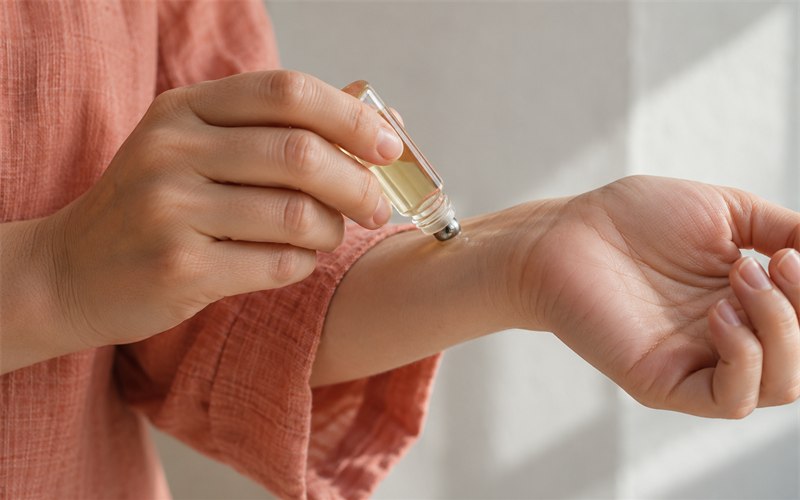
You smell a perfume on a friend and catch a clean cedar trail with a soft, musky warmth. On your own wrist, the opening feels brighter, the floral heart seems louder, and the drydown arrives sooner. That experience is common. A perfume formula is the same in the bottle, yet the smell that reaches your nose is shaped by the skin, the air around it, and the way the fragrance is worn.
The difference is rarely a mysterious chemical reaction that turns one perfume into another. More often, it is a shift in emphasis. Skin temperature, moisture, natural skin lipids, perspiration, body-care products, fabric, and climate can change how quickly materials evaporate and what they mingle with as the scent develops.
Core answer: perfume smells different on different people because a fragrance develops in a changing micro-environment. Skin condition, natural body odor, application habits, and surrounding temperature can alter the balance between the opening, heart, and base. The formula remains the same; the wearing experience can still feel distinctly personal.
What “Skin Chemistry” Really Means
Skin chemistry is a convenient everyday phrase, rather than one single ingredient or a fixed pH number that predicts every result. It describes the changing conditions at skin level: water, sebum, sweat, skin-surface microbes, residual cleanser or lotion, and heat. These conditions influence the evaporation and perception of volatile fragrance materials.
Natural body odor matters as well. Sweat itself is largely odorless, while microbial activity on skin can transform secreted precursors into odor-active molecules. That background odor does not need to be unpleasant to affect a perfume. A crisp citrus, clean musk, cumin nuance, or woody amber can read differently when it sits beside someone’s own scent signature.
The Factors That Change a Perfume on Skin
| Factor | What it can change | Practical implication |
|---|---|---|
| Skin temperature | Evaporation speed and projection | A warm wrist may make a bright opening bloom and fade faster. |
| Moisture and oil | How evenly materials spread and linger | Well-moisturized skin often gives a softer, more continuous drydown. |
| Body-care products | The scent background and compatibility | Unscented lotion gives a cleaner test than a strongly fragranced body wash. |
| Sweat and climate | Diffusion, intensity, and body-odor interaction | Heat can amplify a fragrance that feels restrained in cool weather. |
| Fabric and hair | Retention and delayed release | A scarf or shirt can preserve a different facet from bare skin. |
None of these factors guarantees a fixed outcome. A richer base built around musks, woods, resins, or fixative materials may remain noticeable for longer on some people, while a fresh composition can feel more transparent in dry air. Formula design, dosage, and product concentration still set the broad limits of performance.
Temperature changes the pace
Warm skin and warm weather generally increase volatility. Citrus, aromatic herbs, aldehydic effects, and some light florals may project more quickly, then move through their first stage faster. In cold conditions, the same perfume can seem quieter and more compact. This is one reason a fragrance sampled in an air-conditioned shop may behave differently during a humid commute.
Moisture and lipids change the wearing surface
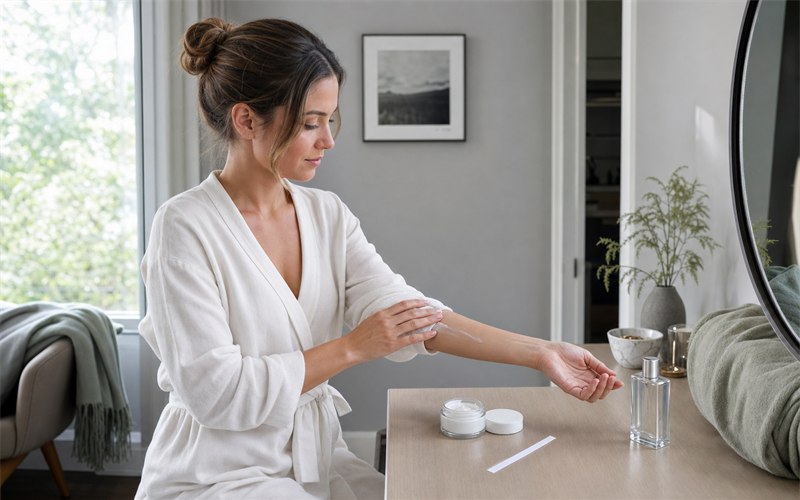
Dry skin can make a perfume feel more discontinuous: an energetic opening, followed by a quick drop in perceived presence. Applying an unscented moisturizer first often makes the test easier to read, because it removes one variable and helps create a more even surface. It is a practical adjustment, not a promise of longer wear for every formula.
Personal products create an accord of their own
Body wash, deodorant, sunscreen, hair products, and laundry fragrance may all sit near a perfume. A vanilla body lotion can make an amber perfume seem sweeter. A sharp floral deodorant can compete with a sheer white-floral fragrance. When comparing scents, use the same simple routine for each test whenever possible.
Why a Blotter Strip and a Wrist Give Different Answers
A blotter is useful because it shows the fragrance without the noise of personal products, perspiration, or body odor. It is a good first screen for identifying notes and checking whether the scent family appeals to you. Skin is the second, more realistic test: it adds warmth, movement, and your personal environment.
Treat both results as useful evidence. If a perfume is beautiful on a blotter but uncomfortable on your skin, that does not mean your skin has “ruined” it. It may mean the formula’s sweeter, more animalic, or more diffusive materials become more noticeable in your wearing conditions. That is valuable information before a full-bottle purchase or a product launch.

A Better Way to Test Perfume on Your Own Skin
- Start with clean skin and an unscented moisturizer if your skin feels very dry.
- Spray one fragrance on each wrist or forearm. Avoid testing more than two at once.
- Smell once after the opening settles, again after 30 to 60 minutes, and once more after several hours.
- Notice intensity, comfort, and the drydown rather than chasing a single “correct” version.
- Repeat the test on another day or in another temperature range before making a final decision.
Give the fragrance space. Rubbing wrists together can disturb the wet application and makes the first minutes harder to compare. The larger point is consistency: the more variables you control, the easier it is to learn whether you enjoy the perfume itself or only a particular moment of it.
Common Myths About Perfume and Body Chemistry
Myth: pH alone explains everything
Skin pH is only one part of the surface environment, and it is not a universal perfume-matching score. Moisture, temperature, product residue, body odor, and perception usually matter more in everyday wear. Avoid treating a pH claim as a reason to buy or reject a fragrance.
Myth: expensive perfume will smell good on everyone
Price can reflect materials, packaging, distribution, and brand position. It does not remove individual preference or make a dense accord suitable for every climate and wearing style. Sampling remains the most reliable route.
Myth: a different smell means a perfume is unsafe
A personal variation in scent character is not, by itself, a safety signal. Stop using any product that causes irritation or a suspected allergic reaction, and seek appropriate professional advice. For brands, compliance must be assessed for the complete formula, finished product, intended use, and target market; a single ingredient cannot establish that a product is compliant.
What This Means for Fragrance Brands and Product Developers
For a brand, variation between wearers is a product-development consideration, not a reason to make unrealistic promises. The strongest brief describes the desired experience in plain language: fresh or enveloping, intimate or projecting, dry or creamy, office-friendly or evening-led. It should also identify the product format, target climate, application area, and intended user.
B2B development note: test fragrance concentrates in the final product base, not only on a blotter. Alcohol perfume, body lotion, shower gel, hair mist, and fabric spray release materials differently. Include stability, odor, and user-panel feedback in the sample loop before approving a direction.
Scentake supports fragrance brands with scent briefs, sample evaluation, and development discussions that account for product base and use context. If you are building a fragrance line, bring the target market, format, scent direction, and performance expectations to the first conversation. That gives the development team something more useful than a request for a scent that “smells good on everyone.”
Frequently Asked Questions
Does perfume last longer on oily skin?
It can seem to, because skin moisture and lipids may support a smoother, slower-feeling development for some formulas. The effect varies with the composition, concentration, climate, and application. An unscented moisturizer is a simple way to test whether dry skin is affecting your own experience.
Can diet change how perfume smells?
Diet, health, medication, stress, and hormones can influence body odor for some people. The result is highly individual and should not be treated as a predictable perfume-control method. For everyday testing, a consistent skin-care routine and repeated wear tests are more practical.
Why does perfume smell stronger on me than on someone else?
You may be wearing it in warmer conditions, applying more, using scented supporting products, or noticing a particular material more strongly. Differences in projection also reflect air movement, fabric, and the distance from which you are smelling it. Compare at the same dosage and after the same amount of time.
Should I test perfume on skin if I have sensitive skin?
Patch-test cautiously and follow the product directions. If you have a history of fragrance allergy, eczema, or reactions to cosmetics, seek advice from a qualified clinician or dermatologist before trying new fragranced products. A scent profile that is appealing does not indicate personal suitability.
Let Your Own Wear Test Make the Decision
A perfume does not have one immutable smell waiting to be discovered. It has a formula, a development curve, and a conversation with the conditions in which it is worn. Test it on a blotter, then on skin, then in ordinary life. The version you enjoy at the end of the day is the one that matters.
For product teams, the parallel is clear: develop against the real base and real use scenario. Scentake can help turn a clear fragrance brief into samples that are evaluated where customers will actually experience them.