
How Perfume Is Made – A Master Perfumers’ Industry Guide
Perfume Begins With a Brief, Not a Bottle
Perfume making starts before a single drop is weighed. A brand, evaluator, or perfumer first defines the brief: target customer, product type, price range, market, olfactive family, concentration, packaging, claim language, and launch timing.
A clear brief might ask for a transparent citrus musk for summer body spray, a woody amber eau de parfum for men, or a resinous floral for a luxury gift set. A vague request such as make it elegant usually slows the process because elegance can mean clean, powdery, expensive, restrained, sensual, or classic.
For commercial projects, this early stage connects creativity with production reality. The scent must fit cost, safety limits, raw material availability, and the final product base.
Step 1: Mapping the Fragrance Direction
The perfumer translates the brief into a fragrance structure. This includes the top notes that create first impact, heart notes that define character, and base notes that support longevity and texture.
Tools such as the fragrance wheel help teams discuss whether the idea belongs near floral, fresh, woody, amber, aromatic, gourmand, or chypre territory. The wheel is not a formula, yet it prevents people from using different words for the same smell.
At this point, the perfumer may prepare a mood board of reference fragrances, raw materials, packaging cues, and market examples. The goal is shared smell language.
Step 2: Selecting Raw Materials
Perfume materials include essential oils, absolutes, resinoids, isolates, aroma molecules, bases, solvents, and modifiers. Each material has odor character, strength, volatility, color, cost, stability, and regulatory considerations.
Modern perfumery uses both naturals and synthetics. The guide to essential oils and aroma chemicals explains why this combination is normal: natural materials bring complexity, while aroma molecules can improve clarity, diffusion, consistency, and cost control.
A master perfumer also thinks about supply risk. Beautiful ingredients still need reliable sourcing, documentation, and batch-to-batch consistency if the product will be produced at scale.
Step 3: Building Accords
An accord is a small blended scent idea that behaves like a building block. A rose accord, leather accord, ocean accord, amber accord, or clean musk accord may contain several materials working together to suggest one impression.
Building accords before the full formula keeps the process manageable. If the rose heart is too jammy or the woody base is too dry, the perfumer can adjust that section before it interacts with every other material.
Accord work is also where originality appears. Many perfumes share broad note names, but the proportion, texture, and supporting materials decide whether the final scent feels ordinary or memorable.
Step 4: Writing and Weighing the Formula
A professional fragrance formula is a precise recipe measured by weight. It records material names, percentages, dilution levels, batch details, and version numbers.
The first trial is rarely the final perfume. It is a hypothesis. The perfumer weighs tiny amounts, blends them, lets the mixture settle, and evaluates the scent on blotter and sometimes in the intended base.
Accuracy matters because even a small overdose of a powerful material can change the whole profile. Good records make a winning sample repeatable.
Step 5: Evaluation Over Time
Evaluation is slower than beginners expect. A perfume must be smelled at the opening, after 15 minutes, after one hour, after several hours, and sometimes the next day. The drydown often reveals the real quality of the formula.
Blotters show structure. Skin shows warmth, sweetness, diffusion, comfort, and personal variation. For body care, candles, diffusers, detergents, or alcohol-free formats, testing in the actual product base is essential.
This is why perfume development moves through revisions. A formula may smell beautiful in alcohol and lose character in lotion. Another may bloom beautifully in wax but become too strong as a fine fragrance.
Step 6: Safety Review and Documentation
Before launch, fragrance safety must be reviewed for the product category and market. IFRA Standards are a global risk-management system that sets limits, restrictions, or bans for certain fragrance materials when needed for safe use.
For cosmetics in the United States, the FDA explains that fragrance ingredients in cosmetics must be safe under labeled or customary conditions of use, even though most cosmetics do not need premarket approval.
Brands should request IFRA certificates, allergen information, SDS where relevant, and destination-market support. For the EU, Regulation (EU) 2023/1545 expanded fragrance allergen labelling requirements under the cosmetics framework.
Step 7: Stability, Compatibility, and Maceration
A perfume must remain attractive after it is blended, stored, filled, shipped, and used. Stability testing checks changes in odor, color, clarity, separation, sediment, and packaging interaction.
Alcoholic perfumes often benefit from maturation or maceration time, allowing the concentrate and solvent to integrate. The exact timing depends on formula style and production process.
Packaging compatibility also matters. Pumps, caps, liners, labels, and bottle coatings can interact with fragrance, especially in high-solvent or high-natural formulas.
Step 8: Compounding, Filling, and Quality Control
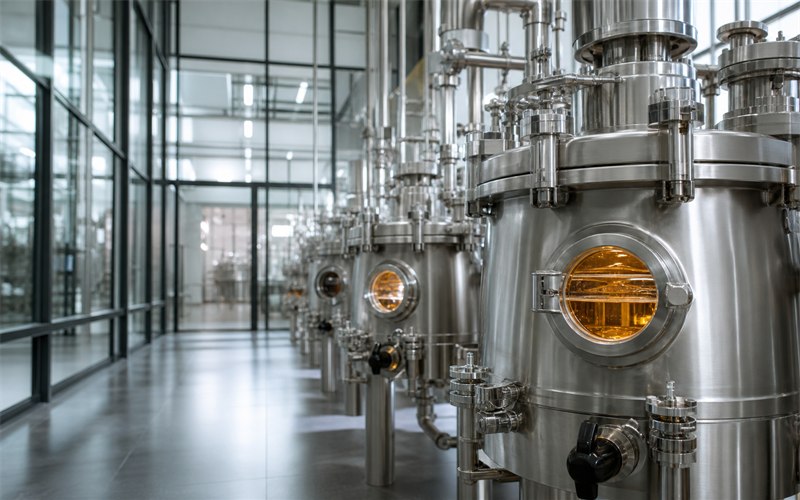
Once approved, the fragrance concentrate is compounded under controlled conditions. Materials are weighed, mixed, filtered if needed, documented, and checked against the approved standard.
The perfume is then blended with alcohol or another carrier at the required concentration, left to settle if the process calls for it, filtered, filled, capped, coded, and inspected.
Quality control may include odor comparison, appearance checks, density, color, fill level, leakage, pump performance, and packaging inspection. Manufacturing discipline protects the creative work.
From Creative Sample to Market-Ready Product
A market-ready perfume is more than a pleasant smell. It is a stable, documented, reproducible, compliant product that fits a customer and a commercial channel.
For brands, the best development partner understands both scent and manufacturing. A capable fragrance supplier should help connect creative direction, raw materials, formula control, and production support.
Scentake helps fragrance brands, wholesalers, and private-label teams develop perfume concepts from brief to sample and production-ready compound. To start a project, contact Scentake with your target product, market, scent direction, and launch plan.