
Resins and Balsams in Perfumery Myrrh, Incense, Styrax and Benzoin
Resins Give Perfume Its Slow-Burning Depth
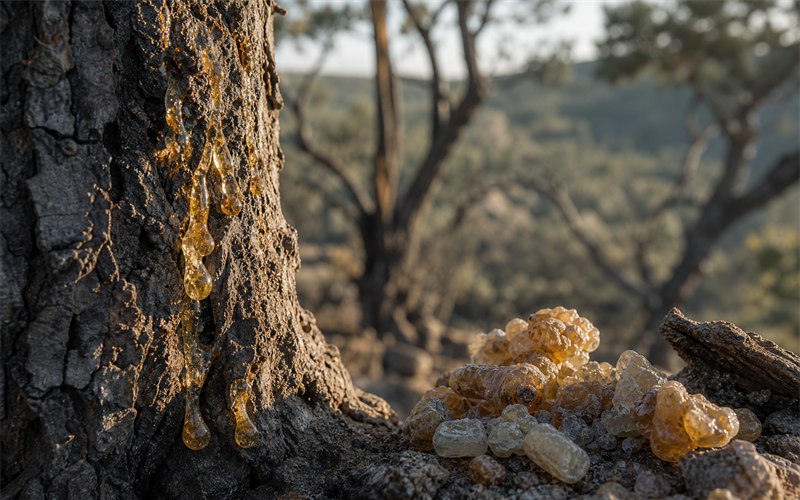
Resins and balsams are among perfumery’s oldest aromatic materials. They come from plant exudates, bark, tears, or balsamic secretions, then become oils, resinoids, absolutes, tinctures, or reconstructed accords for modern fragrance work.
Their appeal is emotional and technical. Resins can smell smoky, sweet, leathery, mineral, vanilla-like, medicinal, incense-like, woody, or honeyed. They also help a formula feel anchored, textured, and long lasting.
For brands, resinous materials are useful in fine fragrance, candles, incense-inspired collections, body care, room sprays, and premium private-label products that need a sense of warmth and substance.
Resin, Balsam, Gum, and Resinoid: The Useful Distinction
In everyday perfume language, resin and balsam are often used loosely. Technically, the material may be a resin, gum-resin, oleoresin, balsam, resinoid, absolute, essential oil, or fragrance accord depending on origin and processing.
A natural resin can be sticky, dark, and difficult to handle. A resinoid or absolute may be more practical in a fragrance concentrate. Some commercial formulas use reconstructed resin notes to improve clarity, color, cost, and safety control.
This is normal professional practice. The finished scent is judged by beauty and performance, while the formulator must manage solubility, color, stability, documentation, and regulatory suitability.
Myrrh: Mineral, Bitter, and Meditative
Myrrh is famous for its bitter, balsamic, mineral, smoky, slightly medicinal character. It can make a perfume feel ancient, dry, contemplative, and richly textured.
In a formula, myrrh works well with frankincense, labdanum, rose, saffron, patchouli, cedarwood, amber, leather, and vanilla. It can deepen florals and make woody compositions feel more ceremonial.
Because myrrh can be heavy, it usually needs lift from citrus, herbs, aldehydes, incense brightness, or airy musks.
Incense and Frankincense: Smoke With Light Inside
Incense in perfumery may refer to frankincense, olibanum, smoky accords, resins, woods, or fantasy incense structures. Frankincense often brings a dry, resinous, lemony, mineral brightness that feels both spiritual and elegant.
It is useful because it gives smoke without necessarily feeling dirty or dense. In fresh woody perfumes, frankincense can add lift. In amber perfumes, it can add structure. In candles, it can create a quiet luxury atmosphere.
A good incense accord should have air around it. Too much smoke can flatten the fragrance and make it feel ashy.
Styrax: Leather, Smoke, and Warm Sweetness
Styrax has a warm balsamic profile with leathery, smoky, spicy, and sometimes slightly floral facets. It can make a fragrance feel darker and more sensual.
Perfumers use styrax effects in leather accords, tobacco scents, amber bases, incense perfumes, and rich woody compositions. It can bridge sweet resins with drier smoke.
The challenge is dosage. Styrax-like materials can dominate a formula if the supporting structure is too light.
Benzoin: Vanilla-Balsamic Comfort
Benzoin is one of the most approachable balsamic materials because it can smell sweet, creamy, vanilla-like, powdery, and softly resinous. It gives warmth without always becoming smoky.
In oriental and ambery perfumes, benzoin often supports vanilla, tonka, labdanum, sandalwood, musk, and spice. It can make a drydown feel smooth and expensive.
Benzoin is also valuable in candles and home fragrance because its comfort note is easy for consumers to understand.
How Resins Work With Other Notes
Resins pair naturally with woods, spices, vanilla, amber, patchouli, rose, jasmine, leather, tobacco, coffee, cacao, and musks. They can also give weight to citrus or aromatic openings.
The relationship with base notes is especially important. Guides to patchouli and vetiver root show how earthy materials can support resinous warmth without turning the scent too sweet.
A balanced resin fragrance needs contrast: light against dark, dry against sweet, smooth against smoky.
Safety, Allergens, and Documentation
Natural resins and balsams can contain complex mixtures and potential allergens, so documentation matters. IFRA Standards help guide safe-use decisions for fragrance ingredients by product category.
For cosmetic products in the EU, Regulation (EU) 2023/1545 is relevant to expanded fragrance allergen labelling. Brands should also request allergen declarations, SDS where relevant, stability guidance, and market-specific support.
For consumers with sensitive skin, resinous perfumes should be tested cautiously, especially strong oils, extrait concentrations, or leave-on scented balms.
Buying or Developing Resinous Fragrances
When choosing a resinous perfume, give it time. The opening may seem sharp, smoky, or medicinal, while the late drydown can become softer, warmer, and more elegant.
For product development, decide whether the resin direction should feel sacred, smoky, sweet amber, leather, woody, gourmand, or clean incense. Those choices change the entire formula.
A strong fragrance formula uses resins with control, so the base supports the fragrance instead of swallowing it.
How Scentake Builds Resin and Balsam Directions
Scentake helps brands create resinous, ambery, incense, woody, and balsamic fragrance directions for fine fragrance, candles, diffusers, body care, and private-label collections. We can support material selection, sample refinement, safety documentation, and adaptation to the final product base.
If you are developing a myrrh, incense, styrax, benzoin, amber, or resin-led scent, contact Scentake with your product format, target market, and preferred fragrance mood.