
What Is the Difference Between Eau de Parfum and Eau de Toilette
A practical buyer’s guide to concentration, wear time, projection, and formula design.
Two bottles can share the same name, the same brand, and the same visual world, yet one says eau de parfum and the other says eau de toilette. Many buyers assume the eau de parfum is simply the stronger and better choice. Sometimes it is the better choice for you. Sometimes the eau de toilette is brighter, easier, and more elegant in daily life.
The difference is partly about concentration, partly about formula design, and partly about how the fragrance behaves on skin. A skilled perfumer may adjust the fragrance formula between versions, so an eau de parfum and eau de toilette are often related interpretations rather than identical liquids at different strengths.
That distinction matters when you are choosing a personal fragrance, building a private-label line, or comparing samples for a market launch.
Why These Names Confuse Perfume Buyers
Eau de parfum and eau de toilette are concentration families. In broad consumer language, eau de parfum usually contains a higher percentage of aromatic concentrate than eau de toilette. It often feels richer, deeper, and longer lasting. Eau de toilette usually feels lighter, fresher, and more transparent.
The tricky part is that there is no single universal concentration law that every brand follows in the exact same way. One brand's eau de toilette may perform longer than another brand's eau de parfum. Materials, fixatives, alcohol balance, application amount, skin, climate, and bottle design all influence the final experience.
So the label is a useful clue. It is not a complete verdict.
Typical Concentration Ranges
Most perfume education guides describe eau de toilette as lighter than eau de parfum. A common practical range is about 5-15% aromatic concentrate for eau de toilette and about 15-20% for eau de parfum, though brands can vary.
Higher concentration usually means more fragrance material in the alcohol base. That can improve longevity, body, and drydown presence. It can also make a scent feel denser, warmer, sweeter, or more intimate depending on the formula.
Lower concentration often gives more lift in the opening. Citrus, aromatic, green, aquatic, and sheer floral styles can feel especially attractive as eau de toilette because their brightness is part of the charm.
How They Smell Different
An eau de toilette often emphasizes the top and early heart of a fragrance. It may sparkle faster, feel more casual, and sit comfortably in warm weather or office settings. It can be ideal when you want fragrance to feel clean and present without filling the room.
An eau de parfum often gives more attention to the heart and base. Florals may feel creamier. Woods may feel smoother. Amber, musk, vanilla, resin, and spice notes may become more noticeable as the fragrance develops.
These are tendencies rather than rules. Some eau de parfums are airy. Some eau de toilettes are surprisingly tenacious. The real question is how the version performs after several hours, not only how it smells from the cap.
Longevity, Projection, and Sillage
Longevity means how long you can smell the fragrance. Projection means how far it radiates from your body. Sillage means the scent trail left behind as you move.
Eau de parfum often lasts longer because it usually contains more aromatic material and a stronger base structure. Eau de toilette may project brightly at first, then become softer sooner. This can be an advantage if you prefer a fragrance that feels fresh and easy to reapply.
The base matters as much as the concentration. A citrus eau de parfum may still fade faster than a woody eau de toilette with strong musks and fixatives. Material choice shapes performance more than the label alone.
Price and Value
Eau de parfum often costs more because it may contain more fragrance concentrate. It can also include costlier base materials, specialty musks, richer naturals, or more elaborate formula work.
That higher price is worthwhile when the version gives you the depth, wear time, and emotional tone you want. It is less compelling if the eau de toilette smells better on your skin, matches your climate, or suits your daily routine more naturally.
A practical buyer compares cost per satisfying wear, not only cost per milliliter.
Which One Works Better on Skin
Skin changes fragrance. Warm skin may make an eau de toilette bloom beautifully, while dry skin may make it disappear too quickly. Oilier or moisturized skin may help both versions last longer. Climate, fabric, stress, and daily activity can also change the result.
When comparing eau de parfum and eau de toilette, test them on separate days if possible. If you test one on each wrist, give them time. The opening may favor the brighter version, while the drydown may favor the richer one.
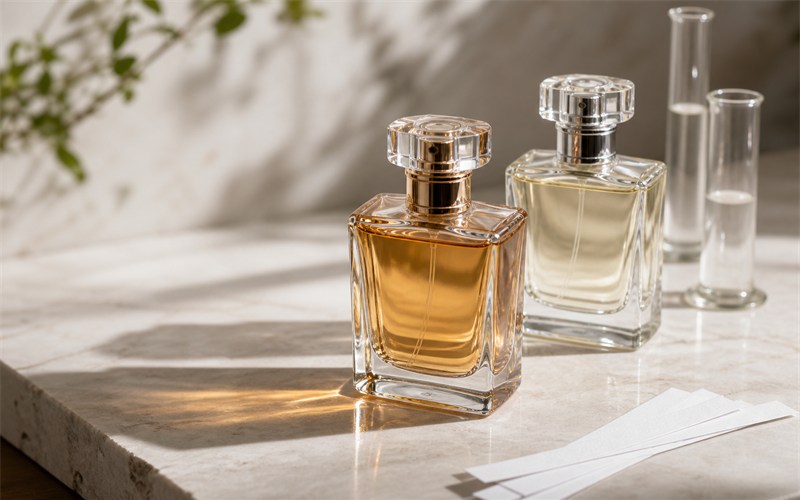
Do not judge only from a paper strip. Blotters are helpful for shortlisting, but skin reveals the true wearing character.
Season and Occasion
Eau de toilette often works well for daytime, warm weather, commuting, school, casual office settings, and situations where restraint feels polished. It can be a smart choice for citrus, aromatic, aquatic, tea, green, and clean musk styles.
Eau de parfum often suits evenings, cooler weather, special occasions, and fragrance lovers who enjoy a more developed drydown. It can flatter amber, floral, woody, gourmand, chypre, and spicy compositions.
Still, personal preference wins. A light eau de parfum may be perfect in summer. A crisp eau de toilette may feel beautiful in winter if you enjoy clarity and lift.
Safety, Sensitivity, and Use Level
More concentrate does not automatically mean a fragrance is unsafe. It does mean there is more aromatic material per spray, so personal comfort and product category matter.
IFRA Standards give the fragrance industry a safe-use framework for ingredients and product categories. FDA guidance also explains that fragrance ingredients in cosmetics need to meet the same safety requirement as other cosmetic ingredients, even when they appear on labels under fragrance or perfume.
If you are sensitive to fragrance, apply lightly, avoid irritated skin, and stop using a product that causes discomfort. A beautiful scent should feel pleasant in real life, not just impressive in the first spray.
How to Choose Between Them
Use this checklist when comparing two versions:
| Decision cue | What it means |
|---|---|
| Choose eau de toilette if… | You want a lighter, brighter, easier daytime scent or live in a warm climate. |
| Choose eau de parfum if… | You want more depth, a fuller drydown, and longer wear from fewer sprays. |
| Test both if… | The fragrance has flankers or reformulated versions that may smell meaningfully different. |
| Buy the smaller size if… | You love the opening but have not tested the four-hour drydown yet. |
| Ask for formula support if… | You are developing a product line and need the concentration to match price, claims, and usage. |
What This Means for Fragrance Brands
For brands, eau de parfum and eau de toilette are strategic choices. They communicate price position, usage occasion, consumer expectation, and sensory style. A premium eau de parfum can carry a more luxurious story. A polished eau de toilette can make the same concept easier to wear and easier to buy.
The two versions may need different formula architecture. Diluting an eau de parfum is rarely enough to create a beautiful eau de toilette. The top notes, diffusion, base materials, fixatives, and stability profile may need adjustment.
Testing should include blotter, skin, packaging, climate, and target-market feedback. The version that smells best in a meeting is not always the version that sells best after repeated wear.
Working With Scentake
Scentake works with fragrance brands, private-label buyers, and product developers who need clear fragrance direction across concentrations, product formats, and market positions. Whether you are choosing between eau de parfum and eau de toilette or developing both versions for a line, the right supplier conversation helps clarify performance, cost, and consumer experience.
If you are planning a perfume launch, contact Scentake with your scent direction, target customer, price point, and intended concentration. A precise brief helps turn a good idea into a fragrance people can understand, wear, and remember.