
Essential Oils vs Fragrance Oils: Differences in Scent, Safety, Cost and Stability

The Names Describe Material Strategies, Not Quality Grades
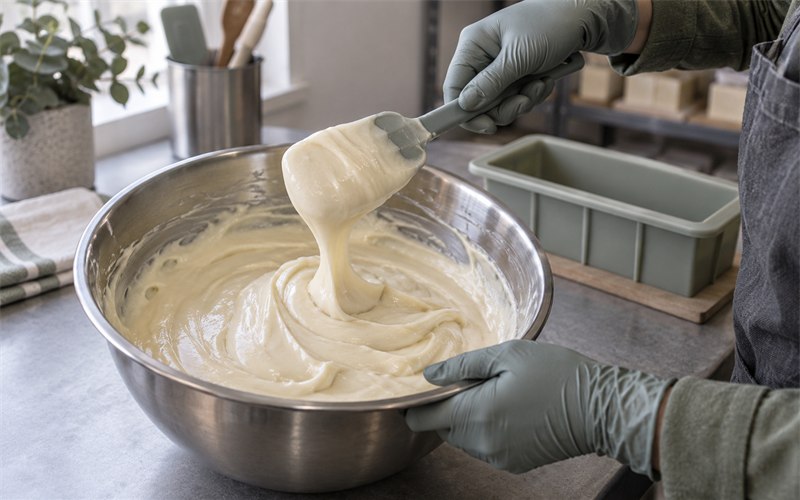
Essential oil and fragrance oil are often presented as opposing quality labels. In product development, they describe different material strategies. An essential oil is a volatile plant extract, commonly obtained by distillation or expression. A fragrance oil is a formulated aromatic mixture designed to deliver a chosen scent and performance target. It may contain essential oils, other natural extracts, aroma molecules, solvents, and functional ingredients.
Core answer: essential oils offer recognizable botanical character and natural-source storytelling. Fragrance oils offer a wider scent palette and greater control over strength, consistency, cost, and product performance. Both require safety review, documentation, compatibility testing, and responsible claims. The best choice depends on the product base, market promise, target odor, budget, and expected shelf life.
A lavender oil and a lavender fragrance oil may share an aromatic direction while behaving differently in soap, lotion, candles, or fine fragrance. Compare specifications and finished-product results.
How Their Scent Profiles Differ
An essential oil carries the chemistry of its botanical source. Steam-distilled lavender can smell floral, herbal, camphoraceous, and slightly woody at once. Expressed citrus oil can include bright peel notes, green facets, bitterness, and natural variation. That complexity can feel vivid and authentic, although it also sets creative limits. Nature does not provide every desired note, and some flowers produce little or no practical essential oil.
A fragrance oil is composed around a brief. A perfumer can reinforce diffusion, extend the dry-down, reduce an unwanted medicinal facet, or create effects such as clean musk, marine air, ripe fruit, leather, or a fantasy floral. Scentake’s perfume-making guide describes modern formulas as combinations of essential oils, extracts, aroma molecules, bases, solvents, and modifiers, each selected for odor, volatility, cost, safety, and stability.

Natural Origin Does Not Settle the Safety Question
Source alone does not determine safety. The FDA states that plant-derived cosmetic ingredients must meet the same safety requirement as ingredients from other sources. Some natural materials can irritate, sensitize, or become phototoxic under particular conditions. Citrus oils that contain certain furocoumarins are a familiar example for products exposed to sunlight.
Fragrance oils also require exposure-based assessment because components can include restricted materials or declared allergens. Suitability depends on the complete formula, concentration, and product category.
Do not assume that an essential oil is safe to use undiluted or that a fragrance oil is unsafe because it contains synthesized materials. Follow the supplier’s current technical documents, legal requirements, product-category limits, and finished-product safety assessment. Consumer patch testing cannot replace professional formulation review.
IFRA Limits Apply to Constituents, Including Those Inside Essential Oils
Essential oils are Natural Complex Substances. One oil can contain many constituents, and several may be covered by IFRA Standards. IFRA explains that suppliers and users need to exchange information about restricted constituents so their contributions can be calculated in the finished consumer product.
A supplier can issue an IFRA Certificate of Conformity for a named fragrance revision and category. It states a maximum level based on the formula and applicable Standards, while broader finished-product obligations remain with the manufacturer.
| Safety question | Essential oil | Fragrance oil |
|---|---|---|
| What must be assessed | The oil and its variable constituents | The complete proprietary formula |
| Exposure basis | Finished-product category and concentration | Finished-product category and concentration |
| Useful documents | Specification, SDS, allergen and constituent data | Specification, SDS, allergen data and IFRA certificate |
| Common mistake | Equating plant origin with unrestricted use | Judging safety from the word synthetic |
Why Cost Comparisons Need the Whole Formula
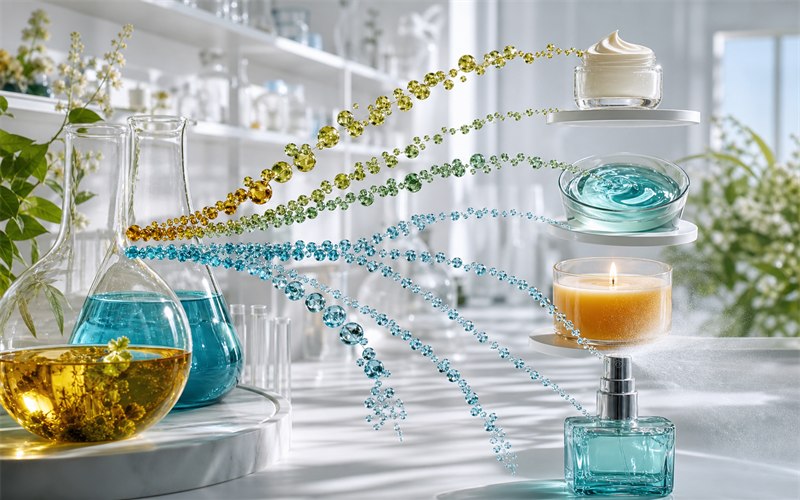
Essential-oil pricing reflects crop yield, land, labor, climate, distillation energy, transport, certification, and market supply. Rose is a clear illustration: a very large mass of petals is needed for a small quantity of oil. Weather or harvest disruption can change both price and odor profile. Citrus by-products and high-yield crops can be far more economical, so there is no single natural-material price tier.
Fragrance oils distribute cost across a formula. A perfumer can use scarce naturals selectively, then support them with consistent aroma materials. Development, testing, documentation, concentration, and supplier service still affect the delivered price.
Compare cost in the finished product. A lower-priced oil that needs a higher dose, fades rapidly, discolors the base, or triggers packaging changes can become the more expensive option. A higher-priced fragrance with better efficiency and stability may lower total manufacturing risk.
Stability and Batch Consistency Are Different Strengths
Botanical oils vary with species, chemotype, geography, harvest, extraction, and storage. Specifications can hold key markers within limits, yet sensory differences may remain. Oxygen, heat, light, and repeated headspace exposure can alter terpene-rich oils.
Fragrance oils can be adjusted to a reference standard and may use stable materials to protect the intended profile. This gives manufacturers more tools for lot matching, heat resistance, color control, and long-term supply. Stability is still formula-specific. A fragrance oil can separate, fade, discolor, or interact with a base when it has not been designed and tested for that application.
| Development factor | Essential-oil-led route | Fragrance-oil-led route |
|---|---|---|
| Batch character | Botanical variation managed by specification | Formula adjusted toward a sensory standard |
| Scent palette | Limited to obtainable plant extracts | Natural, synthetic and fantasy effects |
| Cost exposure | Crop yield and commodity volatility | Formula and sourcing portfolio |
| Stability tools | Storage, antioxidants and careful selection | Material substitution and application design |
| Proof required | Finished-product testing | Finished-product testing |
The Product Base Can Reverse the Preferred Choice
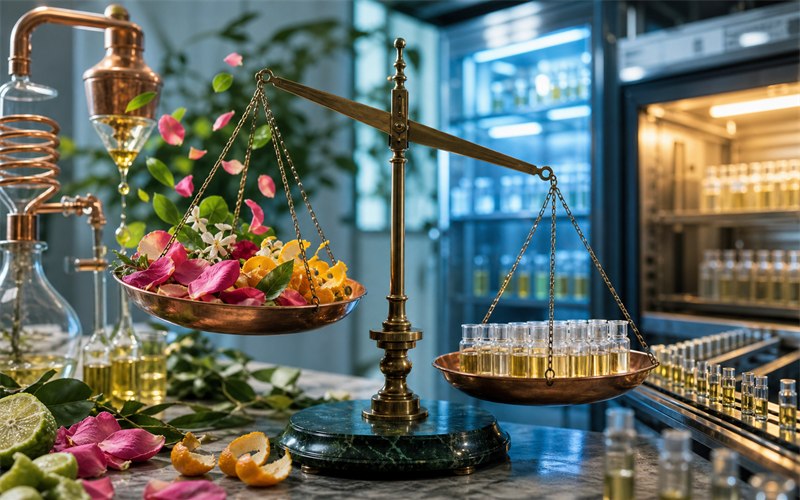
A material that performs in alcohol may struggle in an aqueous spray, high-pH soap, wash, candle wax, or diffuser base. Solubility, color, volatility, pH sensitivity, and packaging interaction matter. Citrus oils can create a brilliant opening while needing support for retention. Dark botanical extracts can tint pale products.
Application-designed fragrance oils can be built around these constraints. Candle formulas may prioritize hot throw, personal-care formulas may emphasize base compatibility, and fine fragrance needs controlled evaporation. Performance still depends on the exact base and dose.
- Define the finished product, market, scent brief, claim language, target dosage, color limit, package, and shelf-life expectation.
- Request samples and current technical documents for the exact commercial material and revision.
- Prepare matched pilot batches at compliant candidate levels, including an unscented control where useful.
- Evaluate odor immediately and after realistic storage, heat, light, transport, and use conditions.
- Record appearance, separation, viscosity, pH, burn or diffusion performance, package interaction, and sensory change.
- Approve a measurable specification and change-control process instead of approving the ingredient category alone.
Claims, Labels and Consumer Expectations Need Separate Review
An essential-oil-led formula may support a botanical story, although claim wording depends on the formula, processing, certification scheme, and target-market rules. In the United States, therapeutic claims can cause an aromatherapy product to be regulated as a drug.
A fragrance oil can appear under the applicable fragrance nomenclature while allergens or other components may require additional disclosure in certain markets. The FDA notes that U.S. retail cosmetics generally list ingredients, while fragrance mixtures can usually appear as fragrance. Multi-market brands need a current labeling review.
Frequently Asked Questions
Are essential oils always more natural-smelling?
They can provide a direct botanical signature, including subtle irregularities that consumers value. A well-composed fragrance oil can also smell highly botanical because it may contain essential oils and carefully selected aroma materials. Evaluate blind samples in the actual product.
Are fragrance oils always synthetic?
No. Fragrance oil describes a formulated aromatic mixture, not one origin class. The formula may combine natural extracts, nature-identical materials, other aroma molecules, solvents, and modifiers according to the brief.
Which option lasts longer?
Longevity depends on volatility, formula structure, dosage, base, substrate, and use conditions. Many essential oils are top-note heavy. A fragrance oil can be designed with persistent heart and base materials, although its actual performance still needs testing.
Can a brand use both?
Yes. Many successful formulas use essential oils for recognizable natural texture and aroma molecules for clarity, diffusion, stability, consistency, or cost control. The combined formula should be assessed and documented as one system.
Choose Against the Brief, Then Prove the Finished Product
Choose essential oils when traceable botanical character is central and the product can accommodate natural variation. Choose a fragrance-oil strategy for a broader scent palette, tight consistency, application performance, or stronger cost and supply control. A hybrid route often gives the best balance.
Scentake can translate a product base, odor direction, market, price target, and performance requirement into a testable fragrance brief. Review what a fragrance formula is and the guide to perfume manufacturing cost, then contact Scentake with the base, package, claim goals, and launch market.