
How Custom Perfume Development Works: From Brief to Formula to Production
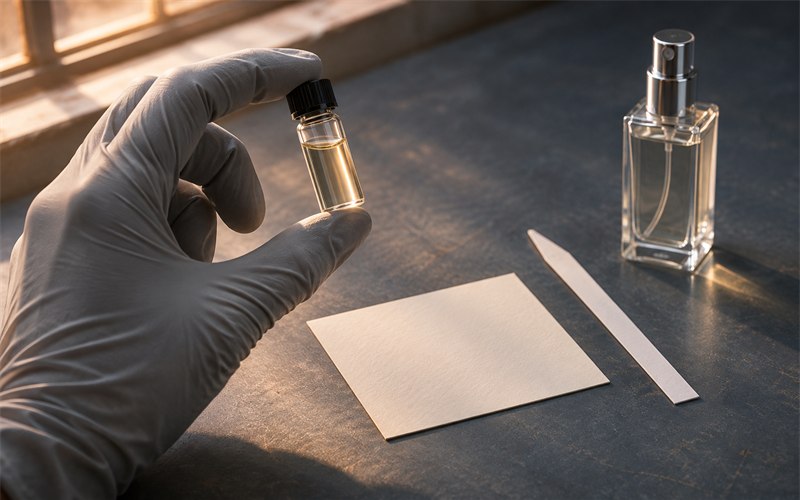
A brand approves a bright tea fragrance on a blotter. A few weeks later, the filling team asks which sample to match, which pump to order and who is approving the label. Those questions are easier to answer while the trial codes and supplier decisions are still fresh.
Custom perfume development turns a creative brief into a formula trial, an approved finished sample and a set of instructions for making it again. Each step answers a different question. What should the perfume smell like? How does the selected formula behave in the intended product? What exactly will the manufacturer release?
Decide what the project needs to develop
Start by identifying what already exists. A brand may select a scent from a supplier’s library, commission an original composition or ask a manufacturer to work from a formula the brand has permission to use. In its own service FAQ, perfume development and manufacturing provider Project Fragrance lists a library-based private-label route and a separate original development service. Project Fragrance service FAQ.
Ask for a quote that identifies the scent development work, sampling rounds, components, filling and documentation separately. A brief for a finished bottle goes to several people, even when one partner coordinates the work. Find out who compounds the concentrate, who makes the finished perfume and who can sign off on a component change. Ask about formula access and permitted use while the scope is still being agreed.
Write a brief the perfumer can use
The brief should give the perfumer room to work and tell the buyer how to judge a sample. For fine fragrance, fragrance developer Givaudan’s sample request guide asks for the product use, a target-market input, scent direction and planned volume. For a commercial project, add the decisions that affect the finished bottle and quote. Givaudan’s fragrance sample request guide.
- Product and audience. Describe the format, intended customer, use occasion and planned sales countries.
- Scent direction. Name the impression you want at first spray and in the drydown. Explain which traits you like in each reference.
- Commercial constraints. Give the target bottle size, price or cost range, initial quantity, reorder plan and desired launch window.
- Decisions and priorities. Identify the elements that must stay, the ones you can adjust and the person who can approve a change.
A brief might ask for a brisk green tea opening, a soft wood drydown and enough restraint for daytime wear. If the reference turns sweeter than you want, say where that happens. “Keep the tea recognisable in the drydown and pull back the sweetness” gives the perfumer a revision to attempt and the buyer something to check.
Compare coded trials in the finished format
A fragrance concentrate is the aromatic blend supplied for incorporation. The finished perfume is the product the customer will use, including its base and delivery format. Ask which form each sample represents. Evaluate the chosen candidate at the proposed concentration and in the intended format before approving the finished version. Keep a record of the sample code, formula revision and test conditions.
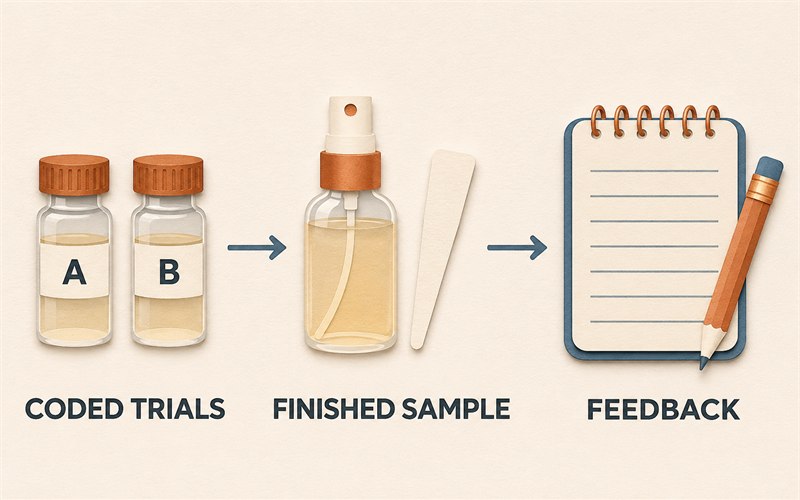
Compare samples under similar conditions and write feedback against the actual codes. If trial A has the right opening and trial B has a cleaner drydown, say which priority comes first. For a wear check, use samples prepared and cleared for the intended use. Record what still smells recognisably like the intended accord as well as how noticeable it is. These are separate observations when assessing a revision for wear. How to compare perfume wear and stability.
Approve the formula and the package together
Once the scent is close, agree which finished sample and components will serve as the reference. Record the concentrate version, finished blend, bottle, pump and closure. Ask how the team will assess the actual configuration for changes in appearance or odour and for spray and closure performance. The International Organization for Standardization’s cosmetics stability guidance leaves manufacturers to justify a protocol that fits the product and its storage and use conditions. ISO guidance on cosmetic stability testing.
Check documents against the same version. The International Fragrance Association, a fragrance industry association, describes a certificate of conformity as the mixture supplier’s declaration for a specified intended use. Assign someone to review the finished product assessment and local market obligations separately. Ask which documents are available for the approved blend and who can supply them to the responsible reviewer. IFRA’s guidance on using the standards.
Hand the approved version to production
Before committing the order, ask the manufacturing partner to match the retained finished sample to the written specification. Confirm the fill, component list, artwork version and agreed acceptance criteria. If the production line needs a trial run for a new bottle or pump, agree who checks it and when the team can proceed with the full order.
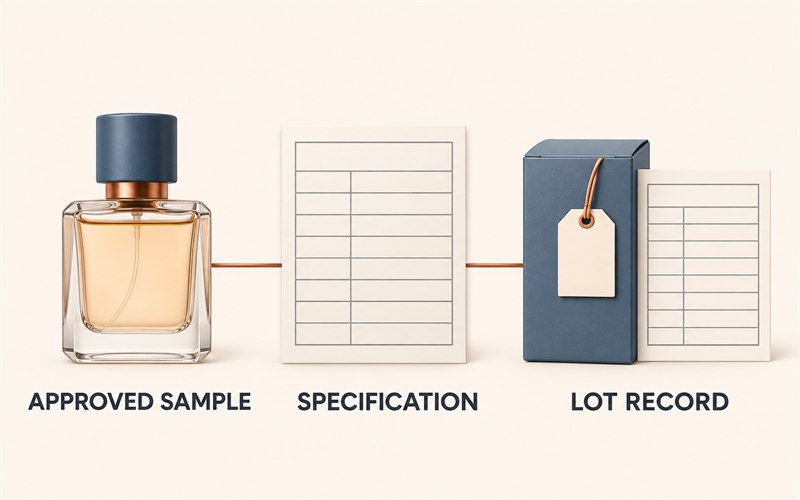
The International Organization for Standardization’s cosmetics good manufacturing practice standard covers production, control, storage and shipment. For your order, ask who releases the finished lot and which record connects it to the approved specification. Keep that link with the purchase order so a later batch can be compared with the same reference. ISO cosmetic good manufacturing practice scope.
Before a reorder, ask the supplier to flag proposed substitutions. If the pump, bottle or concentrate version changes, identify what needs a fresh check and who can authorise the change. A repeat order then has a named reference and a decision history the brand can retrieve.
Questions to settle before placing an order
How long should I allow for development?
Request separate estimates for the first trial, revision rounds, finished product checks, component procurement and filling. Ask which activities can overlap and when the supplier needs an approval from you. That gives you a schedule tied to your project rather than a date based only on sample delivery.
Does a custom brief give the buyer ownership of the formula?
Check the proposed agreement for who owns the composition, who can use it, and what information can be transferred to another manufacturer. If exclusivity matters, define the products, territories and period it covers. Ask for those terms in writing before approving the development quote.
Can I choose the bottle after approving the scent?
You can choose a scent direction while packaging options are still open. Keep final approval tied to the actual bottle and pump you plan to order. If you change either later, have the project team identify which fit, spray and compatibility checks apply to the revised configuration.
Bring a brief to your first development conversation
For a project with Scentake, share the target customer and sales markets, the product format, reference scents, expected order size and any packaging choices already made. Mention which decisions are open and what you need the first sample to show. That gives the development conversation a defined starting point. Explore Scentake custom perfume development or send your perfume project brief.