
Private Label Perfume vs Custom Fragrance: Which Is Better for Your Brand?
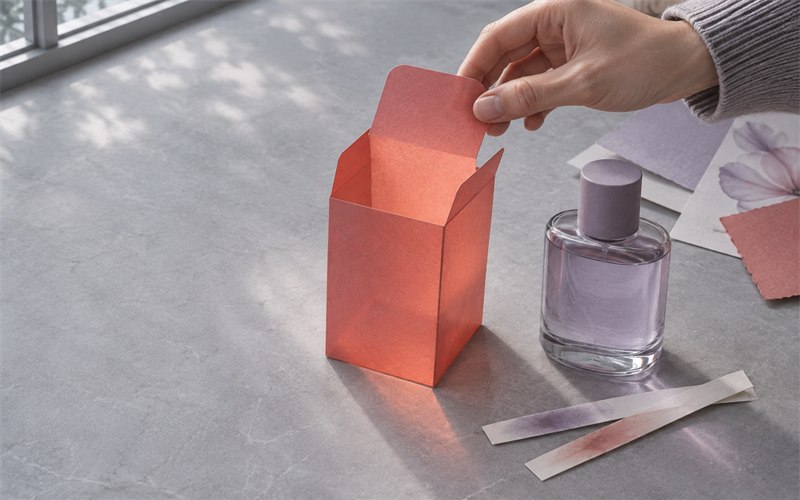
You can launch a perfume under your own brand with a scent you select from a supplier’s library or one you commission from a brief. Start with the library if an existing scent fits and your first run is mainly a test of the offer, packaging or sales channel. Commission a custom fragrance if the scent itself has to deliver a particular experience for your brand.
Compare what the supplier will develop, who can use the scent and how you’ll reorder. Two proposals can use the same service name and give you very different answers.
Ask where the scent starts
Texas fragrance development studio Project Fragrance describes its private label route as choosing one of its fragrances. Its full custom service covers an original scent and fully custom packaging. Belgian perfume house Kastoréll Atelier uses “private label” for a fragrance it develops exclusively from a brand’s brief. Ask each supplier to specify the starting formula, which changes it will make and the sample you’ll approve. Project Fragrance service FAQ and Kastoréll Atelier private label service.
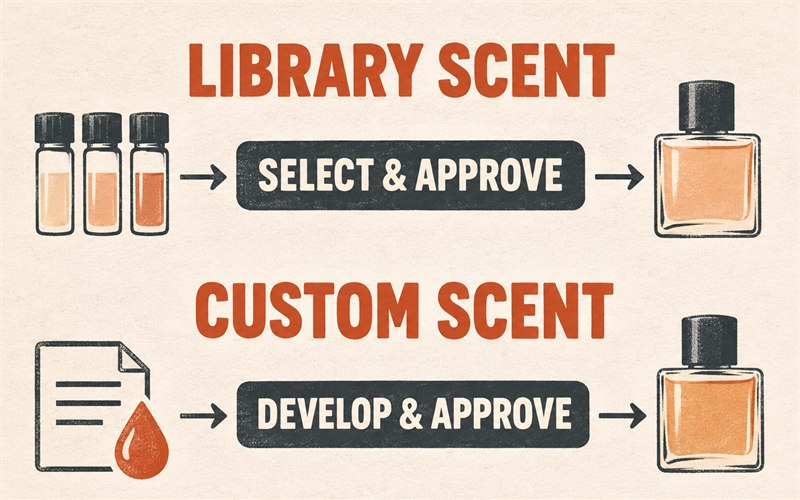
For a library scent, ask for a shortlist against the same brief and evaluate the finalists in the proposed finished spray. Check how the opening and drydown fit the product you plan to sell. Confirm the bottle, pump and carton separately. The packaging work in your quote may range from applying your label to preparing a new finish or carton.
For an original scent, agree on the starting brief and the feedback you will give after each round. For example, describe a dry wood finish and a citrus opening that you want to soften, then explain which part matters most. Agree on who signs off on the final sample and which version goes into production. The custom perfume development guide walks through the handoff from brief to finished sample.
Choose for the decision your first run needs to answer
Suppose you run a home and lifestyle shop and want to see whether customers will pay for a travel spray with your branding. If a library sample already fits the shop’s style, ask for it in the format you plan to sell. That gives you an offer to test while keeping the scent development brief simple. If you later change the scent, sample and approve the new version before ordering it.
If you are building a signature scent around a specific drydown or a sensory brief that current samples miss, put your sampling budget toward development. Ask for the first round against that brief and define what would lead you to revise or approve it. You can also request a quote for the custom scent in a stock bottle if that presentation fits. Ask the supplier to confirm the glass, pump and finish on the finished sample.
Agree on rights and reorders in writing
Seattle fragrance house and private label studio Atelier Madrona says it keeps formula ownership by default while giving the brand exclusive use. It separately offers formula transfer options. That is one studio’s policy, and it gives you a useful question to put to any supplier. What will the agreement give you access to, and what will the supplier continue to make for you? Atelier Madrona’s formula ownership FAQ.
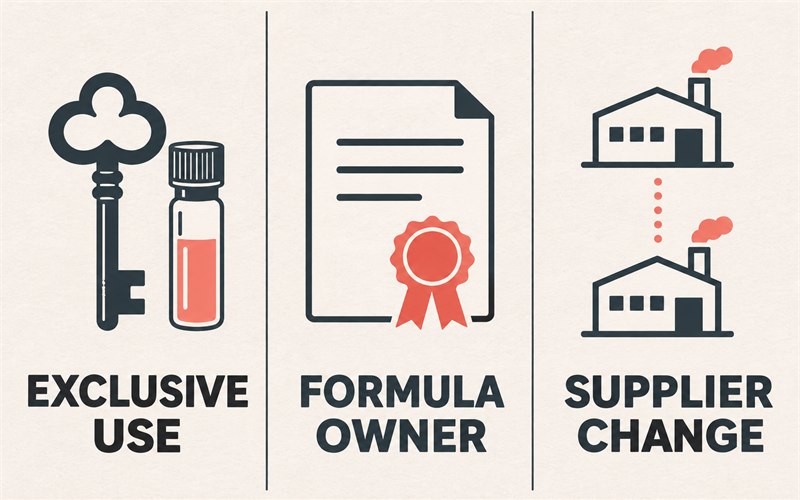
Ask who may use the scent, where and for how long. Then ask who owns the formula and whether you would receive it under the agreement. If you expect to change filling partners, find out whether the current supplier can ship concentrate to your next filler and which documents will go with it. If you expect to change fragrance suppliers, ask what formula details and any necessary permissions you would receive. Confirm the same things for each launch market and keep artwork and tooling rights on separate lines.
Request comparable quotes before selecting samples
Send each candidate the same bottle size, intended markets, launch quantity and packaging specification. Ask for a library-based proposal and an original-development proposal if either route could meet your brief. Keep the finished product format and requested quantity constant so you can see what the development work changes.
- Scent scope. Identify the library reference or development brief, the sample format, included revisions and the fee for further work.
- Production scope. List fragrance, filling, bottle, pump, decoration and carton. Ask what is payable upfront and which components set the minimum order.
- Rights and repeat supply. Ask who may order the fragrance again, how the approved version is identified and what changes if a supplier or component changes.
- Handover. Confirm which documents cover the approved scent and finished product, when you’ll receive them and who checks what your destination markets require.
Ask for one total for development and setup and another for the first production run. If one quote looks smaller, check which sample rounds, components or repeat-order terms it leaves open. Use the perfume MOQ guide to identify which minimum governs your order.
Questions buyers ask before choosing a route
Can a private label perfume have an exclusive scent?
Ask the supplier whether that option is available for the specific scent, which markets or uses it covers and whether it applies only while you keep ordering. If you also want the formula, ask for the transfer terms separately.
Can I start with a library scent and develop my own later?
You can use the first launch to learn about price, channel and presentation. Plan a fresh sample and approval when you introduce the new scent. Ask which packaging can carry over and which documents or artwork need to be updated for that version.
Bring a scent brief and launch plan
For a project discussion with Scentake, share the customer you have in mind, your preferred scent direction, bottle size, first quantity and destination markets. Indicate which parts of the product can use existing options and what you want developed. Send your perfume project brief.