
How Much Fragrance Oil Should You Use in Candles, Soap and Diffusers
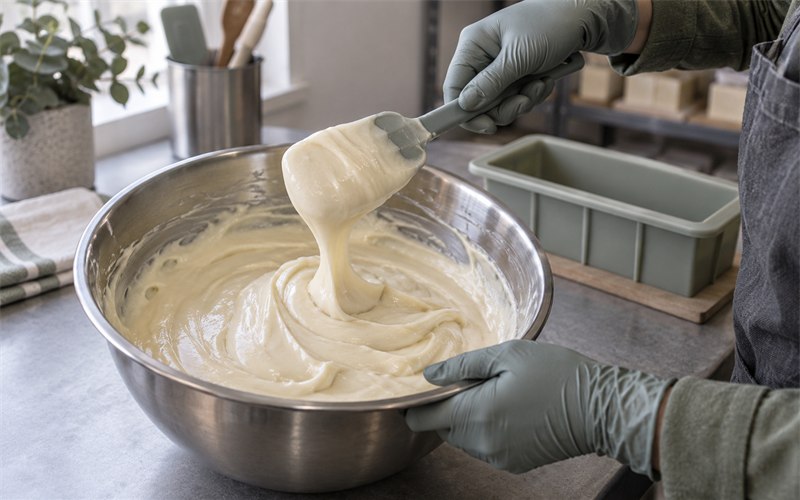
Start with the product, not a percentage
A candle maker, soap maker, and diffuser brand can all ask for “the right fragrance oil load” and receive three different useful answers. The carrier changes the job. Wax has to release aroma through a melt pool. Soap has to survive mixing, curing, and rinsing. A reed diffuser needs controlled evaporation through a base and reed system. A number copied from another product is only a starting point, never a finished formula.
The better question is: what loading range has been assessed for this specific fragrance, this specific base, and this intended market? Scent strength, stability, safety, cost, and product behaviour move together. Increase the oil without checking the whole system and you may gain a louder opening while losing cure performance, combustion quality, clarity, or consumer comfort.
Key takeaway: Choose fragrance load by testing the specific fragrance in the final product base. Candles, soap, and diffusers need different starting ranges, different failure checks, and different compliance documentation. The supplier’s category-specific guidance should set the boundary.
Why one fragrance load cannot fit every application
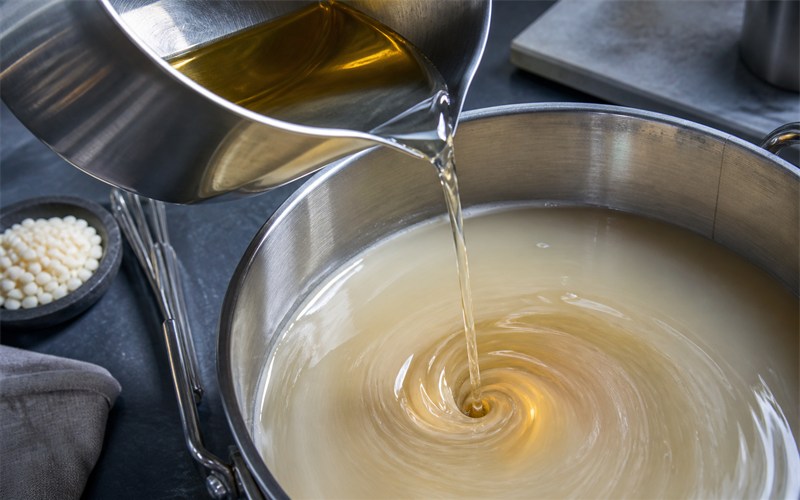
Fragrance oil is a complex mixture. Its materials may dissolve differently, flash at different rates, and respond differently to heat, surfactants, alkaline conditions, or diffuser solvents. A citrus-forward blend that feels bright in an alcohol evaluation can behave quietly in a dense wax. A sweet accord that blooms in a diffuser may discolour a high-pH soap base or throw unevenly from a candle.
Safety boundaries add another layer. IFRA explains that Standards can restrict, prohibit, or set specifications for particular fragrance ingredients, with limits tied to the finished consumer product category. A certificate of conformity supports a specified intended use. It does not replace responsibility for the complete finished product or the regulations of the market where it is sold.
| Application | What the fragrance must do | What to test before scaling |
|---|---|---|
| Candle | Bind in wax, release through the melt pool, remain pleasant hot and cold | Oil binding, wick behaviour, hot throw, soot, sweating, frosting and stability |
| Soap | Remain recognisable through alkaline processing and curing | Acceleration, ricing, discoloration, separation, cure and rinse-off scent |
| Reed diffuser | Diffuse steadily from the chosen base and reed system | Solubility, clarity, evaporation rate, reed performance, leakage and room throw |
Build a practical candle testing ladder
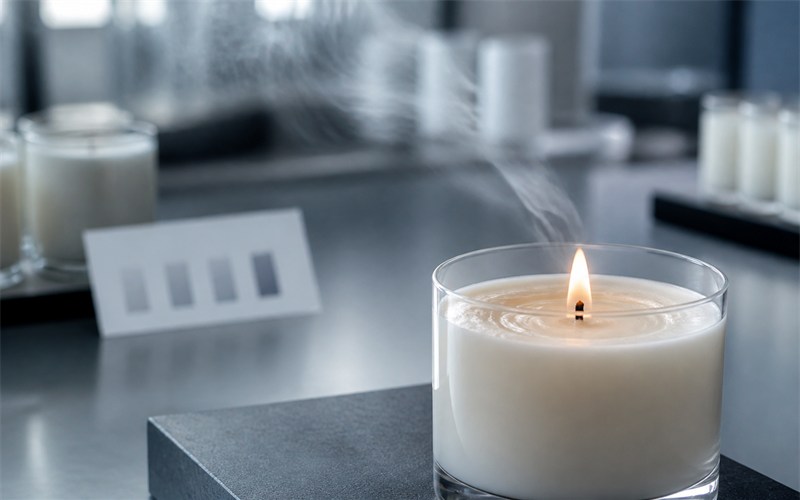
For candles, start with the wax supplier’s guidance and the fragrance supplier’s applicable documentation. Make small, controlled batches at a few sensible trial points within that guidance. Keep the wax, vessel, wick family, colourant, cure time, pour temperature, room conditions, and burn protocol consistent. Change one main variable at a time.
Judge cold throw only after the intended cure period. Then judge hot throw in a repeatable room, recording melt-pool formation, flame behaviour, soot, mushrooming, container temperature, and fragrance character. More oil can sometimes improve perception, though it can also exceed the wax’s binding capacity and produce sweating or poor burning. A candle that smells strong before lighting is not automatically the best performer after several burn cycles.
For a deeper technical discussion, see Scentake’s guide to cold throw versus hot throw. It shows why fragrance load is only one part of a working candle system.
Soap needs processing tolerance, not just a strong bottle smell
In soap, the fragrance meets a reactive environment. Cold-process soap can expose a blend to alkalinity and heat. Melt-and-pour bases add their own colour, temperature, and transparency considerations. Liquid soap and surfactant cleansers bring yet another compatibility question. Ask suppliers about known processing behaviour, then confirm it in your own base.
During a controlled trial, watch for thickening, ricing, separation, unexpected colour change, and scent shift after cure. Keep the original fragrance sample beside a cured sample so the team can compare character, not only intensity. Vanillin and other materials can contribute to discoloration in some systems, while a higher load can make an existing stability issue harder to manage.
Diffusers depend on balance between liquid, reed, and room
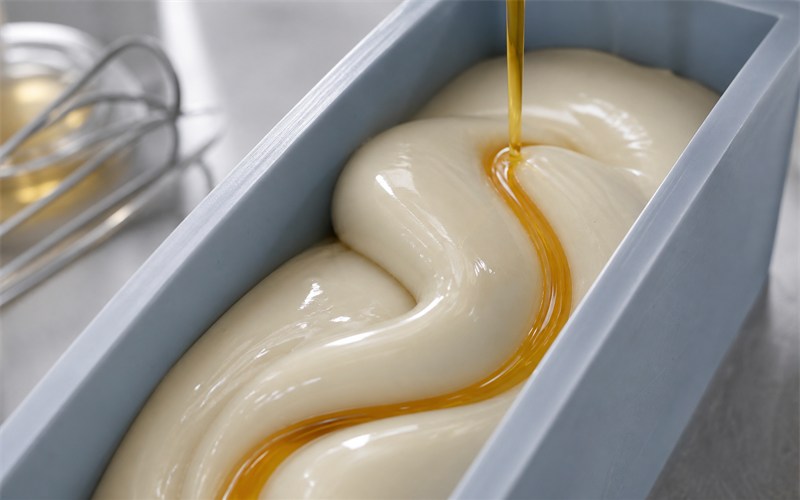
Reed diffusers are often judged by their first week, then disappointed by week four. The fragrance load is only one lever. Base composition, ambient temperature, reed diameter, number of reeds, bottle neck, and fragrance volatility affect how fast the liquid travels and how the room smells. A higher load may deepen the odour profile, yet it can also change clarity, wick-up behaviour, or evaporation.
Run a stability and usage test with the actual vessel and reeds. Record starting and weekly weights, clarity, colour, reed saturation, scent perception at a fixed distance, and any leakage or staining. Do not promise a duration before the final package has been observed in realistic conditions.
Compliance note: Permitted fragrance use depends on the complete fragrance composition, the finished product category, concentration, market, and current applicable standards. A relevant supplier certificate supports the intended use, while the finished-product manufacturer remains responsible for its product.
IFRA’s Standards guidance notes that the relevant maximum acceptable concentration is driven by the most restrictive ingredient for the applicable product category. If a product has multiple intended uses, compare the relevant categories rather than choosing the most convenient one.
Use a supplier brief that produces useful answers
“What is your recommended percentage?” is too broad for a useful development conversation. Instead, provide the base, manufacturing method, target market, desired scent character, target price, package, planned order volume, and any known restrictions. Then ask for the recommended trial range, intended product category, documentation version, known base-compatibility notes, and the tests still needed on your side.
- For candles: wax type, vessel, wick plan, colour, cure target, and burn conditions.
- For soap: process type, base pH, temperature, additives, cure plan, and desired colour.
- For diffusers: carrier base, bottle and neck dimensions, reed type, climate, and target duration.
That brief lets a development team build a more relevant sample path. Scentake’s fragrance formula guide is useful background when aligning scent direction, performance, and cost before sampling.
Questions people often ask
Can I just add more oil if the scent is weak?
Sometimes a revised load is appropriate, though it should be a controlled formulation change. First check cure, wick or reed performance, base compatibility, and the fragrance’s approved intended use. Weak performance can come from the system around the fragrance, not only from the amount used.
Does more fragrance oil always mean a better candle throw?
No. Wax binding, wick selection, vessel geometry, cure time, and the fragrance profile all affect hot throw. Excess oil can also create physical or burn-performance problems. Test several controlled batches rather than jumping to the highest possible load.
Can one IFRA certificate cover candles, soap, and diffusers?
Only if the certificate and product categorization support each intended use. Check the document version and applicable categories with the supplier. A certificate is use-specific and does not remove the need to assess the final product.
What should I ask for with a first fragrance sample?
Ask for the intended application, trial guidance, current compliance documentation, allergen or disclosure information where relevant, and any known compatibility observations. Then test in the actual base and package you expect to sell.
Use loading as a controlled development decision
The right fragrance load earns its place through performance, not guesswork. Build a small test ladder, keep records, and make the finished base the judge. If you are developing a candle, soap, or diffuser line, contact Scentake with your base, market, package, and scent brief so the evaluation path can be built around the product you are actually making.