
How to Layer Perfume Without Ruining the Scent: Oils, Lotions and Sprays
Layering perfume can make a familiar scent feel softer, warmer, cleaner, or more personal. It can also turn a well-balanced formula into a blur. The difference is rarely about owning more bottles. It comes from understanding what each layer contributes, how strongly it projects, and where it sits on skin, hair, or fabric.
Key takeaway: Start with one quiet base, then add one fragrance with a distinct job. A matching body lotion can extend a scent without changing its character; a second perfume should add contrast in a controlled way. Test each pairing on skin before wearing it in a close setting, because concentration, climate, and skin chemistry can change the result.
What perfume layering actually does
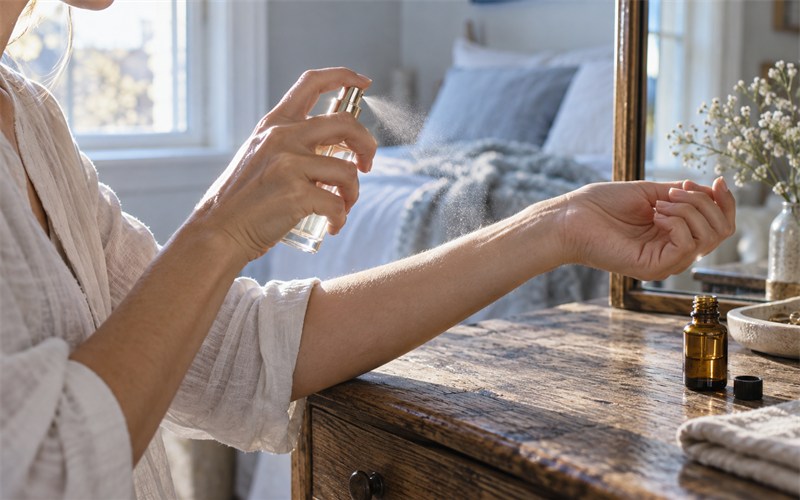
Layering means using two or more scented products in sequence. The simplest version is a fragrance-free moisturizer followed by perfume. A more expressive version combines a body oil, lotion, mist, and spray. Each format releases aroma differently: an oil tends to stay close to skin, lotion can soften the opening, and an alcohol spray usually gives the first noticeable lift.
The goal is not to make every note louder. Good layering creates a readable progression. One product provides texture or longevity; the other provides the recognizable theme. If both products are dense, sweet, woody, smoky, or heavily musky, the drydown can become crowded quickly.
Choose a base before adding a second scent
| Base product | What it can do | Best use |
|---|---|---|
| Fragrance-free lotion | Reduces dryness without changing the scent profile | When you want the perfume to remain itself |
| Matching scented lotion | Builds a familiar theme with lower intensity | When a coordinated line is available |
| Perfume oil | Adds a close, slow-moving base note | For a warm or skin-scent effect |
| Body mist | Adds a light opening that fades sooner | For casual daytime refreshment |
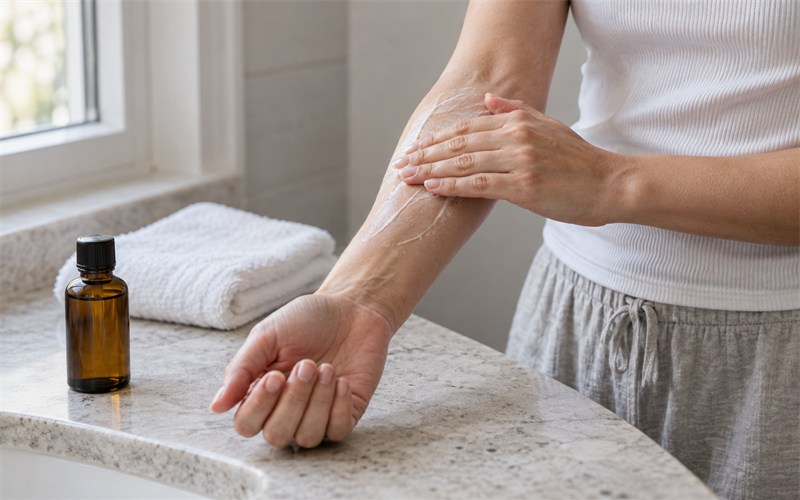
For most people, fragrance-free lotion is the most forgiving starting point. It improves the feel of dry skin without introducing a competing perfume accord. A scented lotion can work well when its fragrance is clearly lighter than the spray layered above it.
Three reliable ways to layer perfume
Keep the scent family consistent
Pairing citrus with neroli, vanilla with soft woods, or rose with clean musk is usually easier than combining unrelated statement scents. You are looking for overlap, not duplication. A bright citrus spray over a quiet cedar oil can feel more dimensional because the products occupy different moments of the wear.
Use one anchor and one accent
Choose the scent you want people to recognize as the anchor. Apply it first or give it the larger spray count. Then use the accent sparingly: one dab of oil on wrists, or one light mist on clothing if the label permits. This helps the result remain intentional.
Separate placement when both perfumes are strong
If two perfumes are both high-impact, do not stack them on exactly the same pulse point. Place the softer one on forearms and the other on the back of the neck or clothing, following product directions. They will mingle in the air while avoiding an immediate, muddy opening.
Pairings that often work and pairings that need caution
- Often easy: clean musk with citrus, light vanilla with sandalwood, tea notes with soft florals, or neroli with a transparent woody base.
- Use restraint: two sweet gourmands, two heavy ouds, leather plus smoke, or several powerful white florals. Start with one half-spray or a single oil dab.
- Test carefully: any pairing that triggers headaches, feels sharp after ten minutes, or becomes cloying in warm weather. A pleasant blotter combination can still feel too dense on skin.
Common misconception: Layering does not reliably make perfume last longer. Longevity depends on the formula, dose, skin condition, climate, and where the fragrance is applied. A light lotion may help the experience feel smoother, yet it cannot guarantee all-day wear from every spray.
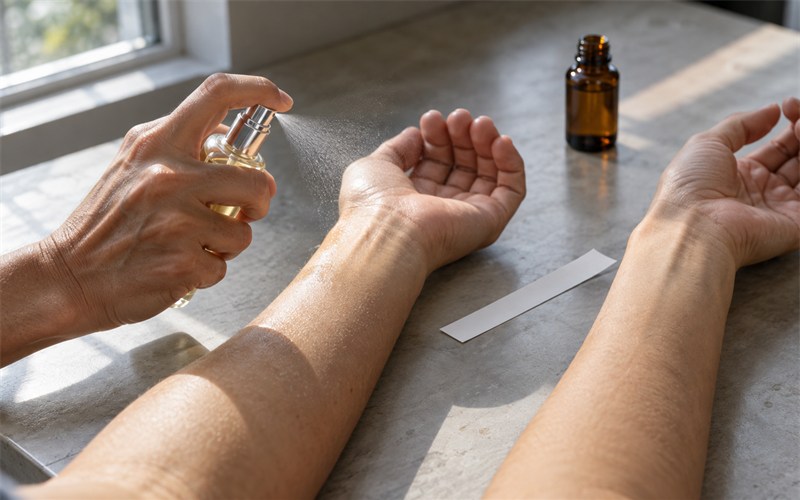
A simple testing routine before you wear a layered scent out
- Test each product alone so you know its opening and drydown.
- Apply the base layer lightly and wait a few minutes.
- Add the accent at half the amount you would normally use.
- Check the scent after 15 minutes, two hours, and later in the day.
- Ask whether one layer is adding a specific benefit. If it is not, remove it.
Keep a small note of the pairing, dose, weather, and outcome. This is surprisingly useful for people who rotate scents seasonally and for brands building coordinated body-care and fine-fragrance lines.
What brands should consider when designing layerable fragrance products
Layerable product lines need more than a shared name. A body lotion, perfume oil, and alcohol spray should be evaluated in their actual bases, at realistic consumer doses, and after drydown. A fragrance that reads softly in an emulsion may project very differently in an alcohol perfume or leave a different impression on fabric.
For fragrance buyers, prepare a brief that names the product formats, target market, desired hierarchy between layers, expected climate, and any labeling or compliance requirements. Scentake can support custom fragrance development around a product base and sensory direction, then help teams evaluate how the range performs as a system rather than as isolated samples.
Compliance note: use limits and labeling considerations can change with the product category, complete formula, and market. A coordinated collection should be assessed in each intended application; a document for one format does not automatically cover another.
FAQ
Should I apply perfume oil before or after spray perfume?
Apply a light oil first when you want it to act as a close-to-skin base, then mist the spray above it. If the oil is stronger than the spray, reverse the emphasis or use less oil. There is no universal order; the result should be tested on your own skin.
Can I layer perfume on clothes and skin?
Only when the label allows it. Some fragrances can stain delicate fabric or behave differently on textiles. Test an inconspicuous area first, and remember that a scent on clothing may persist longer than the same scent on skin.
How many perfumes should I layer?
Two scented layers are enough for most experiments. Add a third only when one product has a quiet, specific purpose such as a fragrance-free moisturizer or a very subtle body mist. More layers make it harder to identify what is working.
The most successful layered scent still feels like one coherent choice. If you are developing a coordinated fragrance range, discuss your product formats and fragrance brief with Scentake before finalizing samples.