

Why Do Some Home Fragrances Cause Headaches, and How Can Brands Make Softer Scents?

A diffuser that feels inviting in a showroom can become tiring in a small bedroom after several hours. The same can happen with a scented candle near a desk, a strong air freshener in a car, or a room spray used just before guests arrive. When someone says a home fragrance “gave me a headache,” the scent is often the most obvious part of the experience. It is rarely the whole explanation.
Key takeaway: Home fragrances can feel headache-inducing when intensity, room size, ventilation, exposure time, and individual sensitivity combine poorly. Brands can make softer scents by designing for controlled diffusion, cleaner transitions, realistic use conditions, and product-specific safety assessment rather than simply lowering fragrance oil.
Headache is a symptom with many possible causes. A scent may coincide with dehydration, screen fatigue, poor sleep, heat, stress, a stuffy room, or migraine sensitivity. Strong odors can also irritate some people’s noses or airways. That is why a responsible brand should avoid claims that one aroma chemical universally causes headaches, or that a “natural” formula automatically solves the problem.
Why a pleasant home fragrance can become overwhelming
Fragrance perception is dynamic. In the first few minutes, a room spray may feel bright and clean. After repeated spraying in a closed room, the concentration in the air rises while the user has fewer fresh-air breaks. A warm reed diffuser can also keep releasing scent when nobody is actively choosing it. The issue is often cumulative exposure rather than the first sniff.
- High intensity in a small space: A formula calibrated for an open retail area can dominate a bathroom, vehicle, or compact apartment.
- Continuous diffusion: Reed diffusers, electric devices, and heavily fragranced candles create a longer exposure window than a brief perfume application.
- Low ventilation: Closed windows, air conditioning, cooking odors, and humidity can change how a scent is noticed.
- Sensory profile: Sharp citrus, very sweet gourmand effects, heavy musks, smoky notes, or strong floral accords may feel more assertive when overdosed.
- Individual context: Migraine, rhinitis, asthma, pregnancy, medication, and personal associations can all change tolerance. A brand cannot predict every response from a formula alone.
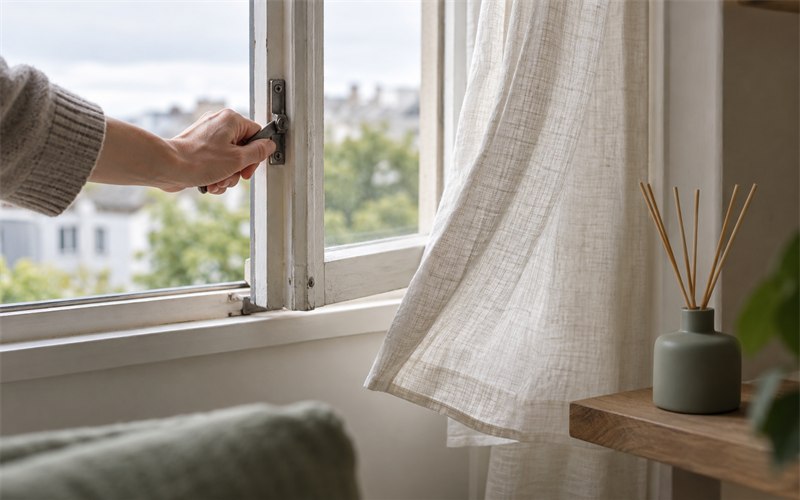
For users who repeatedly get headaches around a particular product, the practical first step is simple: stop using it, ventilate the space, and speak with a qualified clinician if symptoms are severe, persistent, or accompanied by breathing difficulty, rash, swelling, or other worrying signs. A blog article cannot diagnose the cause.
Softness is a performance target, not a weak fragrance
“Soft” does not mean odorless. It means the fragrance has a controlled presence: noticeable at an appropriate distance, less likely to fill every corner of a room, and less fatiguing over time. The target differs by format. A linen spray can offer a brief fresh lift. A reed diffuser needs to remain pleasant for weeks. A candle needs a balanced cold throw and hot throw. Treating all three as the same fragrance problem leads to disappointing results.
| Design choice | What it changes | Useful question for a brand |
|---|---|---|
| Fragrance load | Initial impact and ongoing intensity | Does the product still read clearly at the intended dose? |
| Diffusion system | How quickly scent enters the room | Is release adjustable, intermittent, or continuous? |
| Accord structure | Sharpness, sweetness, warmth, and fatigue risk | Which notes become dominant after 30 minutes? |
| Use instructions | Real-world exposure | Can customers easily control placement, number of reeds, or spray count? |
A softer direction often uses more space between scent events. That can come from a lower release rate, a less aggressive top-note burst, fewer competing sweet or smoky facets, or a base that supports the fragrance without turning opaque. It also comes from testing at the distance and duration a customer will actually experience.
What brands can change during fragrance development
The right adjustment begins with a clear brief. “Make it softer” is useful as a starting point, yet a perfumer needs to know whether the complaint is about sweetness, projection, a sharp opening, lingering residue, or the context in which the product is used. A fragrance that feels calm in a large living room may still be too present in a hotel elevator.
Design the opening for the actual room
Fast, sparkling materials make a product feel fresh at first. In an enclosed room, an overbuilt opening can read as piercing. Evaluation should include the first five minutes and the first half hour, with ordinary ventilation and realistic dosage. Reducing a single material is seldom the most reliable fix; changing the balance around it can preserve freshness while easing the initial impact.
Control the release mechanism
Product engineering matters as much as the perfume concentrate. Diffuser base, reed count, wick choice, burner temperature, spray actuator, and package volume all affect scent delivery. A brand can offer customer control through fewer reeds, adjustable settings, measured spray guidance, or smaller room-format options. These choices reduce the risk of a strong formula being used at an unsuitable intensity.
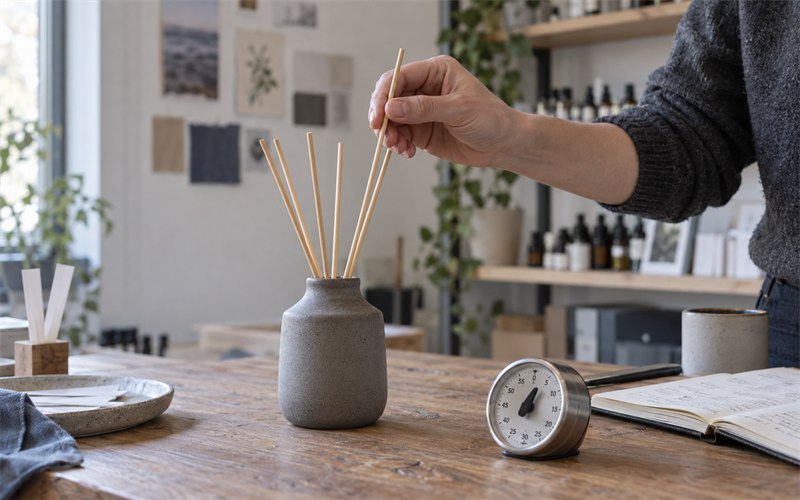
Test for sensory fatigue, not only first impression
Panel feedback should capture distance, room size, elapsed time, and the product setting. Ask whether the scent becomes dull, cloying, sharp, or simply too noticeable after 20, 60, and 120 minutes. Include participants who enjoy fragrance and those who use it more sparingly. A formula can score well in a quick sniff test yet underperform in sustained home use.
For fragrance buyers: Give the development team the product format, target room size, expected use frequency, target market, scent references, and the specific consumer feedback you want to solve. “Light for bedrooms, present for living rooms, no harsh citrus burst” is far more actionable than “make it premium.”
Safety and compliance still require a product-specific review
Fragrance safety is assessed in relation to intended use and exposure. The IFRA Standards can prohibit, restrict, or specify conditions for particular fragrance materials, and the relevant category depends on the finished consumer application. For a fragrance mixture, the applicable limit can be driven by its most restrictive ingredient. These standards are an important part of product stewardship; they do not replace every legal requirement in every market.
Compliance note: The permitted use level of a fragrance material can vary by product category, formula composition, intended exposure, and target market. Final compliance should be assessed using the complete fragrance formula and intended application. Good documentation may include an IFRA Certificate of Conformity for the specified use, an SDS where appropriate, and product-specific regulatory review.
Careful language matters. “Low-allergen,” “non-toxic,” and “headache-free” are not casual marketing labels. They can create claims that are difficult to support across individual users and markets. A more credible promise is to explain the use setting, provide clear instructions, and maintain traceable documentation for the formulation supplied.
A practical checklist for a gentler home-fragrance launch
- Define the space: bedroom, living room, car, hospitality area, or retail environment.
- Set an intensity target at a stated distance and time, rather than using “strong” or “soft” alone.
- Evaluate the fragrance in the final diffuser, candle, spray, or other finished base.
- Run repeated-use tests with normal ventilation and realistic consumer instructions.
- Record panel feedback by timing and setting, then revise either the fragrance, the release system, or both.
- Review applicable safety and market documentation before release.
For brands building a home-fragrance range, a measured sensory target is also commercially useful. It can create clearer product differentiation: an active kitchen spray, a calm bedside mist, and a more diffusive entryway reed system do not need to compete at the same volume.
FAQ
Can natural home fragrances still trigger headaches?
They can feel overwhelming for some people. Natural origin does not determine comfort, safety, diffusion rate, or individual tolerance by itself. Essential oils and botanical extracts also vary in composition and can have strong odor profiles. Brands should evaluate the complete formula in its final application.
Does less fragrance oil always make a room fragrance softer?
No. Lowering dosage may reduce impact, yet the release system and accord structure still shape the experience. A sharply diffusive formula can feel intense at a modest load, while a better-balanced fragrance can feel present without becoming tiring. Test the whole product, not the concentrate in isolation.
How should brands respond to customer complaints about scent headaches?
Take the report seriously, avoid diagnosing the customer, and collect useful context: product format, amount used, room size, ventilation, timing, and any recurring pattern. Review batch records and instructions, then use the findings to guide product and fragrance evaluation. Escalate safety concerns through the appropriate quality and regulatory process.
A home fragrance should support a space rather than compete with it. If you are developing a diffuser, candle, room spray, or fabric refresher, Scentake’s custom fragrance development process can start with the product base, target room, sensory brief, and intended market. For procurement planning, it also helps to know the difference between an SDS, IFRA Certificate, and COA before samples move into final evaluation. Discuss your fragrance brief when you are ready to define a calmer, more controllable scent experience.