
Does Candle Cure Time Affect Hot Throw? What Makers Should Test
A candle can smell promising after it cools and still perform very differently once it has rested and completed a full burn cycle. Makers often call that resting period “cure time.” It matters, yet it is only one part of the candle system.
Key takeaway: Cure time can affect how a candle’s cold throw and hot throw are judged, so makers should test after the wax supplier’s recommended cure window. It cannot rescue an unsuitable wick, vessel, fragrance load, or fragrance–wax pairing. A useful hot-throw result comes from a controlled burn test, not from waiting for a magic number of days.
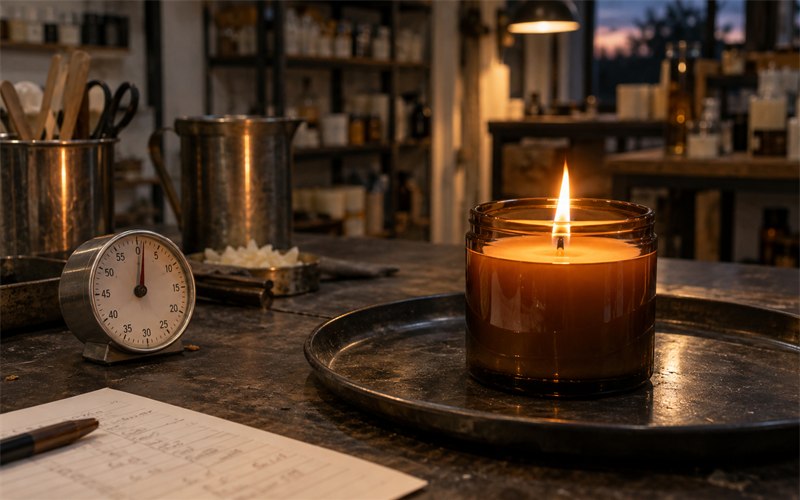
Hot throw is the scent a candle releases while burning. It develops as the melt pool forms and fragrance reaches the air. Because wax type, fragrance oil, wick, vessel diameter, burn duration, room conditions, and cure period all interact, two candles made with the same fragrance can give different impressions. The right question is less “How long must every candle cure?” and more “What does this complete candle system do after its intended cure window?”
What cure time can change
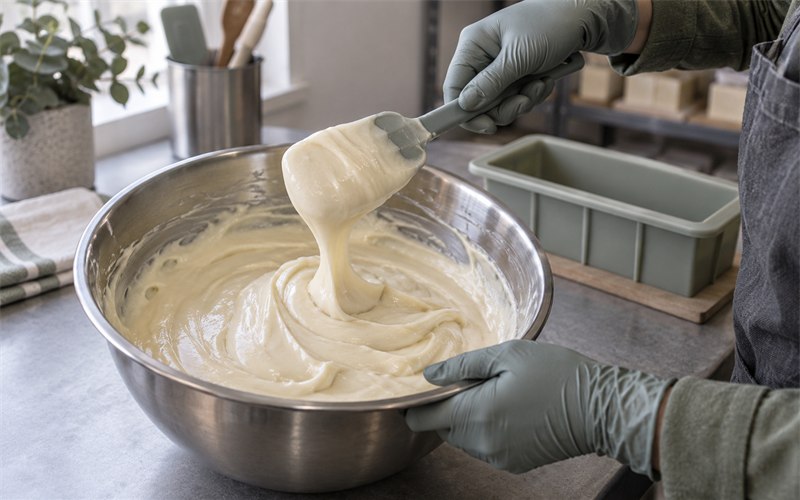
Cure time is the period after pouring when a candle rests before final evaluation. Depending on the wax and fragrance system, the scent character and perceived strength may change during that period. CandleScience recommends evaluating cold and hot throw after candles have cured fully, and defines hot throw as the fragrance experienced after a candle has burned long enough to form a full melt pool.
That does not justify a universal cure rule. Wax suppliers and fragrance suppliers may give different guidance for their materials. A small test batch also needs a documented baseline: same wax, vessel, wick series, fragrance load, fill weight, pour process, and testing room. Without that baseline, a longer cure can be mistaken for an improvement caused by another change.
Why hot throw is more than a fragrance-oil question
| Variable | Why it matters | What to record |
|---|---|---|
| Wax and fragrance load | They affect compatibility and scent availability in the finished candle. | Wax grade, load percentage, mixing temperature. |
| Wick and vessel | They shape melt-pool size, flame behavior, and heat over the burn. | Wick series and size, vessel diameter, fill depth. |
| Cure period | It sets the point at which the intended system is evaluated. | Pour date, test date, storage conditions. |
| Test setting | Room size and airflow change perceived intensity. | Burn duration, room size, ventilation, panel notes. |
A stronger fragrance load is not automatically a better answer. If the system has poor compatibility or the wick does not create a stable melt pool, adding more oil can introduce new problems without giving a reliable improvement. Follow the maximum load and process guidance for the wax, then test changes one at a time.
How to build a useful cure-time test
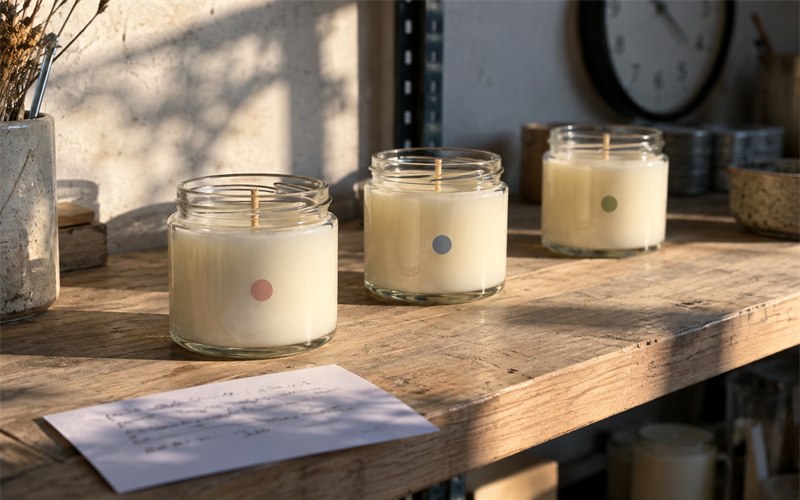
Start with one formula and make enough identical testers to compare planned dates. A practical schedule may include an early observation, the supplier-recommended cure point, and a later confirmation. The dates are not the result by themselves. They are checkpoints for observing the same product under comparable conditions.
- Lock the controls. Use one wax, one fragrance load, one vessel, one wick, and the same production method.
- Record the pour. Log batch code, fragrance addition temperature, pour temperature, fill weight, and visual observations.
- Store consistently. Keep testers away from direct sun, heat, and strong surrounding odors.
- Burn comparable candles. Test after the planned cure point and allow a full melt pool where appropriate for the vessel.
- Score more than scent strength. Note cold throw, hot throw, flame, soot, mushrooming, vessel temperature, melt pool, and scent character.
- Change one variable next. If the candle underperforms, revise wick or fragrance load in a new test set rather than changing everything together.
The basic burn-test guidance from CandleScience makes the same practical point: wax, fragrance load, wick, color, and container all affect performance. A good test notebook turns that complexity into decisions a team can repeat.
Read the results at more than one point in the candle life
Hot throw should be assessed across burn cycles, not only during the first dramatic melt pool. A candle may smell strong early and become less balanced as the wax level drops. A wick that looks appropriate on the first burn may prove too hot or too cool later. Record the time to melt pool, scent character after the room is closed for a realistic interval, and any visible burn behavior.
Use a small panel when possible. One person may love a rich gourmand accord in a compact room while another finds it tiring. Ask panelists to describe distance, strength, clarity, and whether the scent changes from pleasant to heavy over time. These notes are more useful than a single “good” or “bad” score.

Safety and launch readiness
A fragrance brief for candles should identify the wax system, intended market, vessel, target scent character, burn profile, and documentation needs before fragrance selection is finalized. The final formula needs review for its intended use. An IFRA Certificate of Conformity, where applicable, relates to a specified finished-product application and does not replace a complete product safety, labeling, or market review.
For fragrance buyers: Share the wax type, fragrance percentage range, vessel dimensions, wick candidates, target burn time, markets, and desired scent intensity when requesting samples. This helps a developer propose fragrance directions that can be evaluated in the actual candle base instead of only on a blotter.
FAQ
Can I test hot throw the day after pouring?
You can make an early observation, yet it should not be treated as the final performance result if the wax supplier specifies a longer cure window. Record it as an early data point and compare it with a planned test after the intended cure period.
Will a longer cure always make a candle smell stronger?
No. The effect depends on the complete wax, fragrance, wick, vessel, and process system. After the relevant cure point, weak hot throw may point to other variables that need controlled testing.
What should a candle brand send with a fragrance development brief?
Include the wax, vessel, fragrance load range, wick candidates, desired scent family, intended market, performance goal, and any target documents. The details make it easier to evaluate sample behavior in the intended product format.
For a commercial candle launch, the most useful goal is a repeatable test process. Scentake’s custom fragrance development process can begin with the wax system and fragrance brief, while our guide to SDS, IFRA Certificates, and COAs helps procurement teams prepare the right questions. Discuss your candle fragrance brief when you are ready to test a product-specific direction.