
Can the Wrong Wick Make Your Fragrance Oil Smell Weak?
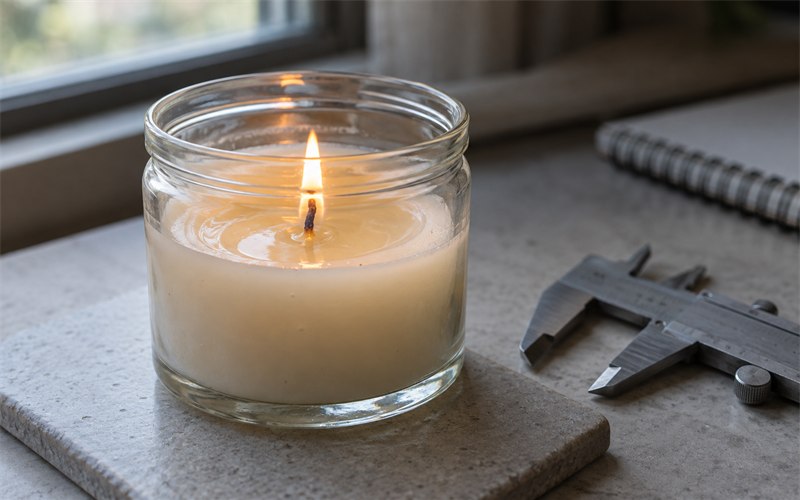
A fragrance oil can smell clear and expressive in the bottle, then seem almost absent when the candle is lit. It is tempting to blame the oil immediately. In many cases, the wick is part of the problem because it controls the heat and melt pool that allow fragrance to reach the air.
Key takeaway: The wrong wick can make a candle’s fragrance seem weak, yet a wick is only one variable in the finished system. Test wick series and sizes against the actual wax, vessel, fragrance load, and burn conditions before changing the fragrance oil or increasing dosage.
Hot throw is not a direct measure of how strong a fragrance concentrate smells. It is a performance result created by heat, wax, surface area, airflow, and scent structure. A candle that burns too cool may never form a useful melt pool. One that burns too hot can create another set of problems, including an unstable flame, excess soot, or a scent profile that feels unbalanced later in the burn.
How a wick changes fragrance release
The wick supplies heat to the candle system. Its size, construction, and interaction with the wax influence flame height, melt-pool width and depth, and the rate at which warmed wax presents fragrance to the air. The same wick can behave differently in a wider jar, a softer wax blend, or a formula with a different fragrance load.
A too-small wick can leave a narrow melt pool and weak perceived scent. A too-large wick can give a very fast, dramatic first impression while reducing control over the burn. Neither result tells you that the fragrance oil is inherently weak. It tells you that the complete candle needs a more disciplined comparison.
| Observed sign | Possible wick-related question | What to test next |
|---|---|---|
| Weak scent and narrow melt pool | Is the wick delivering enough heat for this vessel? | Compare the next wick size in the same series. |
| Strong early scent with heavy flame | Is the candle becoming over-wicked? | Track flame, soot, vessel heat, and later burn cycles. |
| Uneven scent from candle to candle | Are process and wick placement controlled? | Check centering, trimming, fill weight, and batch records. |
| Good cold throw, poor hot throw | Does the heat system match the fragrance–wax pairing? | Hold formula controls and run a wick comparison. |
Separate a wick issue from a fragrance issue
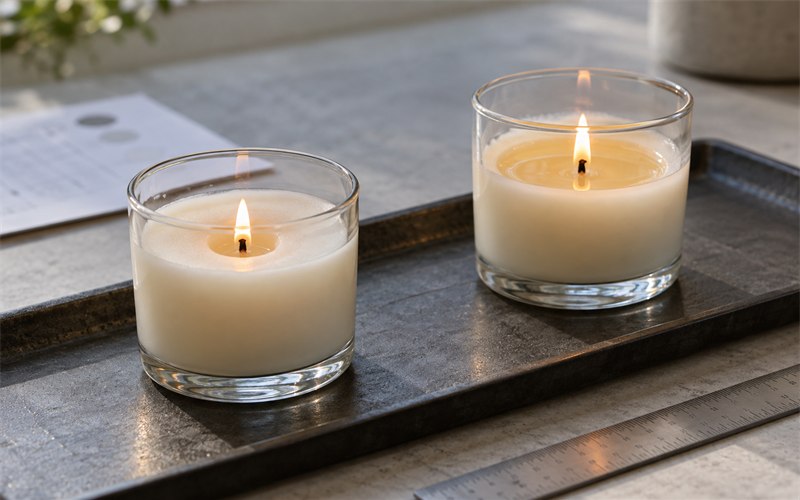
Change one variable at a time. If you increase fragrance load, change wax, and move to a new wick at once, the test cannot explain which choice caused the result. Start with a fixed wax, vessel, fill weight, fragrance oil, fragrance load, cure period, and testing room. Then compare two or three carefully selected wick options.
- Use identical, fully cured testers made from one batch when possible.
- Trim and light candles consistently, then record flame shape and time to a useful melt pool.
- Evaluate hot throw at a stated time and distance in the same room.
- Continue through later burn cycles rather than judging the first burn alone.
- Review soot, mushrooming, vessel temperature, and end-of-burn behavior alongside fragrance.
CandleScience’s burn-test guidance similarly treats wax, fragrance load, wick, color, and container as one system. The best wick is not simply the largest option that produces more scent. It is the option that supports acceptable fragrance performance while meeting the intended burn profile.
What makers should record during a wick test
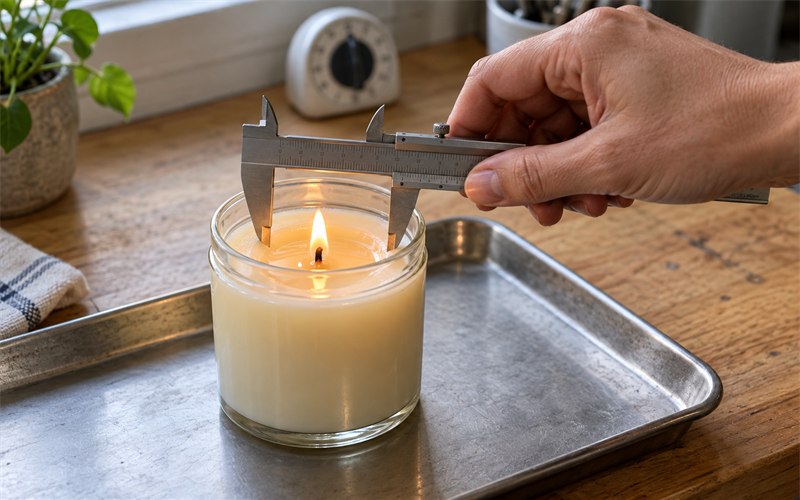
Useful notes turn sensory feedback into production decisions. Record wick series and size, vessel dimensions, wax and fragrance load, cure date, burn duration, ambient conditions, melt-pool dimensions, flame behavior, and scent description. Photographs can help with visual comparisons, while a short panel form can capture whether the scent is clear, faint, harsh, or tiring over time.
Do not assume the strongest scent is the target. A hospitality candle, bedside candle, and open-plan living-room candle may need very different intensity targets. The goal is a scent experience that matches the room, product position, and expected use rather than a single maximum score.
Fragrance development and compliance considerations
Before changing a fragrance oil to chase stronger hot throw, confirm the product brief: wax base, vessel, wick candidates, scent family, intended room size, target market, and sensory target. A fragrance can be evaluated more accurately when it is developed in the actual candle base. The final formula also needs review for the intended application. IFRA Standards can restrict or specify conditions for particular materials, and the relevant assessment depends on the finished use.
For fragrance buyers: Include your wax grade, vessel diameter, fragrance-load range, wick candidates, test results, and target market in the sample brief. These details make it easier to distinguish a scent-direction issue from a candle-engineering issue before commercial production.
FAQ
Can a larger wick always improve hot throw?
No. A larger wick may increase heat and melt-pool development, yet it can also create excessive flame behavior or reduce balance later in the burn. Test the complete candle system and judge safety and performance together.
Why does my candle have good cold throw but weak hot throw?
Cold throw and hot throw are different observations. Good cold throw does not guarantee that the wax, wick, vessel, and fragrance system will release scent effectively while burning. A controlled wick comparison is a sensible next step.
Should I change the fragrance oil first?
First check the performance controls already in the candle: wick, wax, vessel, load, cure period, and burn conditions. If these have been tested and documented, a fragrance reformulation may be the right next investigation.
Reliable hot throw is a development question, not a guess. Scentake’s custom fragrance development process can begin with your candle base and testing brief. For procurement teams, review the roles of an SDS, IFRA Certificate, and COA before final sign-off, or discuss your fragrance brief with the product details that matter.