
Fragrance-Free vs Unscented: Why the Difference Matters for Sensitive Users
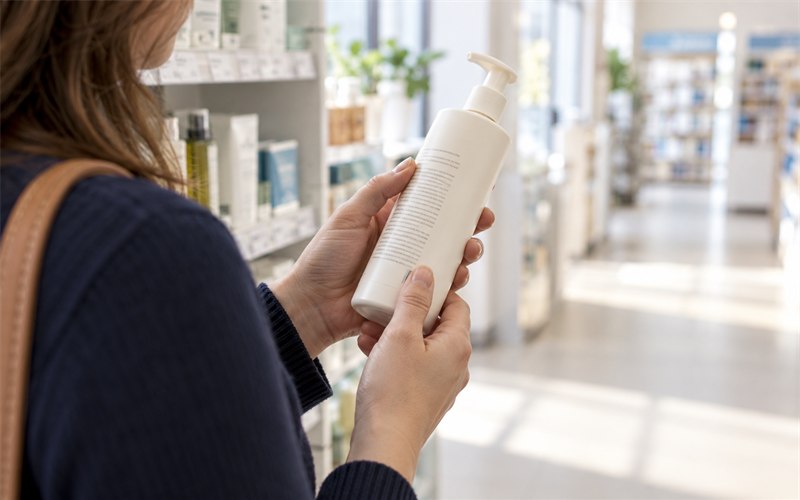
You buy an unscented hand cream because the last one left your skin itchy. This replacement smells almost like nothing, so it seems a sensible choice. Then you turn over the tube and find fragrance in the ingredient list.
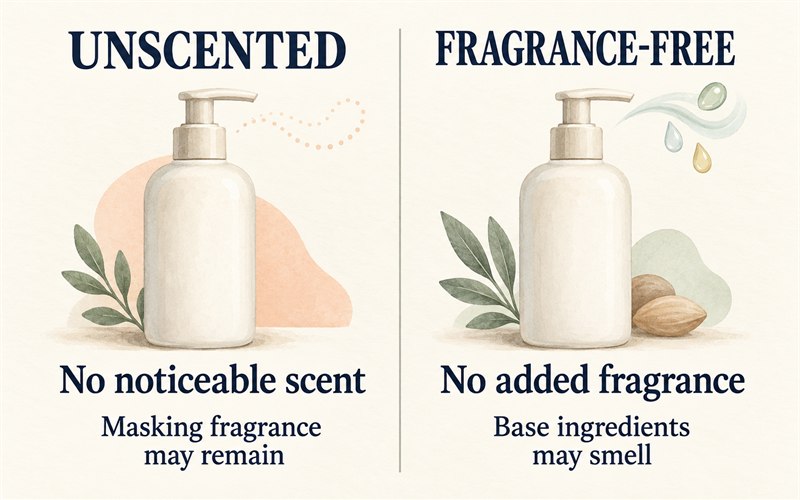
The distinction matters because unscented describes the smell you notice; fragrance-free describes the absence of added fragrance. Some unscented products use masking fragrance to cover the smell of their base ingredients. That can leave a sensitive user exposed to fragrance ingredients even without a recognisable perfume. Choosing fragrance-free is a useful first filter, followed by checking the complete formula and your own known triggers.
What fragrance-free and unscented actually mean
The US Food and Drug Administration (FDA), which regulates cosmetics in the United States, explains in its guidance on cosmetic wipes that fragrance-free cosmetics should contain no added fragrance ingredients. It also makes an easily missed point: other ingredients can have their own odour.
An unscented label usually describes a product without a noticeable scent. The FDA’s fragrance guidance says some such products may contain fragrance used to mask an unpleasant base smell. You cannot tell which formulation you have simply by sniffing the bottle.
| Label or experience | What it tells you | What to check next |
|---|---|---|
| Fragrance-free | The cosmetic should contain no added fragrance. | The whole ingredient list and any substances you already know you react to. |
| Unscented | There is no obvious scent. Masking fragrance may still be present. | Whether perfume or masking fragrance has been added. |
| A faint smell | Other ingredients may have an odour, even in a fragrance-free formula. | Ingredient information rather than judging the claim by smell alone. |
Why a quiet scent can still matter to your skin
Masking an odour does not establish that its ingredients have been removed. A fragrance ingredient can still contact your skin inside a cream or cleanser whose smell barely registers. This is why a scent description gives you less useful information about avoiding a trigger than the composition of the product.
The American Academy of Dermatology (AAD), a US-based professional association of dermatologists, distinguishes two forms of contact dermatitis. Irritant contact dermatitis develops when something injures and irritates the skin. Allergic contact dermatitis involves an immune response to a substance the person is allergic to, and the rash can take hours or days to appear.
Those are different routes to a skin problem. A burning sensation or rash alone does not identify fragrance as the cause, and describing your skin as sensitive does not establish a fragrance allergy. For people with atopic dermatitis, the AAD’s eczema care guidance recommends fragrance-free skincare because fragrance can trigger flares. Shop for the relevant ingredient claim rather than choosing whichever bottle has the weakest smell.
Why fragrance-free can still leave you with a reaction
Removing added fragrance addresses one possible source of trouble. A moisturiser still contains other ingredients, and your reaction history matters when you compare products. In its advice on testing skincare, the AAD notes that ingredients such as preservatives can cause allergic contact dermatitis. Its eczema guidance also recognises other possible triggers. A fragrance-free label gives you a reason to shortlist a product, without settling whether the entire formula suits your skin.
Natural ingredients deserve the same attention. A 2024 peer-reviewed review in the dermatology journal Acta Dermato-Venereologica describes contact allergy to essential oils and explains that botanical names on cosmetic labels may conceal their relevance as fragrance materials from shoppers. This is a review of clinical evidence, rather than a test showing every plant extract is problematic.
If you are avoiding fragrance, check an essential oil for its role in the formula and for any allergens relevant to you. Lavender oil or a floral oil added for scent needs attention even if the packaging emphasises its plant origin. Our guide to fragrance ingredients can help you understand that vocabulary before asking the manufacturer a more specific question.
How to check a bottle before buying it
Start with the packaging you will actually take home. A retailer’s short description is useful for searching, yet the current ingredient declaration gives you a better starting point for checking a particular product.
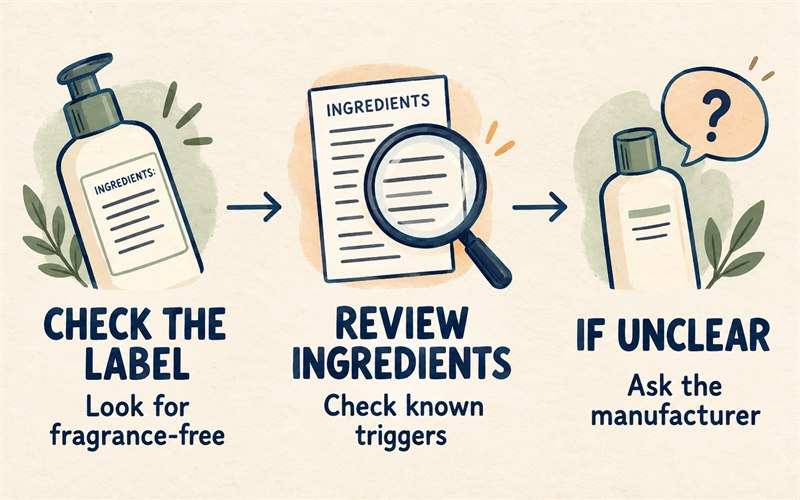
- Look for an explicit fragrance-free claim. If the label says only unscented, leave open the possibility of masking fragrance. Check terms such as fragrance or parfum in the ingredient list, along with any essential oils.
- Compare the full list with your known triggers. Use the ingredient names and alternatives your dermatologist has identified for you. A front-label claim cannot replace that individual information.
- Ask a precise question when the formula is unclear. For example: “Does this product contain added perfume, masking fragrance or essential oils used for scent?” If you have a diagnosed allergy, ask about the specific ingredient you need to avoid.
There is a limit to what the word fragrance tells you. The US cosmetic ingredient rule, 21 CFR 701.3(a), permits fragrance ingredients to be listed collectively as fragrance. That entry does not provide the whole fragrance composition. Contacting the manufacturer can be necessary when your question concerns a particular substance.
Other reassuring words answer different questions. In the United States, the FDA says there is no federal standard or definition for hypoallergenic cosmetics. Treat hypoallergenic as a separate claim to examine. It does not tell you whether fragrance has been added.
Introducing a new product without guessing at the cause
Introduce one new item at a time and keep the packaging or a photograph of its ingredients. For ordinary skincare introduction, the AAD suggests using a small test spot twice daily for seven to ten days, with the normal amount of product and its usual contact time. A wash-off product should still be washed off according to its directions. If your skin reacts, wash the product off and stop using it. Note where and when symptoms occur so you can discuss the exposure with a clinician.
This small-area trial gives you an observation about that product under those conditions. It cannot identify an individual allergen or guarantee future tolerance. Avoid deliberately trying a product containing a known trigger; follow your clinician’s avoidance advice.
Recurring or persistent rashes deserve a more targeted assessment. The AAD explains that a dermatologist may recommend medical patch testing to investigate delayed allergic skin reactions. Clinical testing and interpretation differ from trying a dab of cream at home. Bring your product list and reaction notes so the assessment starts with the exposure you actually had.
Questions that come up while shopping
Can fragrance-free skincare still smell?
Yes. Other ingredients may contribute an odour without added fragrance. A smell alone does not prove the label is wrong. If the scent seems inconsistent with the claim, check the ingredients and ask the manufacturer what produces it.
Does every unscented product contain masking fragrance?
No. Some may contain it. The reason to check is that unscented alone does not confirm its absence. For someone avoiding added fragrance, an explicit fragrance-free claim provides a more useful starting point.
Are essential oils a better choice for fragrance-sensitive skin?
Plant origin does not establish suitability. Some essential oils contain fragrance contact allergens. Check the specific oil and your own allergy information rather than treating natural fragrance as an automatic substitute.
Does no reaction after one use mean a product is suitable?
One uneventful use is limited evidence. Allergic contact reactions may be delayed, and home product testing cannot diagnose an allergy. If rashes keep returning, seek an assessment instead of repeatedly switching to less noticeable scents.
For brands, make the fragrance-free brief explicit
A buyer developing a sensitive-user range can put the distinction into the sample brief: no added perfume, no masking fragrance, a current full ingredient declaration, and a clear explanation of any essential oils or ingredients with more than one function. Specify the product category and selling markets so the proposed claim can be reviewed against the rules that apply.
Certification also needs its own question. The US Environmental Protection Agency (EPA), the federal environmental agency, offers an additional fragrance-free certification within its voluntary Safer Choice and DfE programmes. Its current standard requires eligible products to meet the programme requirements and undergo EPA review for fragrance materials, including chemicals with a fragrance function alongside another role. That programme certification is distinct from ordinary wording on cosmetic packaging.
Request evidence for the finished formula and the claim being made. Our guide to what a fragrance supplier does helps clarify which questions belong with each partner. Scentake approaches fragrance product development as a brief, sample and supply-chain discussion. If you are comparing scented and fragrance-free options for a product range, share your product type, target markets and intended label claim. Agree on what needs to be documented and reviewed before moving from a sample to an order.