
How to Write a Fragrance Brief That Helps Perfumers Create the Right Scent

A perfumer reading “fresh, luxurious and long-lasting” still needs to know what fresh means to your customer. Bright citrus, green leaves and a cool watery impression could each take the project in a different direction. A fragrance brief brings that sensory request together with the product, budget, markets and way you will approve a sample.
Start with the facts you already know. Describe the experience you want, put the most important requirements first and mark the decisions you need help making. The brief can develop through the conversation.
Start your fragrance brief with the product
Name the product before listing notes. An alcohol-based perfume spray, a solid perfume and a candle give the developer different application questions. Include the intended base, packaging and proposed fragrance level if you have one. If the formulation is still open, ask the supplier what it needs to prepare an appropriate sample.
Australian fragrance developer JH Lever & Associates asks for application, positioning, dosage, sales countries and budget per kilogram in its fragrance brief form. These fields show how a supplier connects the creative request to the product it will supply. Use them to check whether your own brief gives the team enough context. JH Lever’s fragrance brief form.
Describe who is buying and when they will wear or use the product. “A travel spray sold through a lifestyle shop for daytime use” gives the perfumer a setting to discuss. Add your planned first quantity, expected repeat demand and target launch window. State which dates are fixed and which are estimates.
Give the perfumer sensory priorities
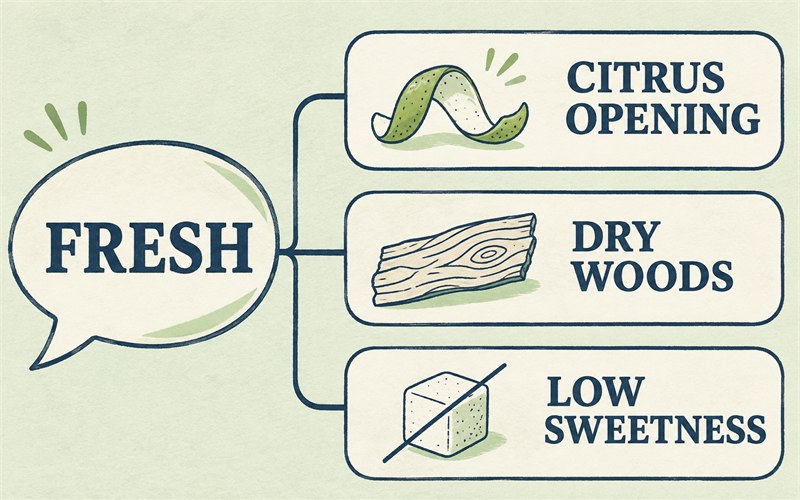
Choose a few things that must survive every revision. You might ask for a bright citrus opening, a dry woody finish and restrained sweetness. Explain which aspect leads the scent. If the opening is central to the concept, say what you would accept changing in the drydown.
References help when you identify the feature you mean. With a supplied reference, explain that you like its airy opening or soft wood texture, then name the element you would change. You can include a mood image and describe the association it carries for you. Keep those references connected to the scent experience you want evaluated.
You can leave room for interpretation. Texas fragrance development studio Project Fragrance describes building the brief with clients around mood, notes, audience and references. Its process illustrates how an initial idea can become a shared development brief. Project Fragrance’s development process.
Use a filled example to check your own brief
Here is a hypothetical first brief for a brand planning a perfume spray. Adapt the choices to your project and put open questions next to the relevant field.
- Product and customer. A 50 mL alcohol-based spray for customers buying a daytime fragrance from our lifestyle store. Initial sales planned for the UK and UAE.
- Scent direction. Bright citrus at first spray, developing toward soft, dry woods. Keep the sweetness low enough for the woody character to remain clear.
- Priorities and references. Preserve the citrus lift and dry finish. A supplied reference illustrates the airy opening we like. Please explore a softer wood texture.
- Presentation and volume. We are considering an existing bottle and pump. First-order quantity and reorder plan are open. Please show the minimums for the proposed format.
- Cost and technical questions. Finished-unit cost target is being set. Please identify development charges and the basis for any concentrate quotation. Confirm the proposed fragrance level, sample format and document scope for each market.
- Sample decision. Our product lead will consolidate feedback and approve the direction. Please agree the sample rounds, evaluation plan and production approval steps with us.
Give costs a unit and a scope as soon as you can. A fragrance concentrate price per kilogram and a finished-bottle price cover different purchases. If you have a ceiling, state what it includes. Ask the supplier to flag where the proposed scent or presentation would exceed it.
List required documents and any proposed marketing claims for review. The fragrance supplier document guide explains what to ask for as the project takes shape.
Write feedback against the sample code
Before samples arrive, agree who evaluates them, the form supplied and how the team will record observations. JH Lever says it gives each sample an individual identification code. Retain that code with your notes so the next request points to the exact version you smelled. JH Lever’s sample FAQ.
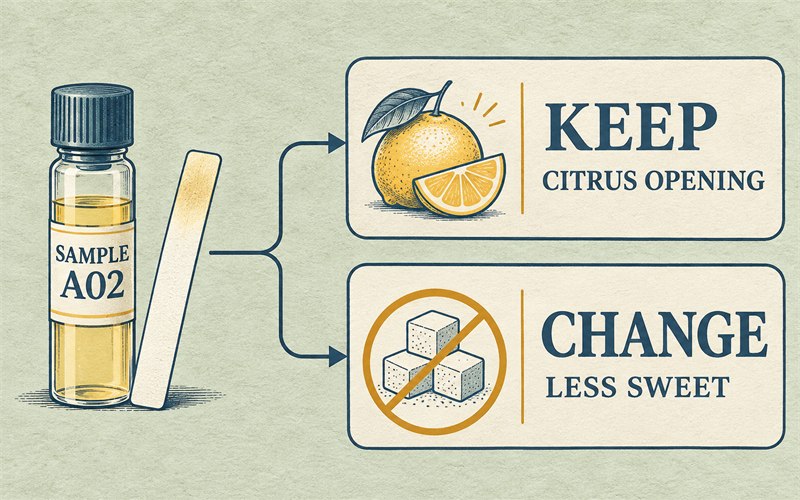
For an agreed perfume-spray evaluation, you might record first impressions, a later check at 15 minutes and another at two hours. Those are proposed observation points to discuss with the developer. Write down the application and conditions you used, and keep them consistent when comparing versions.
A useful revision note could read, “Sample A02, on a blotter. The citrus opening fits the brief. At the later check, the sweet impression covers the dry woods. Keep the opening and explore a less sweet drydown.” This tells the perfumer what to retain and what to work on. Consolidate differing opinions into one request and identify the person making the decision.
Date the brief whenever a core requirement changes. If a new bottle, product base, market or cost target enters the project, ask what needs to be reviewed before continuing. The custom perfume development guide follows the work through sample approval and production handover.
Questions before sending the brief
Do I need to know perfume ingredients?
Plain sensory language is enough to start the discussion. Describe what you smell, how you want it to develop and which references help explain it. Ask the perfumer to propose materials and a direction within the product and commercial constraints you have given.
Can one brief cover a perfume and a candle?
Use a shared sensory concept and give each product its own application details, sample plan and approval. Ask the developer how the scent needs to be adapted for each base. Record the decisions against the relevant product so feedback on one version stays attached to it.
Bring your first brief to the discussion
For a Scentake project discussion, gather the product format, scent priorities, references, markets, quantity and cost questions in one document. Mark what is fixed and what you want to explore with the development team. Send your fragrance brief.