
Should You Spray Perfume on Skin or Clothes? Longevity, Staining and Safety
Skin and fabric tell a perfume different stories
Spraying perfume on skin gives it warmth, movement and the chemistry of the wearer. Spraying it on clothes can make some notes linger longer, yet fabric introduces a different set of questions: staining, fibre compatibility, colour transfer and how the scent develops without skin warmth. Neither choice is universally right.
Key takeaway: Apply perfume to clean, healthy skin when you want to experience the formula as it was designed for personal wear. Use clothing only with caution, after a discreet fabric test, and avoid delicate materials, pale silk, leather, suede and jewellery. A longer scent on fabric does not automatically mean a better or safer application.
This distinction also matters in product development. A fine fragrance, body mist and fabric spray have different bases, exposure patterns and performance expectations. The right fragrance brief begins with the real point of contact.
What changes when perfume meets skin
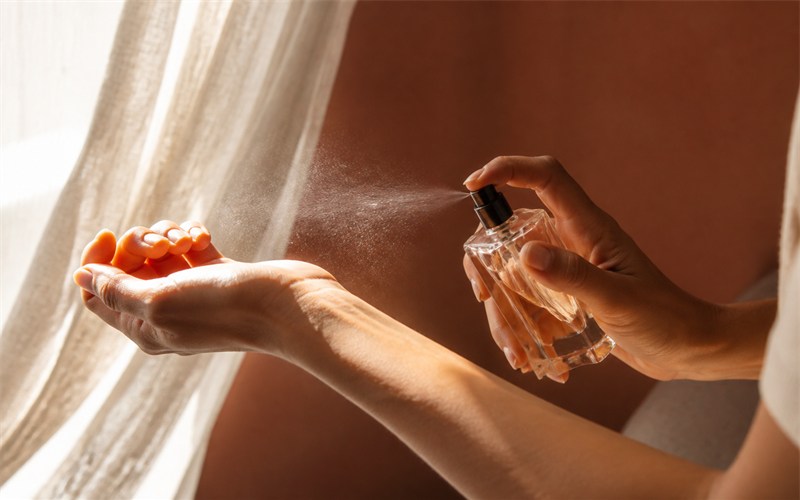
Skin warmth helps volatile top notes rise quickly. Natural skin oils, hydration, weather and recent skincare products can influence the way the heart and drydown unfold. That is why the same perfume can feel airy on one person and denser on another. Pulse points are popular because warmth and movement make the scent easier to notice, though there is no need to rub the wrists together after spraying.
Use a light application on clean skin and give the alcohol a moment to evaporate. If you have known fragrance sensitivity, a skin condition or a medical concern, follow the product guidance and seek suitable professional advice. Patch testing may help with personal sensitivity, though it does not replace a product’s safety assessment.
Why fabric can hold a fragrance longer
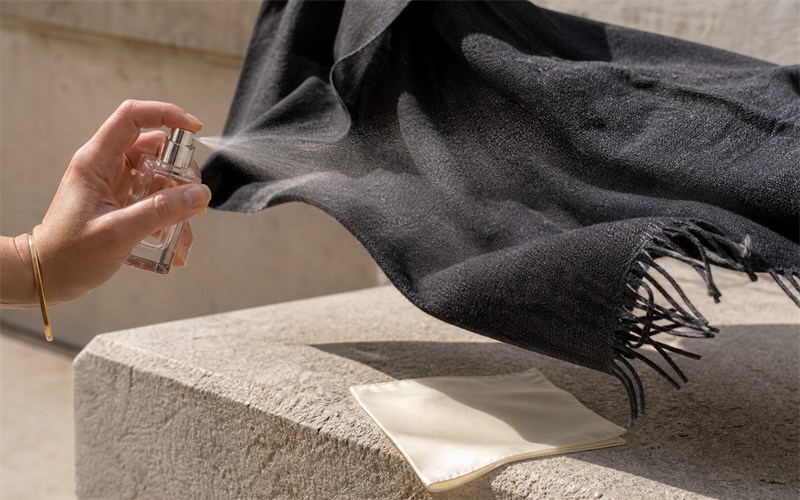
Textile fibres can retain aromatic materials differently from skin, particularly in a scarf, coat lining or knitwear. Without skin warmth, the opening may seem quieter while base notes remain noticeable for longer. This can be pleasant, though it can also make a dense fragrance feel persistent in a way the wearer did not intend.
Perfume alcohol and coloured materials can mark some fabrics. White silk, satin, suede, leather and delicate synthetics deserve special caution. A small test on an inconspicuous area is sensible. Keep the spray at a distance, and avoid oversaturating one spot.
Skin or clothes: a practical comparison
| Question | On skin | On clothes |
|---|---|---|
| Scent development | Warmer, more interactive with the wearer | Often cooler and closer to the bottle character |
| Longevity | Depends on skin and formula | May linger longer on some fibres |
| Main risk | Personal sensitivity or irritation | Staining, fibre damage or lingering odour |
| Best practice | Light spray on clean, healthy skin | Test a hidden area and spray sparingly |
For a balanced approach, many people apply one light spray to skin and let the rest of the scent come from the natural diffusion of the formula. If you want scent on clothing, treat it as a separate choice rather than an automatic extension of skin application.
Safety and formula category still come first
Fine fragrance is developed for a defined personal-use application. A fabric spray, laundry fragrance or home-fragrance product needs its own evaluation in its own base and expected exposure pattern. The IFRA Standards organise restrictions and limits around intended finished-product uses. A fragrance that is appropriate for one use should not be assumed suitable for another.
That is also why an IFRA certificate is linked to a specific application. For brands considering both a perfume and a scented textile product, separate briefs and finished-product checks are usually more useful than trying to force one formula into every format.
How brands can design for the intended contact point
Ask early whether the product will touch skin, hair, fabric, air or a combination of surfaces. The answer shapes the fragrance concentration, carrier, performance target, package and testing plan. A long-lasting accord in a fabric-care product may be judged by retention after washing. A fine fragrance is judged by opening, comfort, diffusion and drydown on skin.
For fragrance buyers: specify product format, base, target market, desired wear profile, fabric or skin contact and any staining concern before sampling. Scentake’s custom fragrance development process can then centre on the relevant product reality rather than an abstract perfume idea.
Questions people often ask
Does perfume last longer on clothes than skin?
It can, particularly on absorbent fibres, though the scent may develop differently and can linger after you no longer want it. Longevity alone should not decide where to spray.
Can perfume stain clothes?
Yes. Alcohol, dyes, oils and certain aromatic materials can mark some fabrics. Test a hidden area first, use distance, and avoid delicate or light-coloured materials when you are unsure.
Can I spray perfume in my hair?
Hair can retain scent, yet alcohol-containing perfume may feel drying for some people. Use products designed for hair when possible, avoid the scalp and follow the brand’s instructions.
Choose the surface that matches the product
Skin is usually the most faithful place to experience a personal fragrance. Clothing can be a useful secondary surface when the fabric and product allow it. For a new branded product, the better question is broader: where will customers actually use it, and what must it do there? To discuss a fragrance brief for fine fragrance, fabric care or another application, contact Scentake with the intended base and market.