


Vetiver Root: The green gold of perfumery
A Root Note With Unusual Elegance Vetiver root has a strange kind of beauty. It smells earthy, green, smoky, dry, woody, nutty, mineral, and sometimes faintly grapefruit-like. In one formula it can feel clean and tailored; in another it can feel dark, damp, and almost leathery. This flexibility is why perfumers treat vetiver as one of the great base notes. The material comes from the roots of vetiver grass, commonly listed in cosmetics by names such as Vetiveria Zizanoides Root Oil or Chrysopogon zizanioides. The roots are harvested, cleaned, dried, and steam-distilled to produce a viscous essential oil with remarkable…

The Floral Family in Perfumery: The Complete Guide to Flowers, from Rose to Rare Blooms
Why Floral Perfumes Never Really Leave Fashion Floral perfume is often described as romantic, but that word is too small for the category. Flowers can smell fresh, creamy, spicy, green, honeyed, powdery, waxy, fruity, animalic, metallic, or almost mineral. This range is why the floral family keeps returning in fine fragrance, personal care, home fragrance, and private-label launches. A floral scent can be transparent enough for a clean body mist or rich enough for a luxury extrait. It can also act as the emotional center of a formula, giving customers a note they understand immediately while the perfumer builds depth…

The Oriental and Ambery Perfumes: Expert Guide to Vanilla, Tonka, and Resins
Why This Fragrance Family Feels So Memorable Oriental and ambery perfumes sit in the warmest corner of the fragrance world. They feel rounded, textured, and intimate because many of their signature materials have a natural association with desserts, incense, polished wood, skin warmth, and evening light. A good ambery perfume can feel plush without becoming heavy, while a good oriental structure can feel mysterious without relying on old-fashioned sweetness. The naming has changed in many modern fragrance houses. Some brands now prefer ambery, ambered, or warm spicy language because it describes the smell more directly for global consumers. The olfactory…

Which Perfume to Choose for Women? The Guide to Finding Your Olfactory Signature and Style
A practical style guide for choosing fragrance by notes, mood, season, skin, and occasion. Choosing a perfume for women sounds simple until the counter fills with blotters. One fragrance is luminous and floral. Another is clean and musky. A third feels expensive on someone else and oddly sharp on your own skin. The best choice is rarely the bottle everyone recommends. A woman's olfactory signature should fit her daily rhythm, style, climate, and the way perfume develops on skin. It should feel like a private pleasure first, then a public impression. This guide is written for practical choosing: how to…

Why Are Some Fragrance Ingredients Restricted or Banned
A balanced guide to safety, reformulation, allergens, phototoxicity, and responsible perfume design. When a beloved perfume changes, fans often blame regulation. Sometimes the change is real. A mossy base becomes softer. A citrus top feels cleaner. A dark animalic shadow turns more transparent. Behind those changes may be safety reviews, ingredient limits, supply concerns, or a brand's own reformulation choices. Fragrance ingredients are restricted or banned when new evidence, exposure patterns, or regulatory priorities show that a material needs tighter control. The goal is to keep fragrance enjoyable while reducing avoidable risk. This topic deserves nuance. A restriction does not…

How Are Fragrance Ingredients Regulated Globally
A practical guide to IFRA, cosmetic laws, labeling, safety documents, and market entry. A fragrance can travel farther than the bottle it comes in. One formula may be developed in France, compounded in China, filled in the United States, and sold online to customers in the European Union, Southeast Asia, and the Middle East. That global path makes fragrance regulation more than a paperwork detail. Fragrance ingredients are controlled through a layered system. There are industry standards, national cosmetic laws, regional labeling rules, ingredient restrictions, transport documents, and brand responsibilities. For consumers, these systems help explain why some materials are…
What Is the Difference Between Eau de Parfum and Eau de Toilette
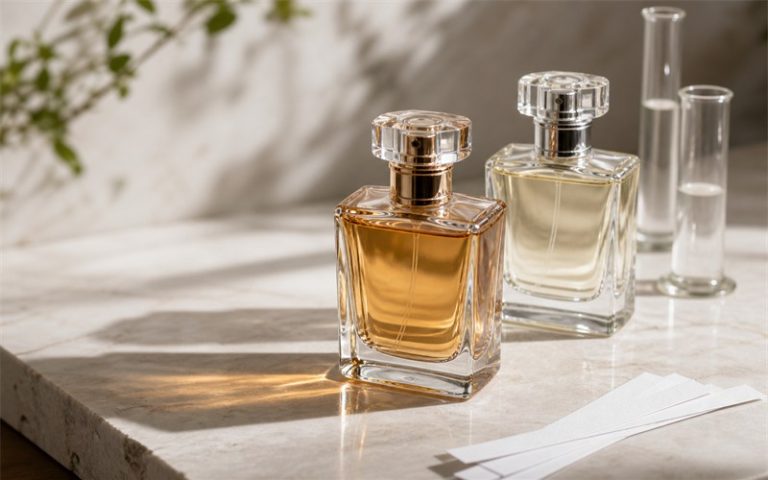
A practical buyer’s guide to concentration, wear time, projection, and formula design. Two bottles can share the same name, the same brand, and the same visual world, yet one says eau de parfum and the other says eau de toilette. Many buyers assume the eau de parfum is simply the stronger and better choice. Sometimes it is the better choice for you. Sometimes the eau de toilette is brighter, easier, and more elegant in daily life. The difference is partly about concentration, partly about formula design, and partly about how the fragrance behaves on skin. A skilled perfumer may adjust…

What Is the Role of Fixatives in Perfume
A practical guide to longevity, drydown, base notes, and responsible formula design. A perfume that disappears too quickly can feel disappointing, even when the opening smells beautiful. That is why many consumers become curious about fixatives. They sound like the secret ingredient that makes scent last. Fixatives do help perfume stay coherent and last longer, but they are only one part of the story. Longevity also depends on formula structure, concentration, skin, climate, raw materials, and how the fragrance is applied. Understanding fixatives makes perfume easier to judge. It also helps brands develop scents that feel polished from the first…

Why Do Some Perfumes Smell Different on Skin
A practical guide to body chemistry, evaporation, climate, and smarter fragrance testing. A perfume can smell radiant on a paper blotter, creamy on one person's wrist, sharp on another, and oddly flat on your own skin by lunchtime. That does not mean your nose is wrong or the fragrance is fake. Perfume is a moving mixture. Once it touches skin, it meets heat, oil, moisture, skin texture, residual body odor, clothing, climate, and time. Those small variables can change which notes rise first, which notes linger, and which parts of the formula seem louder than expected. For consumers, understanding this…